
Are maintenance contracts for stairlifts worth the investment?
Maintenance contracts for stairlifts can be worth the investment if you rely on your lift regularly, particularly when the plan covers servicing, call-outs and common replacement parts. Compare the contract’s total cost, exclusions and response times with pay-as-you-go repair costs and your stairlift’s age, condition and warranty cover.
Maintenance contracts for stairlifts can be worth the investment when you depend on your lift regularly and the agreement provides meaningful cover for servicing, breakdown call-outs and eligible replacement parts. They are less likely to offer good value when a stairlift is new and still covered by its warranty, used only occasionally, or subject to a contract with extensive exclusions and additional charges.
The right choice depends on comparing the likely cost and inconvenience of pay-as-you-go repairs with the contract’s price and conditions. A maintenance plan is not simply an insurance policy: it is an agreement defining what will be inspected, repaired or replaced, how quickly assistance will be provided and what you will pay if a fault occurs.
What a stairlift maintenance contract usually covers
Although plans vary, a comprehensive agreement may include a scheduled service, telephone support, engineer call-outs and labour for faults arising during normal use. Some contracts also include commonly replaced items, such as batteries or wear-related components, while others charge separately for parts. Check the written terms rather than relying on a general description of “full cover”.
- Routine servicing and safety checks at an agreed interval
- Diagnosis of operational faults
- Engineer attendance during the contract period
- Labour associated with covered repairs
- Replacement of specified parts, subject to age, condition and fair-use provisions
- A stated response time, which may differ for urgent and non-urgent faults
Servicing commonly involves checking the track, drive system, seat, controls, safety sensors, charging system, batteries and fixings. The engineer should also identify wear, unusual noise, reduced performance or safety issues before they develop into a breakdown. A service does not guarantee that every component will remain fault-free, particularly on an older lift, but it can help detect developing problems earlier.
When a contract is more likely to be worthwhile
- The stairlift is used every day: Frequent use increases the importance of dependable operation and means a breakdown may affect essential movement around the home.
- The lift is older or outside its warranty: As components age, the risk of repairs and parts replacement generally becomes more relevant. A contract can make costs easier to plan, provided older models and their parts are accepted.
- A breakdown would be difficult to manage: If you cannot safely use the stairs without the lift, an appropriate response commitment may be more valuable than the potential saving from paying for occasional repairs.
- The plan includes the costs you are most concerned about: Cover for labour alone may not protect you from a substantial parts bill. Confirm precisely what is included.
- You prefer predictable household expenses: A regular payment can be useful if avoiding an unexpected repair bill is more important to you than achieving the lowest possible cost over time.
When pay-as-you-go repairs may be more suitable
Paying for servicing and repairs as needed can be reasonable if the stairlift is relatively new, has comprehensive warranty cover, is used infrequently or has a strong recent service history. It may also suit customers who can manage an occasional repair bill and do not need priority response arrangements.
However, pay-as-you-go cover should not be confused with having no maintenance. A stairlift can continue to operate while developing wear or a charging fault, and waiting until it stops can lead to greater inconvenience. You should still follow the manufacturer’s servicing recommendations and arrange an inspection if you notice changes in performance.
How to compare the cost properly
Start with the total contract cost for the full term, including any joining fee, renewal change, VAT, call-out excess, engineer travel charge or separate parts cost. Then compare this with the likely alternatives: a planned service paid for separately, the published call-out and labour rates, and the possible cost of common repairs for the age and model of your lift.
There is no reliable way to predict exactly how much a particular stairlift will cost to maintain. The result depends on its design, installation environment, frequency of use, condition, availability of parts and the nature of any fault. A cheaper contract may provide limited assistance, while a more expensive plan may be justified if it includes parts, prompt attendance and clear support outside normal working hours.
Important contract conditions to check
- Whether the plan covers straight, curved or outdoor equipment, and whether your specific model is eligible
- Whether faults present before the contract begins are excluded
- Whether batteries, chargers, remotes, upholstery, arms or other consumable and cosmetic items are included
- Whether accidental damage, misuse, water ingress, power surges or alterations by another provider are excluded
- Whether replacement parts are new, reconditioned or subject to availability
- Whether there is a limit on call-outs or claims during the contract period
- Whether service visits are included or must be booked and paid for separately
- How quickly engineers aim to attend and whether this differs at weekends or on bank holidays
- What happens if the lift is beyond economical repair or parts are no longer available
- How renewal, cancellation and price changes are handled
Also check whether the contract transfers if you move home, whether cover remains valid if the stairlift is relocated, and whether the provider requires servicing to be carried out at specified intervals. Keep the agreement, service records and any repair reports together; they can help establish the lift’s history and identify recurring faults.
Warranty cover and maintenance contracts
Before purchasing a separate plan, check what remains under the manufacturer’s or installer’s warranty. A warranty may cover defects for a defined period but exclude routine servicing, wear and tear, accidental damage or problems caused by unsuitable use. A maintenance contract may duplicate some warranty benefits, so ask when the contract begins to provide additional value and whether it can start after the warranty ends.
For a reconditioned stairlift, ask how the warranty and maintenance arrangements work together. The age of the lift, the availability of replacement parts and the inspection carried out before installation are particularly relevant when assessing future maintenance needs.
Signs that a contract may not provide good value
Be cautious if the agreement uses broad terms such as “all repairs included” but does not define parts, labour, response times or exclusions. A plan may also be poor value if it excludes the components most likely to need attention, requires a large excess for every visit, or offers no practical advantage over the provider’s standard repair service. Do not assume that a maintenance contract will cover a lift that is already showing a serious fault; pre-existing problems are commonly treated separately.
How regular maintenance helps, even without a contract
Whether you choose a contract or pay as needed, regular professional maintenance can support safe, consistent operation. It can identify battery deterioration, worn drive components, loose fixings, charging problems and changes in safety-device performance. Routine checks are also an opportunity to confirm that the lift is being used correctly and that warning indicators are understood.
Contact the service team promptly if the stairlift stops unexpectedly, moves unevenly, fails to charge, makes an unusual noise, displays a warning or causes a circuit breaker to trip. Do not bypass safety features or attempt electrical or mechanical repairs yourself. If the lift is needed for essential access, explain this when reporting the fault so the appropriate response can be considered.
Practical conclusion
A maintenance contract is generally most defensible when the stairlift is essential, regularly used, outside warranty and covered for the repairs that could otherwise create significant disruption or expense. If the lift is new, lightly used or comprehensively covered already, paying for individual servicing and repairs may be more economical. Review the agreement against your stairlift’s age, condition, usage and warranty status, and ask for any exclusions or additional charges to be confirmed in writing before committing.
A stairlift maintenance contract is most likely to be worthwhile when the lift is used every day, is outside its warranty and a breakdown would seriously affect your access around the home. The value comes from predictable costs and agreed support, provided the plan covers the repairs and parts your stairlift may need.
Before agreeing to cover, check whether servicing, engineer call-outs, labour, batteries and other replacement parts are included. Confirm any excesses, exclusions, response times and rules for pre-existing faults in writing. If your stairlift is new or comprehensively covered by a warranty, paying for servicing and occasional repairs separately may be more economical.
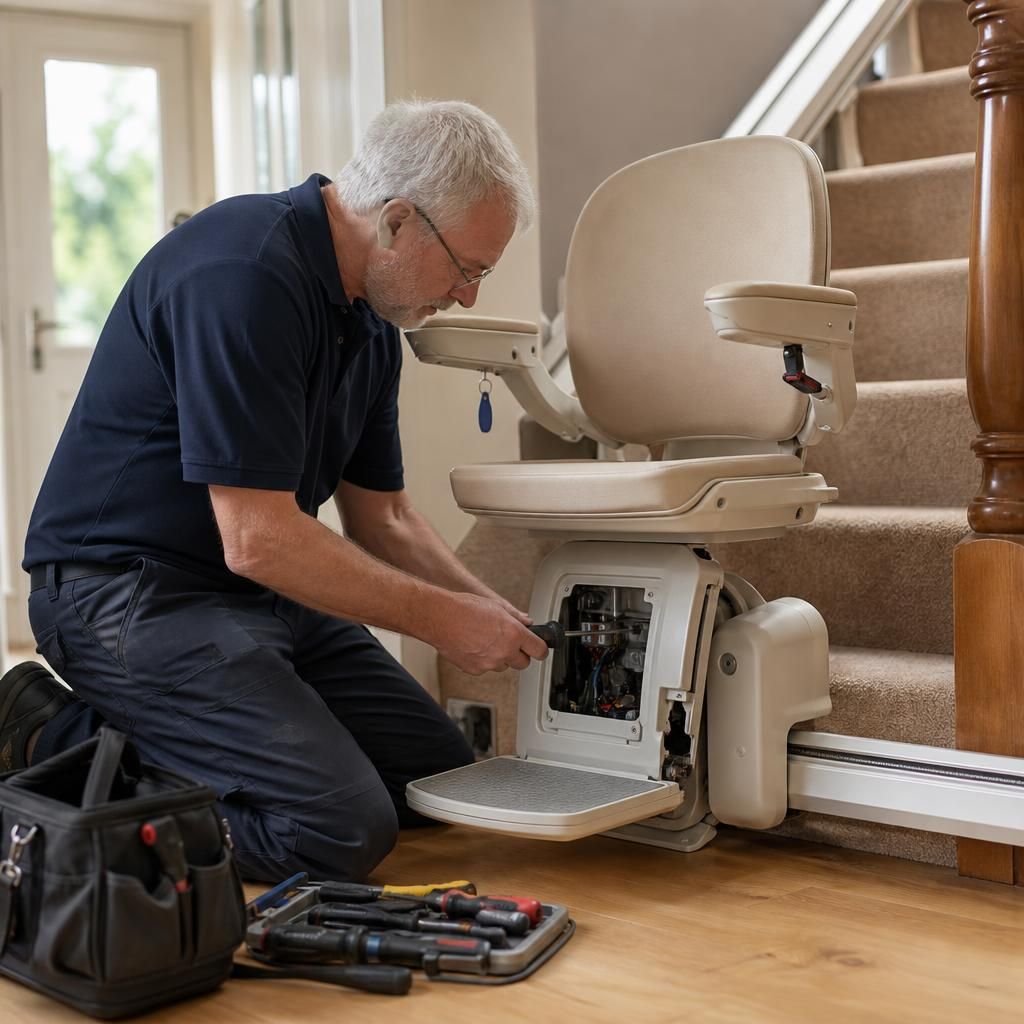
Discuss your stairlift maintenance options
Discuss your stairlift maintenance options with our service team, including contract cover, pay-as-you-go servicing and any warranty arrangements. We can help you compare the available support with your stairlift’s age, condition and usage.