
What should be included in a comprehensive stairlift maintenance plan?
A comprehensive stairlift maintenance plan should include a scheduled professional service covering the track, drive system, seat, carriage, batteries, charging points, controls, safety sensors, wiring and emergency stop functions, followed by operational testing. It should also set out cleaning and lubrication requirements, fault-reporting and repair procedures, response times, service records, safety advice and clear details of what is included in the contract and any additional charges.
A comprehensive stairlift maintenance plan combines scheduled servicing, safety inspections, cleaning, functional testing, fault support and clear contract terms. It should cover the complete stairlift installation rather than focusing only on the batteries or drive unit, and should explain what you need to do between professional visits to keep the lift safe and dependable.
A planned professional service
The plan should specify when the stairlift will be inspected and serviced. The correct frequency depends on the manufacturer’s guidance, the age and condition of the lift, how often it is used and the environment in which it is installed. A stairlift used several times a day, or one installed outdoors, may need closer monitoring than a lightly used indoor lift.
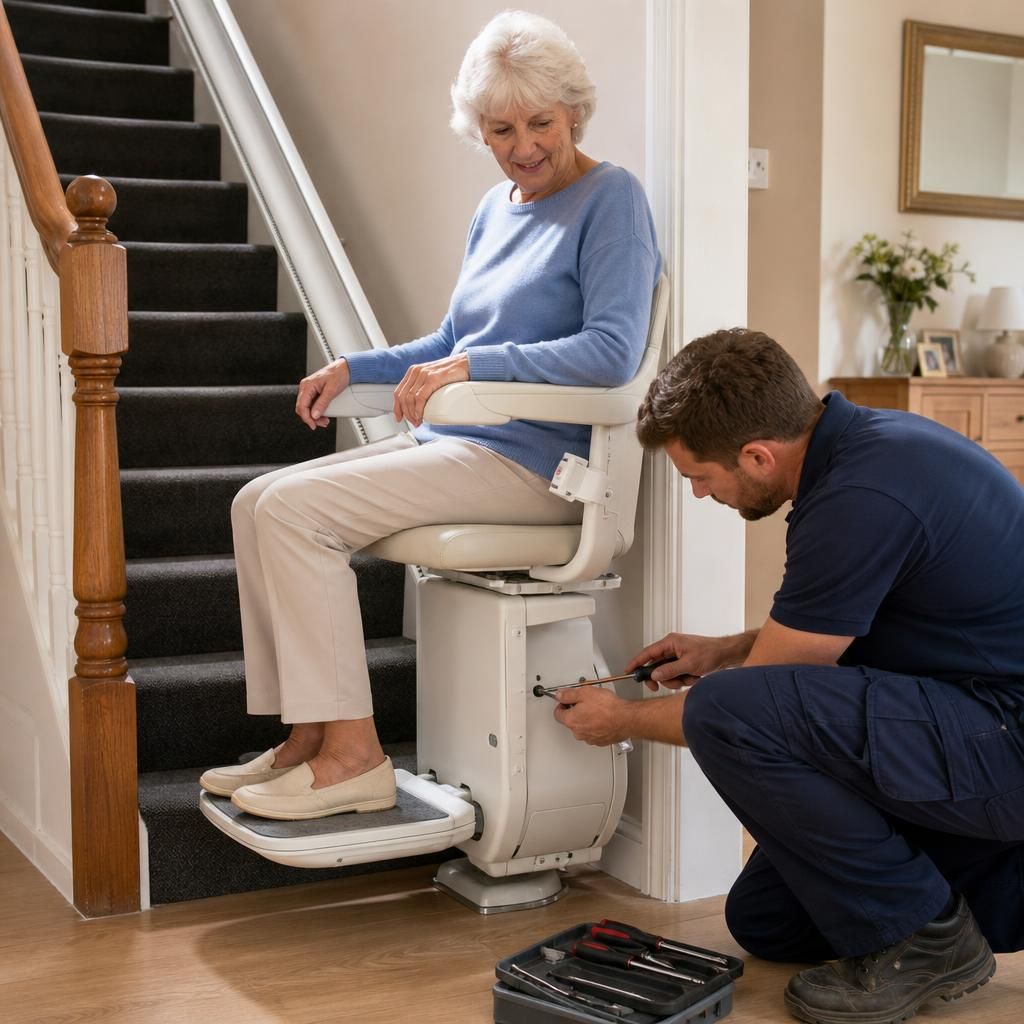
A service should be carried out by a suitably trained engineer familiar with the type of stairlift installed. The engineer should identify the model and inspect the equipment against the manufacturer’s requirements, rather than applying a basic visual check only.
Inspection of the track and mechanical parts
- The rail or track should be checked for secure fixings, damage, movement, obstruction and excessive wear.
- The carriage should be inspected for smooth travel, unusual movement, wear and correct alignment on the track.
- The drive system, motor, gears, rollers and other moving components should be checked for wear, noise and signs of strain.
- Where lubrication is required, the engineer should apply the correct product to the appropriate parts. Over-lubrication or using the wrong lubricant can attract dirt and affect operation.
- For outdoor stairlifts, the inspection should also consider corrosion, water ingress, weather exposure and the condition of protective covers or seals.
Safety checks and operational testing
Safety equipment should be tested as part of every planned service. This normally includes the seat belt or restraint, armrests, swivel seat mechanism, footrest, safety edges, obstruction sensors, limit switches, key switch, control switches and emergency stop functions. The engineer should confirm that the stairlift stops correctly when a safety feature is activated and that it cannot be operated in an unsafe condition.
The stairlift should be run through its full usable route after inspection. Testing should include starting, stopping, changes in direction where relevant, parking, approach to the charging points and operation of the user controls. Any unusual vibration, juddering, delay, noise or loss of power should be investigated rather than simply recorded as a minor issue.
Batteries and charging equipment
Batteries are commonly affected by age, usage and charging conditions, so they should be included in the maintenance plan. The engineer should check the batteries, terminals, charging contacts, charger and charging points, as well as the lift’s ability to charge correctly when parked. Battery performance should be assessed in the context of the stairlift’s behaviour; a lift that repeatedly stops away from a charging point or struggles on the stairs may need further investigation.
The plan should explain how to leave the stairlift parked and charged, whether the charger should remain switched on and what signs may indicate a battery or charging fault. Battery replacement may be excluded from some contracts or treated as a chargeable item, so this should be stated clearly.
Electrical and control-system checks
Wiring, connectors, hand controls, remote controls and display or diagnostic indicators should be checked for damage, loose connections and correct operation. The engineer should examine any error codes and explain their significance. Electrical safety checks must be appropriate to the stairlift and carried out without bypassing safety systems or making unauthorised alterations.
Cleaning and care requirements
A useful plan sets out which cleaning tasks are included during a service and which are the customer’s responsibility. Dust, hair and debris can collect around the track, carriage, footrest and sensors, particularly where the stairlift is used frequently. The customer should be given practical advice on keeping these areas clear without placing hands near moving parts or using excessive water.
Cleaning instructions should also cover the seat, armrests, controls and outdoor components. The plan should identify products or methods to avoid if they could damage upholstery, electrical components, finishes or protective coatings.
Fault reporting and repair support
Maintenance is not a substitute for repairing a known fault. The plan should provide a clear process for reporting problems, including the appropriate contact method, the information to provide and what to do if the stairlift stops working. Useful details include the customer’s name and address, the stairlift model if known, any displayed fault code, where the lift has stopped and whether anyone is unable to use the stairs safely.
It should also state the expected response time, whether telephone troubleshooting is available, how urgent breakdowns are prioritised and whether engineer visits outside normal working hours are covered. If the stairlift must not be used until an engineer attends, that warning should be made clear.
Service records and follow-up actions
After each visit, the engineer should provide a service record showing the date, equipment inspected, tests completed, faults found, parts replaced, adjustments made and any recommendations. The record should identify work that is essential for safe operation separately from preventative or optional work. It should also confirm whether the stairlift was left in working order and whether further attention is required.
Keeping these records helps identify recurring faults, supports warranty or insurance discussions and gives future engineers a reliable maintenance history. Any safety-related defect should have a documented action, such as repair, isolation of the equipment or advice not to use the stairlift until the problem is resolved.
Clear details of what the contract covers
A maintenance plan should define its coverage in plain language. Check whether the agreed price includes:
- planned service visits and inspection of the complete stairlift;
- engineer labour and travel;
- breakdown call-outs and telephone support;
- replacement parts, batteries, chargers and consumables;
- repairs required after a fault is found;
- emergency, evening, weekend or bank holiday attendance;
- removal or replacement of equipment that is beyond economical repair; and
- VAT and any administration, cancellation or missed-appointment charges.
Some contracts cover servicing but charge separately for parts or breakdown visits. Others exclude accidental damage, misuse, water damage, alterations by another provider, cosmetic wear or faults caused by the wider electrical supply. These exclusions are not necessarily unreasonable, but they should be explained before the plan begins.
Customer responsibilities and safety advice
The plan should explain the checks you can make safely, such as keeping the track and landing areas clear, using the seat belt, parking the lift correctly and reporting changes in performance promptly. You should not attempt to dismantle the carriage, adjust the track, bypass a sensor or repair electrical components yourself. If the stairlift makes an unfamiliar noise, moves unevenly, fails to charge or stops unexpectedly, stop using it if it is unsafe and report the issue.
Finally, a good plan should be reviewed when the stairlift’s usage changes, when a new user takes over or when repeated faults suggest that the original servicing frequency is no longer suitable. A written schedule, complete inspection checklist, responsive repair process and transparent charges provide the practical foundation for keeping a stairlift safe, reliable and suitable for the home in which it is installed.
A complete stairlift service should test the entire installation, not just the battery. An engineer should inspect the track, carriage, drive system, seat, controls, charging points and safety devices, then run the stairlift through its full route to check smooth and reliable operation.
The service record should document the checks completed, faults identified, parts replaced and any further action required. This makes it clear whether the stairlift is safe to use and helps identify recurring problems before they lead to a breakdown.
Arrange a stairlift maintenance assessment
Arrange a stairlift maintenance assessment with our team to review your current servicing needs, equipment condition and support options.