
What are the typical costs associated with maintaining a stairlift?
Typical stairlift maintenance costs depend on the model, condition and whether you pay for individual servicing or a maintenance contract. A service may cover inspection, safety checks, cleaning and adjustments, while batteries, worn parts, call-outs and repairs are usually charged separately unless included in your agreement.
Typical stairlift maintenance costs depend on the lift’s age, model, condition and the type of support you choose. You may pay for an individual service, a maintenance contract, or a repair when a fault is found. A routine service generally covers inspection, safety checks, cleaning, lubrication and adjustments, while batteries, worn components, emergency call-outs and major repairs may be charged separately unless your agreement includes them.
The cost of maintaining a stairlift is therefore not limited to the service visit itself. Before arranging work, check exactly what is included, whether replacement parts are covered and how the provider charges for attendance outside a planned service.
What a routine stairlift service usually includes
A planned service is intended to identify developing problems and confirm that the stairlift is operating safely. The engineer will normally assess the main operating and safety systems, which may include:
- operation of the seat, carriage, controls and charging system;
- the condition of the rail, brackets, wiring and visible connections;
- safety sensors, armrests, swivel or folding mechanisms and seat belt;
- batteries, charging contacts and warning indicators;
- drive components, gears and other moving parts;
- cleaning, lubrication and adjustments where required; and
- the stairlift’s response to the manufacturer’s safety functions.
If the engineer identifies a problem, the service may include a minor adjustment. Replacement parts or more extensive repair work may require a separate quotation, particularly where the work involves batteries, a motor, control board, handset or other major component.
Individual servicing and maintenance contracts
With individual servicing, you pay for each planned visit when it is carried out. This can suit an owner whose stairlift is used occasionally, is relatively new, or remains covered by a manufacturer’s warranty. It also allows you to arrange maintenance when you consider it necessary, although delaying service can allow wear to develop unnoticed.
A maintenance contract usually involves an agreed charge for planned servicing and may also provide access to repair support. Depending on the terms, it might include labour, call-outs, replacement parts, or a contribution towards them. Some contracts cover only specific stairlift models or exclude faults caused by misuse, accidental damage, water ingress, unauthorised alterations or normal battery replacement.
A contract can make budgeting easier, but it is not automatically the cheapest option. Compare the total contract cost with the likely cost of servicing the particular lift, and check the exclusions before deciding. A lower initial price may not represent good value if labour, parts or out-of-hours attendance are excluded.
Costs that may be charged separately
Several items can increase the total cost of maintaining a stairlift:
- Battery replacement: batteries gradually lose capacity and may eventually prevent the lift from completing its journey or charging correctly. Battery life varies with usage, charging conditions and the age of the equipment.
- Wear-and-tear parts: rollers, switches, belts, handles, arm mechanisms and other components may need replacement as the lift ages.
- Emergency call-outs: an urgent visit outside a planned service may carry a separate attendance or out-of-hours charge.
- Additional labour: a straightforward adjustment may be included in a service, whereas fault-finding, dismantling or extended repair work may be billed separately.
- Access and travel: unusual access arrangements, difficult parking or a location requiring additional travel may affect a quotation, particularly where these terms are set out in advance.
- Older or unusual models: specialist parts may be harder to source, and an engineer may need extra time to assess a discontinued or modified stairlift.
- VAT: ask whether quoted prices include VAT and whether any eligibility requirements apply to the work or equipment in your circumstances.
How the stairlift’s condition affects maintenance cost
A well-maintained stairlift that is used in normal household conditions may need little more than routine inspection and adjustment. A lift that has been unused for a long period, exposed to damp, subjected to heavy use or showing intermittent faults may require a more detailed assessment. Trying to resolve several issues during one visit can also involve parts and labour beyond the standard service charge.
Curved stairlifts can require a more bespoke assessment because their rail and carriage are designed for a particular staircase. Outdoor stairlifts may need checks for weather exposure, corrosion and drainage in addition to the usual operating and safety checks. Reconditioned stairlifts should also have their service history and current component condition reviewed rather than being assessed solely by age.
How to budget accurately
Ask for a written breakdown before approving maintenance or repair work. It should identify the planned service, labour, parts, call-out arrangements, VAT, warranty cover and any exclusions. If a fault is found, request confirmation of whether the recommended work is essential for safe operation, advisable to prevent further wear, or optional.
Keep records of service visits, replaced parts and recurring faults. This helps identify whether a contract remains suitable and provides useful information when arranging future repairs. If the same fault returns shortly after servicing, contact the provider and check whether the work or part is covered by a guarantee.
Regular maintenance cannot prevent every failure, and it does not make an ageing stairlift cost-free to operate. It can, however, identify safety issues and developing wear before they result in a more disruptive breakdown. The most appropriate option is the one that clearly matches the stairlift’s age, usage, condition and likely repair needs, with no uncertainty about what you will pay if additional work is required.
The most reliable way to assess stairlift maintenance costs is to request a written breakdown before work begins. A standard service may cover inspection, safety checks, cleaning and adjustments, but batteries, replacement parts, extended fault-finding and emergency call-outs are often charged separately.
Check whether the quotation clearly states:
- what the planned service includes;
- whether labour and call-outs are covered;
- which replacement parts are included or excluded;
- whether repairs require approval before work proceeds; and
- whether VAT and any travel charges are included.
This helps you compare an individual service with a maintenance contract on a like-for-like basis and reduces the risk of unexpected charges if the engineer finds additional wear or a fault during the visit.
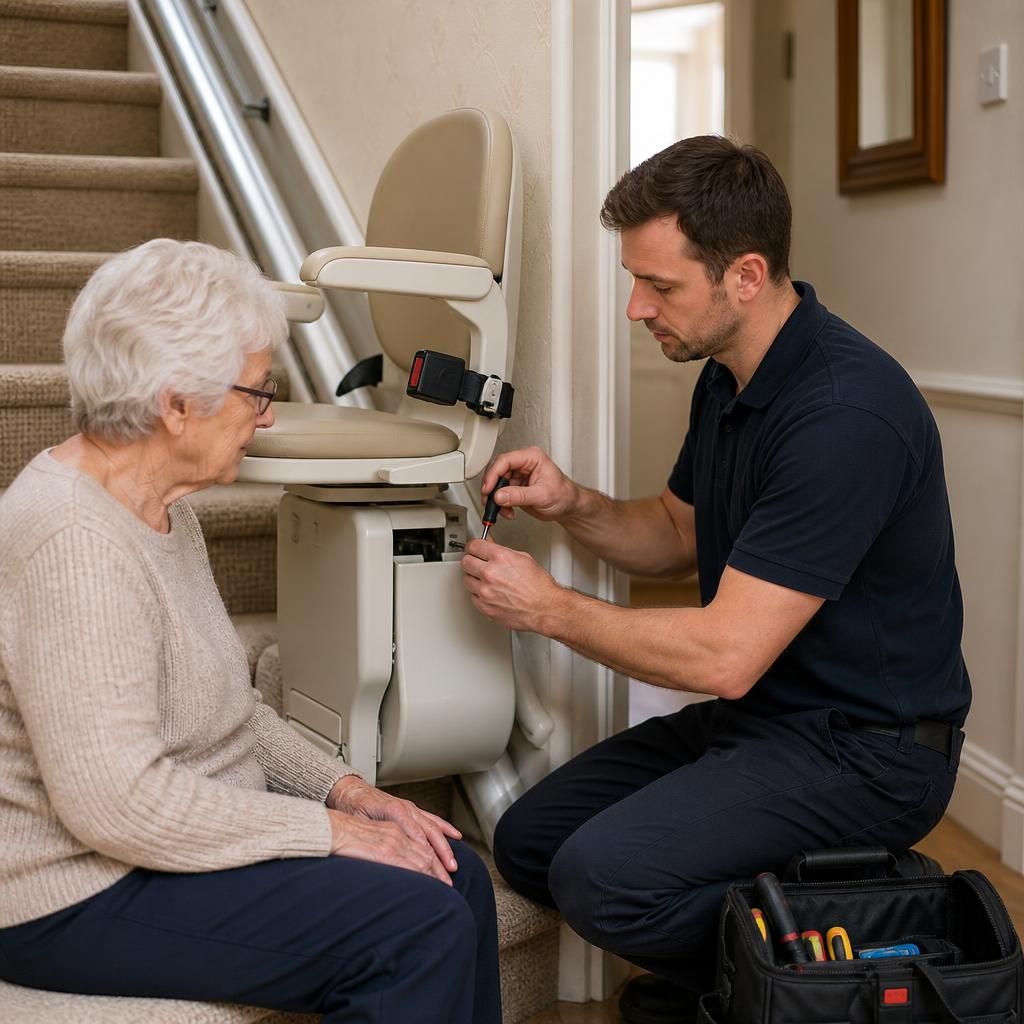
Get advice on your stairlift maintenance costs
Contact Independent Stairlifts for a clear assessment of your stairlift’s maintenance needs and a written breakdown of any expected service, labour and parts costs.