
What are the implications of skipping regular stairlift maintenance?
Skipping regular stairlift maintenance can allow wear, battery problems and safety faults to develop unnoticed, increasing the risk of breakdowns, unreliable operation and avoidable repair costs. Servicing helps identify issues early and keeps essential safety features working as intended.
Skipping regular stairlift maintenance can allow developing faults to go unnoticed, increasing the likelihood of unreliable operation, unexpected breakdowns, safety-related problems and more expensive repairs. A professional service checks the parts that are difficult to assess during everyday use and helps keep the stairlift operating as its manufacturer intended.
Stairlifts are used regularly and contain mechanical, electrical and safety-critical components. Even when a lift appears to be working normally, gradual wear, contamination or battery deterioration may affect its performance. Routine maintenance is intended to identify these issues early, before they cause a loss of service or damage to other components.
Potential implications of missed maintenance include:
- Higher risk of a breakdown: Worn drive components, loose connections, charging faults or deteriorating batteries can eventually prevent the stairlift from starting, stopping correctly or completing a journey.
- Reduced battery performance: Batteries may lose their ability to hold charge, particularly if the stairlift is not regularly returned to its charging position or if the charging system is not working correctly. A weak battery can lead to shorter operating time and may leave the lift unusable when it is needed.
- Safety features becoming less reliable: Sensors, seat switches, armrest controls, swivel mechanisms, seat belts and obstruction detection systems all need to operate correctly. Maintenance helps confirm that these features respond as expected rather than assuming that they are functioning because the lift still moves.
- Progressive mechanical wear: The carriage, drive system, rollers, rail and moving joints may become noisy, stiff or less smooth. Continuing to use a worn component can place additional strain on related parts and increase the eventual repair requirement.
- Unexpected disruption: A stairlift that stops working can make the stairs difficult or impossible to use, affecting access to bedrooms, bathrooms or other parts of the home. This can be particularly inconvenient if a fault occurs outside normal service availability.
- Higher repair costs: Early adjustment, cleaning or replacement of a smaller component may prevent damage to more expensive parts. Delaying attention can turn a routine service issue into a larger repair involving several components.
Missed servicing does not automatically mean that a stairlift is unsafe, nor does a service guarantee that a fault will never occur. It does, however, remove an important opportunity to identify wear and confirm that the lift’s safety systems, electrical connections and charging arrangements are operating properly. A stairlift can continue to run while a fault is developing, so normal movement should not be treated as proof that maintenance is unnecessary.
Battery condition is one of the most common practical concerns. Rechargeable stairlift batteries have a limited service life and can deteriorate gradually. A user may first notice slower movement, warning sounds, reduced journeys between charges or the lift stopping before it reaches the end of the rail. These symptoms should be reported promptly rather than managed by repeatedly recharging the batteries or continuing to use the lift until it fails completely.
Maintenance also helps identify less obvious problems, such as debris on the rail or charging contacts, changes in running noise, loose fittings, lubrication requirements or changes in the alignment and operation of the seat. The engineer can assess the condition of the installation, test relevant functions and explain whether a repair or replacement is recommended. Keeping a record of servicing and repairs can also help when investigating recurring faults or planning future expenditure.
The appropriate service frequency depends on the stairlift model, its age, how often it is used, the installation environment and the manufacturer’s guidance. A lift used several times a day, installed in a demanding environment or showing signs of wear may need closer attention than one used occasionally. Follow the maintenance schedule provided for your model and arrange an assessment if the stairlift has been stored, unused for a prolonged period or moved to a different property.
Users can reduce avoidable problems between professional services by:
- Returning the stairlift to its designated charging point when it is not in use, where the model’s instructions require this.
- Keeping the rail, steps and charging contacts clear of dust, objects and spillages.
- Watching for unusual noises, jerky movement, repeated stopping, warning tones or changes in speed.
- Checking that the seat belt, swivel seat, armrests and controls appear to work normally without forcing them.
- Reporting a fault instead of repeatedly resetting the lift or continuing to use it when a safety warning is displayed.
Do not attempt to dismantle the carriage, alter electrical connections or bypass a safety switch. These tasks require appropriate training and may create additional risks or invalidate relevant manufacturer or service arrangements. If the stairlift stops unexpectedly, smells of burning, shows visible damage or behaves differently from usual, stop using it if it is safe to do so and request professional advice.
Regular maintenance is therefore best viewed as preventive care rather than an optional inspection. It cannot remove every possibility of failure, but it can identify developing issues, support safe and reliable operation, and reduce the chance that a minor fault becomes an urgent and costly repair.
Skipping stairlift maintenance can allow safety features to deteriorate without being noticed. A professional service checks functions such as the seat belt, swivel seat, armrest controls, safety sensors and obstruction detection, confirming that they respond correctly when needed.
A stairlift may continue to move even when one of these features is becoming unreliable. Regular servicing can identify loose fittings, contamination, worn parts or electrical faults before they affect safe operation. If a safety warning appears, the lift stops unexpectedly or behaves differently from usual, stop using it if safe to do so and arrange professional advice rather than bypassing the fault.
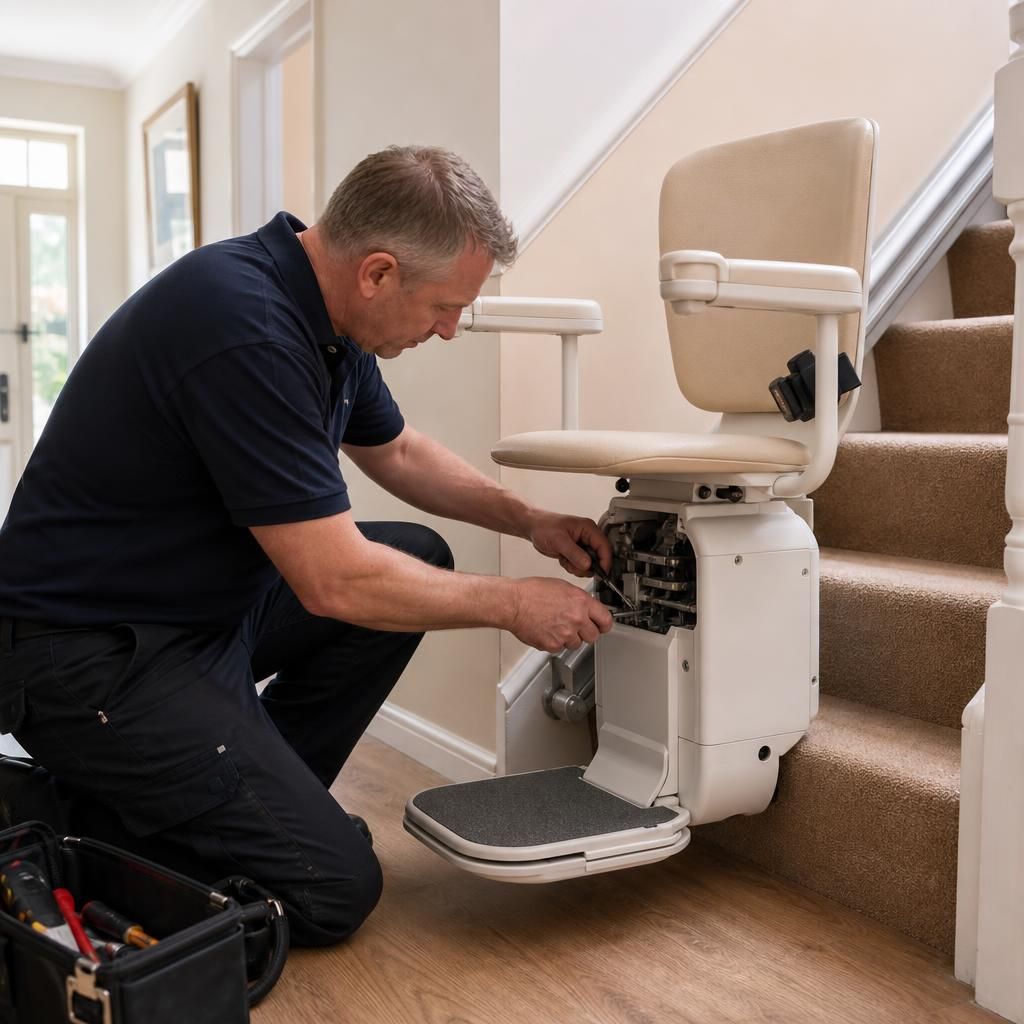
Arrange a professional stairlift maintenance assessment
Arrange a professional stairlift maintenance assessment with Independent Stairlifts to identify developing faults and confirm that your lift is operating safely and reliably.