
What factors influence the overall cost of stairlift maintenance?
The overall cost of stairlift maintenance is influenced by the lift’s type and age, the complexity of its installation, the condition of key components, and whether servicing, labour, call-outs or replacement parts are included. Curved and outdoor stairlifts can require more specialised inspection and parts than standard straight models, while a maintenance contract may make costs more predictable.
The overall cost of stairlift maintenance depends on the type and condition of the lift, the work required, the availability of replacement parts and what is included in the service arrangement. A routine inspection of a well-maintained straight stairlift is usually less involved than diagnosing a fault on a curved or outdoor model, but the final cost is determined by the individual assessment.
Stairlift type and design
Straight stairlifts generally have a simpler rail and fewer bespoke components, which can make servicing more straightforward. Curved stairlifts are made to follow the shape of a particular staircase and may include customised rails, swivel mechanisms, powered hinges or additional safety features. These parts can require specialist knowledge and may take longer to inspect, adjust or replace.
Outdoor stairlifts are exposed to rain, temperature changes, dirt and coastal or atmospheric corrosion. Maintenance may therefore include closer checks of weather seals, electrical connections, charging equipment, covers and exposed fixings. If the lift serves more than one staircase or has unusual access arrangements, the design can also affect the time needed for a service visit.
The age and condition of the stairlift
Older stairlifts may need more maintenance because components have experienced longer-term wear. Batteries, rollers, drive belts, gears, arm controls, seat mechanisms and charging contacts can all deteriorate over time. A newer lift may only require inspection, cleaning and adjustment, whereas an older model might need parts replaced during or after the visit.
Condition is influenced by more than age. A stairlift used frequently, operated on a dusty rail or exposed to accidental knocks may require more attention than a similar model used occasionally in a clean, dry environment. Previous repairs, storage conditions and the quality of earlier servicing can also affect the amount of work required.
Routine servicing or a repair visit
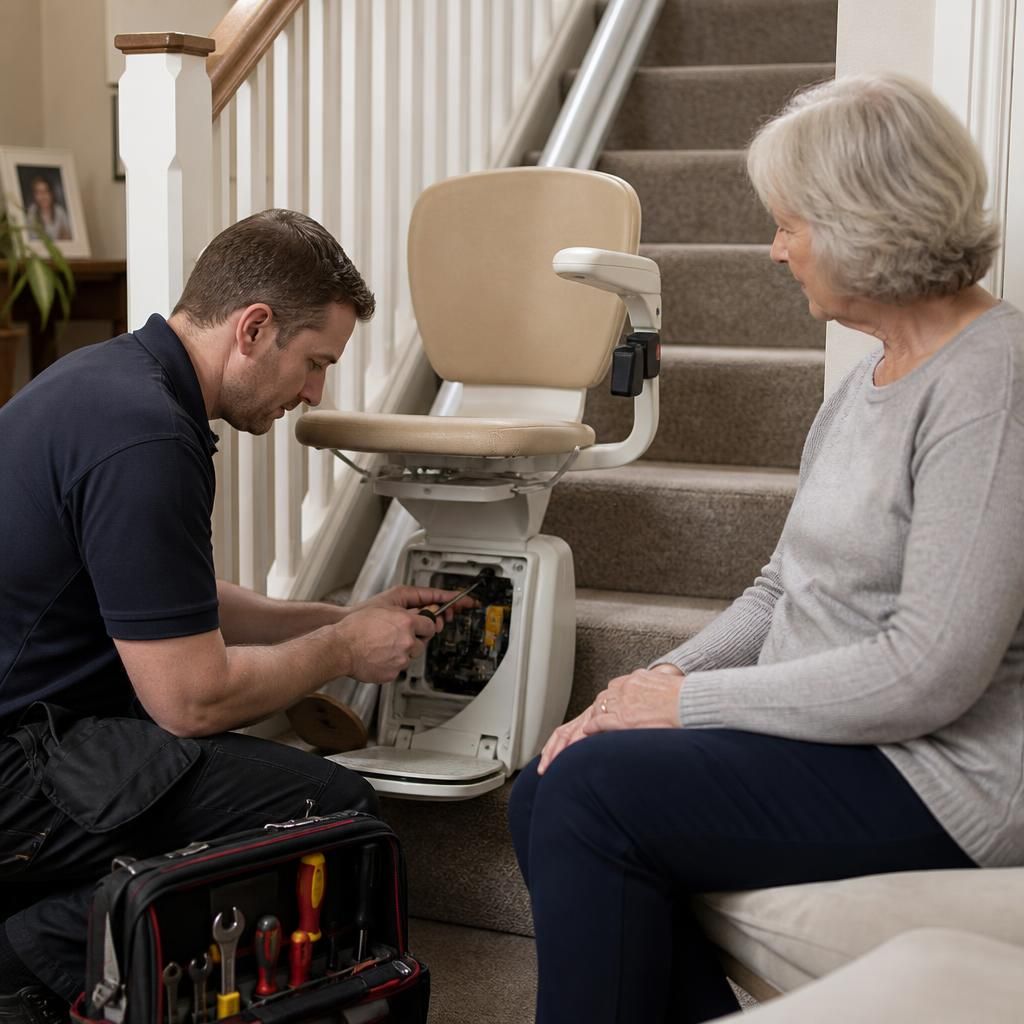
A planned maintenance visit normally covers safety checks, cleaning, lubrication where appropriate, inspection of the rail and moving parts, battery and charging tests, and checks on the seat, controls and safety features. This is different from a repair visit, where the engineer must diagnose a specific fault and restore the lift to working order.
Repair costs can be higher when the fault is intermittent or has several possible causes. An engineer may need to test the power supply, batteries, control systems, sensors and drive components before identifying the underlying problem. A clear description of what the lift is doing, when the issue occurs and whether any warning lights or sounds are present can help reduce diagnostic time.
Replacement parts and their availability
Parts are often a significant part of the total maintenance cost. Batteries and other commonly replaced items may be relatively straightforward to source, while components for discontinued or less common models can be more difficult to obtain. If a part is no longer manufactured, a suitable alternative may need to be identified, or additional assessment may be required to determine whether repair remains practical.
Parts designed for a curved or outdoor stairlift can be more specialised than those used on a standard indoor model. The cost may also include fitting, testing and safe disposal of the old component. A maintenance quotation should make clear whether parts are included or charged separately.
Labour, call-outs and access
The total charge may include the engineer’s labour, travel or call-out costs, as well as any time spent diagnosing a fault. A planned appointment can be easier to schedule than an urgent visit, particularly where the lift is the customer’s main means of accessing another floor. The location of the property and the time needed to reach it may affect the quotation, especially for rural or hard-to-access areas.
Access to the stairlift can also influence the work involved. Clutter on the stairs, restricted parking, difficult internal access or the need to move furniture can add time to a visit. Keeping the staircase clear and ensuring that the engineer can reach the charging point, rail and controls helps the inspection proceed efficiently.
What a maintenance contract includes
A maintenance contract can make costs more predictable, but contracts differ considerably. Some cover scheduled servicing only, while others include labour, call-outs, selected replacement parts or repairs. Batteries and damage caused by misuse may be excluded, and some agreements may apply different terms to older, reconditioned or non-standard lifts.
Before choosing or renewing a contract, check:
- how often planned servicing is carried out;
- whether emergency call-outs are included;
- whether labour and travel are covered;
- which parts are included and which are chargeable;
- how faults outside normal working hours are handled;
- whether there are exclusions for accidental damage, water ingress or misuse;
- whether the agreement covers the specific make, model and configuration of the lift; and
- how cancellation, renewal and price changes are dealt with.
A contract may be useful when predictable budgeting and access to ongoing support are important. For a lightly used lift in good condition, paying for individual planned services may be more suitable. The right option depends on the lift’s age, reliability, use and the consequences of it being unavailable.
Warranty and previous installation work
If the stairlift or a recently fitted component is still covered by a manufacturer’s or installer’s warranty, some maintenance or repair work may be covered subject to the terms. Warranty conditions can require servicing by an approved engineer or exclude damage caused by misuse, unauthorised alterations or lack of care. Keep service records and ask what is covered before authorising chargeable work.
Where a lift has been relocated, modified or installed on a particularly complex staircase, the engineer may need to check additional fixings, alignment and safety systems. This can affect the time and cost of maintenance compared with a standard installation.
How to keep maintenance costs clear
Request an itemised quotation or written estimate before non-urgent repair work begins. It should distinguish between the inspection or call-out charge, labour, parts, travel and any follow-up visit. Ask whether VAT applies, whether the quoted price is fixed, and what happens if further faults are found once the lift has been opened or tested.
Give the service provider the stairlift’s make, model, approximate age and a description of the problem. Mention unusual noises, reduced travel speed, charging difficulties, loss of power, movement stopping unexpectedly or changes in the seat and safety controls. Do not attempt to dismantle the lift or bypass a safety feature, as this can create a hazard and may increase the eventual repair cost.
Regular servicing cannot prevent every fault, but it can identify worn components before they cause a breakdown and helps keep safety systems operating as intended. Comparing the scope of service, parts coverage and response arrangements is more useful than comparing the headline price alone.
The overall cost of stairlift maintenance depends not only on the work required, but also on what your service arrangement includes. A routine service may cover inspection, cleaning, safety checks and adjustments, while labour, call-outs, travel and replacement parts may be charged separately.
Before agreeing to maintenance or repair work, ask for an itemised quotation. Check whether it covers the specific make and model of your stairlift, emergency visits, follow-up work and commonly replaced parts such as batteries. This makes it easier to compare the true cost of a maintenance contract with paying for individual visits.
Request a clear stairlift maintenance quote
Contact Independent Stairlifts for a clear, itemised maintenance quotation based on your stairlift’s type, age and condition. We can explain what is included and identify any additional costs before work begins.