
What factors influence the cost of stairlift repairs?
The cost of stairlift repairs is mainly influenced by the fault, the parts required, labour and call-out arrangements, as well as the type, age and condition of the stairlift. Straight stairlifts are often simpler to repair than curved or outdoor models, while obsolete or heavily worn components may increase the overall cost.
The cost of a stairlift repair is determined by the nature of the fault, the parts and labour required, and the type, age and condition of the stairlift. Call-out arrangements, access to the property, whether the repair is urgent and the availability of replacement components can also affect the final price. A reliable assessment should identify the problem before recommending the most appropriate repair or replacement option.
The fault and its cause
Some faults can be resolved with an adjustment, reset or replacement of a relatively small component, while others involve major electrical, mechanical or structural work. A stairlift that stops intermittently may require diagnostic testing to identify whether the cause is a battery, charging point, safety sensor, wiring connection, control or motor issue. The time needed to find the underlying cause can therefore influence the labour element, particularly where the reported symptom does not point to one obvious component.
Common repair issues include:
- flat, ageing or failed batteries;
- charging problems caused by the charger, charging contacts or power supply;
- worn drive components, rollers, gears or other moving parts;
- faulty armrest, seat, footrest, joystick or remote controls;
- obstructed or incorrectly positioned safety sensors;
- loose connections, damaged wiring or electrical control faults; and
- problems with the rail, track, swivel seat, hinges or safety mechanisms.
The exact cost cannot be established from the symptom alone. For example, a stairlift that will not move may have a simple control issue, but it may also have a battery, motor, sensor or control-board fault.
Parts required
Replacement parts are a significant part of many repair bills. The price depends on the component, its availability and whether it is a standard, model-specific or discontinued item. Batteries and commonly replaced wear components may be relatively straightforward to source, whereas an older control board, motor assembly or specialised curved-rail component may be more difficult to obtain.
Parts for curved stairlifts are often specific to the individual rail and model. Outdoor stairlifts may also use components designed to withstand moisture, temperature changes and exposure to the elements. These requirements can make the parts different from those used on an indoor straight stairlift.
Where an original part is no longer available, a suitable manufacturer-approved or compatible alternative may be considered. The engineer should explain whether the proposed part is new, refurbished or reconditioned, and whether it carries a parts warranty. If a repair requires a special-order component, the stairlift may need to remain out of use until it arrives.
Type and design of the stairlift
A straight stairlift usually has a simpler rail and fewer bespoke elements than a curved model, which can make diagnosis and repair more straightforward. Curved stairlifts are made to follow the individual staircase and may include multiple bends, landings, parking positions or powered options. Accessing and replacing components on these systems can require more specialist knowledge and additional time.
Outdoor stairlifts are exposed to conditions that do not affect indoor equipment to the same degree. Water ingress, corrosion, dirt and temperature changes can contribute to faults or increase the time needed to inspect and service the lift. Heavy-duty equipment, platform lifts and stairlifts with powered swivels, hinged rails or other accessories may also have more components that need testing.
The age, condition and history of the stairlift
Older stairlifts may cost more to repair when parts are obsolete, difficult to source or no longer supported. Age can also mean that several components have experienced wear at the same time. An engineer may identify an immediate fault while advising that another part is approaching the end of its serviceable life.
The general condition of the stairlift matters as well. Poor cleaning, moisture, impact damage, long periods without use or missed maintenance can lead to additional work. A well-maintained lift may need only the failed component replaced, whereas a neglected lift may require cleaning, adjustment, safety checks and several worn parts to restore reliable operation.
Labour, diagnosis and access
Repair charges commonly include the engineer’s time for inspection, diagnosis, repair, testing and advice. The time required varies according to the fault, the model and how accessible the relevant components are. A lift installed in a confined area, or one that requires sections to be dismantled before the fault can be reached, may take longer to repair.
Travel and call-out arrangements may also influence the cost. Before an engineer attends, check whether the quoted charge includes diagnosis, travel, labour, VAT where applicable and any follow-up visit. If parts are not available on the first visit, ask whether a further attendance will incur another call-out or labour charge.
Urgency and availability of parts
A planned repair may provide more flexibility than an emergency or out-of-hours attendance. If the stairlift is the customer’s main means of accessing essential parts of the home, explain this when arranging assistance so that the urgency can be assessed appropriately. Emergency attendance does not always mean the required part will be available immediately, particularly for an older or less common model.
Warranty, cover and maintenance agreements
A fault may be covered by a manufacturer’s warranty, an installation warranty, a service agreement or a separate repair plan. The terms vary, so check whether cover applies to labour, parts, batteries, travel and accidental or weather-related damage. Some agreements exclude consumable items or faults caused by misuse.
Regular maintenance cannot prevent every failure, but it can identify worn batteries, charging issues, loose fixings and safety concerns before they develop into more extensive repairs. Keeping service records and reporting changes in performance promptly may also help an engineer diagnose the fault efficiently.
Repair or replacement
For an older stairlift, the most appropriate solution is not always to replace one failed component. If several major parts are worn, replacement parts are unavailable or repair costs are disproportionate to the lift’s condition, a replacement stairlift may offer better long-term value. This should be explained clearly rather than assumed. The decision should consider reliability, safety, parts availability, the user’s needs and whether the existing rail or installation can be reused.
Before approving work, ask for a clear quotation that separates diagnosis, labour, parts, travel and any additional charges. A competent assessment should explain the fault, state whether the repair is expected to restore safe operation, identify any limitations and confirm the warranty on the work or parts. If the cause is uncertain, a diagnostic visit may be needed before a fixed repair price can be given.
Independent Stairlifts can assess the stairlift, explain the available options and provide advice suited to the equipment and property. If you are unsure whether a fault is urgent, stop using the lift if it is behaving unpredictably and request professional guidance.
The cost of a stairlift repair depends on the fault, the parts needed and the time required to diagnose and resolve the problem. A simple adjustment or battery replacement may be relatively straightforward, while a motor, control board or curved-rail component can require specialist parts and additional labour.
Before work begins, ask for a clear explanation of the proposed repair and what the quotation includes. Check whether it covers:
- the engineer’s diagnostic and labour time;
- replacement parts and any parts warranty;
- travel or call-out charges;
- VAT, where applicable; and
- any follow-up visit if a part must be ordered.
If the stairlift is older or several components are worn, compare the likely repair cost with the condition, reliability and parts availability of the existing lift. A professional assessment can help establish whether repairing it or considering replacement is the more suitable option.
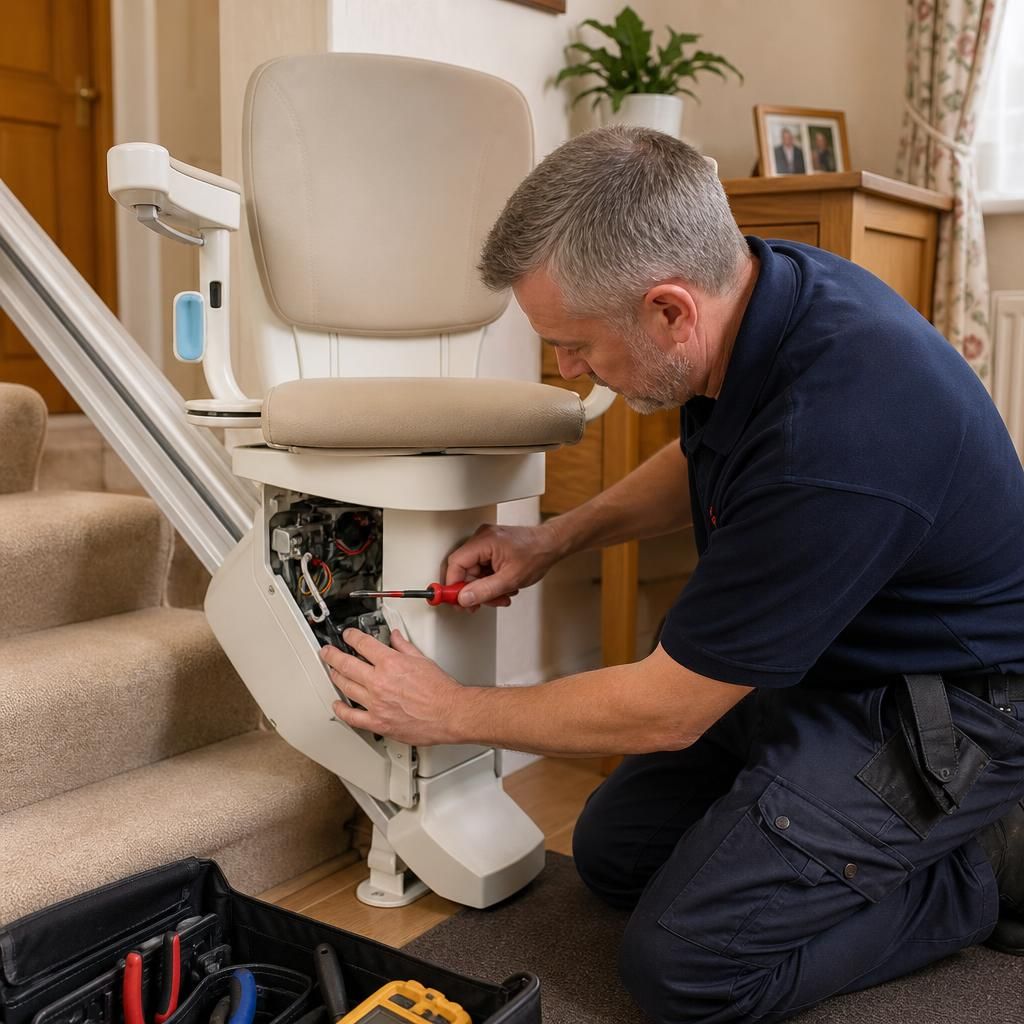
Need help with your stairlift repair?
If your stairlift is showing a fault or behaving unpredictably, contact Independent Stairlifts to arrange an assessment and discuss the most suitable repair option. We can explain the likely costs and advise whether repair or replacement is more appropriate.