Safety-led advice
Guidance starts with safe checks and does not involve bypassing safety switches or forcing the stairlift.

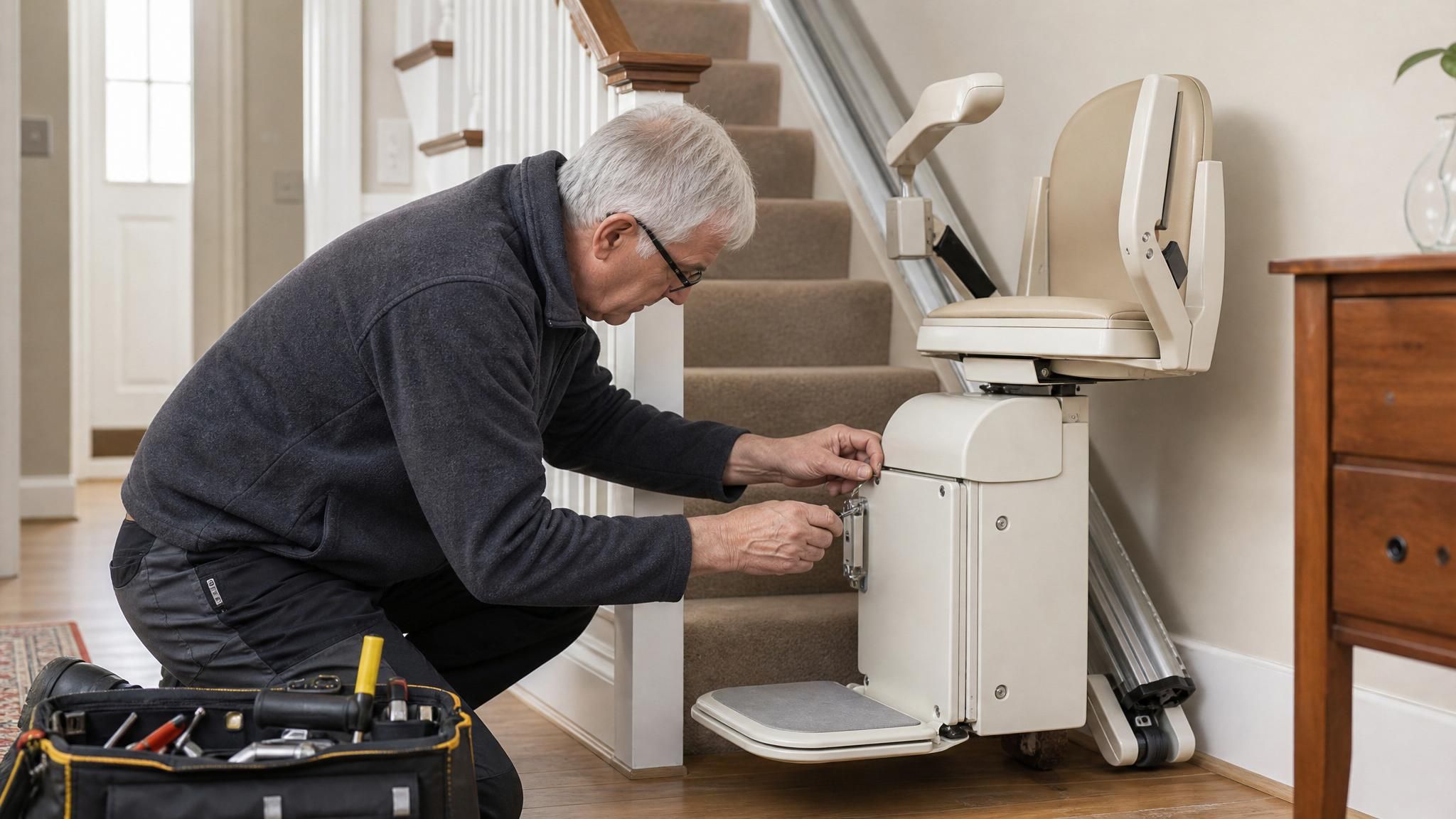
If your stairlift is not working, check its power supply, controls, safety sensors and charging position before using it again. This guide explains common faults, safe troubleshooting steps and when a qualified engineer should inspect or repair the lift.
A stairlift that is not working may have a power, charging, battery, control or safety-sensor fault. Check the wall switch, key and handset, then look for warning lights. Make sure the chair is on its charging point and the track is clear. Do not bypass safety switches.
If these checks do not help, or the chair stops on the stairs, leave it in a safe position and contact a qualified engineer. Do not force controls, remove covers or fit unapproved parts. A professional can test the batteries, charger, drive system, sensors and controls, then advise whether repair or servicing is suitable.
Independent Stairlifts offers engineer support for straight, curved and outdoor systems. We explain repair options clearly, without recommending work.
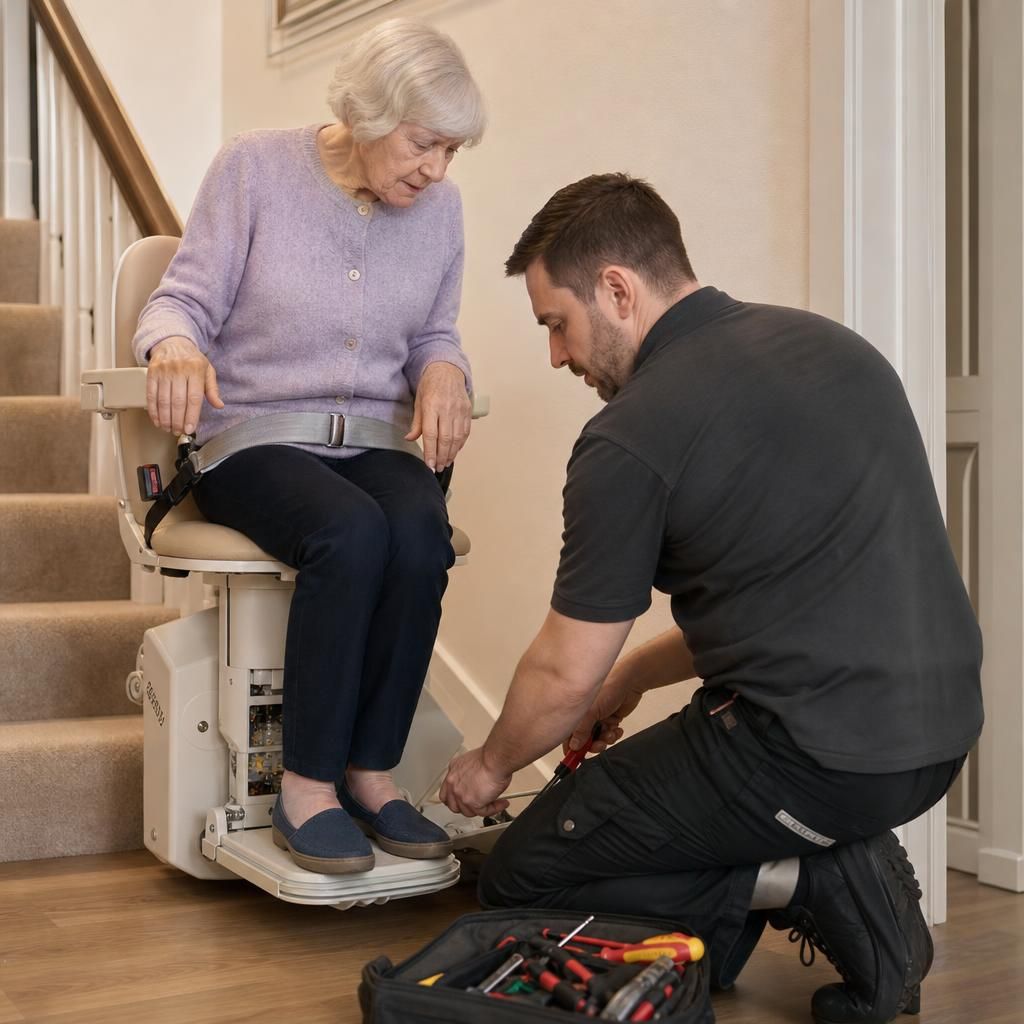
A stairlift that is not working may have a power supply, charging, battery, control, drive or safety-sensor fault. Before using it again, check the simple causes safely, including the wall switch, key, handset, warning lights, track and charging position.
Use the answers below to identify the likely problem and decide whether an engineer is needed. Do not bypass safety switches, force the chair, remove covers or fit unapproved parts; if the stairlift stops on the stairs or remains unusable after basic checks, leave it safely positioned and arrange professional assistance.
If the stairlift makes no sound and the chair does not move, the fault may be with the operating controls, power supply or main electrical system. A few observations can help an engineer identify the problem.
Check whether the chair’s key is inserted and turned to the operating position, and try the control on the armrest as well as the remote handset if available. Look for an illuminated power indicator or warning light, but do not open the electrical casing or attempt to reset internal components. If there is still no response, report the make and model, any lights or sounds, and the chair’s position to a qualified stairlift engineer.
Beeping usually indicates a warning rather than a normal operating sound. The pattern and any accompanying light can help identify whether the issue involves charging, a safety switch or an obstruction.
Make sure the armrests, seat and footrest are fully in their normal operating positions and check that nothing is touching the steps, track or carriage. If the chair is parked away from its charging point, return it only if it can move safely; otherwise leave it where it is. Persistent beeping, repeated warning tones or an unclear fault indication should be assessed by an engineer rather than silenced or bypassed.
A stairlift that stops on the stairs should not be forced or repeatedly restarted. It may have detected an obstruction, lost power or developed a fault in its drive or safety system.
Release the controls and keep clear of the lift until you understand why it stopped. If the stairlift can move safely to a landing using its normal controls, follow the manufacturer’s instructions; do not push the chair or operate it with a safety switch held down. If it remains on the staircase, use an alternative route if possible and contact the service provider for guidance, explaining whether the chair is blocking access or leaving someone unable to move safely.
A faulty handset may affect remote operation while the armrest control still works, or the problem may affect both controls. Testing each control without forcing it can help separate a handset issue from a wider fault.
Check that the handset is switched on if it has its own power control, that its buttons are not stuck and that it is within the normal operating range. If the armrest control works but the handset does not, the handset or its batteries may need attention; if neither control works, the fault may be elsewhere. Do not use a substitute handset or attempt wiring repairs, as the control system must remain compatible with the stairlift.
Weak or ageing batteries can cause slow movement, reduced travel distance, warning sounds or failure away from the charging point. Battery performance can also be affected if the chair is regularly left without charging.
Check that the chair reaches its charging position correctly and that the charger indicator shows the expected status. Do not rely on repeated short charges or continue using a lift that loses power on the stairs. Batteries are often replaced as a matched set by a qualified engineer, who can also test the charger, charging contacts and wiring before recommending replacement.
A stairlift fault does not automatically mean the whole system needs replacing. The appropriate option depends on the failed component, the lift’s condition, parts availability and whether it remains suitable for the staircase and user.
An engineer can inspect the drive system, batteries, charger, track, controls and safety devices, then explain whether a repair or planned service is reasonable. If the equipment is significantly worn or parts are no longer available, they can discuss replacement options, including whether a reconditioned stairlift is suitable. Ask for the fault, proposed work and any warranty or follow-up arrangements to be explained clearly before authorising repairs.
A stairlift that is not working may have a power, charging, battery, control or safety-sensor fault. Check simple causes safely, but do not force the chair or bypass safety switches.
Independent Stairlifts offers UK-wide engineer support for straight, curved and outdoor systems, explaining whether repair, parts or servicing is suitable.
Guidance starts with safe checks and does not involve bypassing safety switches or forcing the stairlift.
If basic checks do not resolve the fault, an engineer can inspect the stairlift and identify the cause safely.
Independent Stairlifts provides engineer support for customers across the UK.
Support is available for straight, curved and outdoor stairlift installations.
The condition of the lift can be assessed before explaining whether repair, replacement parts or servicing is appropriate.
Advice is based on the stairlift, its surroundings and the fault reported rather than a standard recommendation.
Independent Stairlifts’ repair support helps identify why a stairlift has stopped working, whether the cause is power, charging, batteries, controls, sensors or the drive system. Basic checks can be explained safely, while faults requiring testing, replacement parts or adjustment can be assessed by a qualified engineer.
Support is available for straight, curved and outdoor stairlifts, with advice based on the installation and symptoms rather than a standardised fix. This helps you compare repair, servicing or replacement options before any work is recommended.
Support begins with safe checks and clear limits, including when to stop using the stairlift rather than risk bypassing a safety feature.
An engineer can assess the electrical supply, batteries, charger, controls, sensors and drive system instead of replacing parts without identifying the cause.
Findings can be explained in practical terms so you can compare repair, servicing or replacement based on the stairlift’s condition and fault.
Repair guidance takes account of the stairlift’s design, track arrangement, environment and reported symptoms rather than applying the same fix to every installation.
Safety-critical components are treated carefully, with no recommendation to force controls, remove covers or use unsuitable replacement parts.
Information can be provided clearly to stairlift users and relatives who are helping arrange a safe inspection or decide what to do next.
The right response depends on whether your stairlift has a simple power issue, needs replacement parts, or requires an engineer’s assessment. Use these options to compare safe checks, servicing and repair support from Independent Stairlifts.
If the lift is completely inactive, check that the wall switch is on and that the charger is connected correctly. If there is still no response, avoid removing electrical covers. An engineer can test the power supply, charger and wiring safely.
Do not force the controls or attempt to move the chair manually. Keep the staircase clear, use the safest available position and contact an engineer for advice. A stalled lift may need its drive system, controls or safety circuit inspected.
Repeated beeping, slow movement or frequent charging can indicate tired batteries, a charging fault or an issue with the electrical supply. Battery replacement should use compatible parts and be completed by a qualified person.
Check that the key is inserted and turned to the operating position, then try the other control if one is available. If neither control works, do not bypass the control system. Professional testing can identify a handset, receiver, wiring or control-board fault.
Check that the footrest, seat, armrests and track are free from obstructions, and that the seat is correctly positioned. Safety sensors should never be taped, bridged or otherwise bypassed. Arrange an inspection if the warning remains.
A stairlift that works temporarily but repeatedly stops may need more than a reset or battery change. Independent Stairlifts can arrange engineer support to assess the charger, batteries, drive system, track and safety components, then explain whether servicing or repair is appropriate.
If basic checks have not restored safe operation, provide the stairlift model, fault symptoms and any warning light information when requesting help. Independent Stairlifts supports straight, curved and outdoor systems and can discuss the available repair options following an assessment.
Ensure your stairlift is plugged in and switched on, check for obstructions on the track, and confirm the remote control has working batteries.
Continuous beeping often signals a battery issue. Check the charging status, ensure the stairlift is correctly docked, and confirm the power supply is active to avoid prolonged alerts.
Slow or jerky stairlift movements often result from mechanical wear or misalignment. Inspect the track for debris, ensure all components are lubricated, and consider professional servicing to address advanced mechanical issues.
Ensure the remote control’s batteries are functional and that there is no signal interference; if the issue persists, the remote or control unit may require professional inspection.
To safely reset your stairlift, locate the reset switch, often under the seat or armrest. Turn it off, wait a few minutes, then switch back on to restore functionality.
Independent Stairlifts supports faults affecting straight, curved, outdoor and reconditioned stairlifts. Its engineers assess the chair, track, batteries, controls and safety systems before explaining suitable repair, servicing or replacement options. UK-wide coverage helps coordinate support for homes and mobility needs.
Support for Different Stairlift Types
Independent Stairlifts can help assess faults affecting straight, curved and outdoor stairlifts, rather than limiting support to one standard track design. This is useful where the fault may relate to a bespoke installation or weather-exposed equipment.
Assessment Based on the Whole Installation
A repair assessment considers the chair, track, charging equipment, batteries, controls and safety features together. This helps distinguish an isolated component fault from a wider issue affecting how the stairlift operates.
Repair or Replacement Advice
Where repair is not the most suitable option, the available alternatives can be explained clearly. Advice may include servicing, replacing worn components or considering a different stairlift, depending on condition, compatibility and the home environment.
Options for Reconditioned Stairlifts
Reconditioned stairlift options may be considered where a replacement is more practical than repairing an older unit. Suitability depends on the staircase, equipment condition, parts availability and the user’s mobility requirements.
Assessment Matched to the Home
A stairlift fault cannot always be separated from the way the equipment is used or installed. An assessment can take account of the staircase layout, charging position, access needs and the user’s ability to operate the controls safely.
Support Coordinated Across the UK
UK-wide coverage makes it possible to arrange stairlift advice and engineer support for customers in different parts of the country. The same practical approach can be applied whether the property has a straight domestic lift, a curved system or an outdoor installation.
Ensure the power switch is on and seated correctly; check if the track and path are clear from obstructions or debris for seamless stairlift operation.
First, ensure the stairlift is stopped at the charging point. Switch the power off, wait ten seconds, then turn it back on. This resets many models after interruptions.
Check if the batteries in the remote are depleted or incorrectly placed. Ensure the remote's frequency matches the stairlift system. Consider pairing the remote again with the stairlift following manufacturer instructions.
Investigate potential mechanical issues like loose components or misaligned tracks. Regular lubrication of the track and examining the stairlift’s motor can mitigate abnormal noises and prolong efficient operation.
Verify if the stairlift is locked in place due to an obstruction or activated safety switch, then restart it. Confirm the power supply connection to ensure continuous functionality.
If your stairlift is still not working after basic checks, contact Independent Stairlifts for assistance. We can assess the fault, explain repair or servicing options, and help restore safe access with support suited to your straight, curved or outdoor lift.
Contact Us