
What are the most common reasons a stairlift might stop working unexpectedly?
A stairlift may stop working unexpectedly because of a power interruption, an isolated power supply, low or failing batteries, an obstruction on the track, or a safety sensor detecting that the seat, armrests or footrest are not correctly positioned. Remote-control faults, an emergency stop, or an internal electrical or mechanical fault can also prevent movement and should be assessed by a qualified stairlift engineer if simple checks do not resolve the problem.
A stairlift most commonly stops working because its power supply has been interrupted, the batteries are low or failing, an obstruction or safety sensor is preventing movement, or the lift has been stopped by an emergency control. Remote-control faults and internal electrical or mechanical problems can also cause an unexpected stoppage. Some causes can be checked safely at home, but a stairlift should not be opened, bypassed or forced if it still will not operate.
Power supply problems
A stairlift needs a reliable electrical supply to charge its batteries and operate correctly. It may stop if the wall switch has been turned off, a fused spur has been isolated, a household circuit breaker has tripped, or there has been a power cut. A lift can sometimes continue briefly on its batteries after the mains supply is lost, then stop when the remaining charge is exhausted.
Check that the stairlift’s power switch is on and that the relevant household supply has not been switched off. If other electrical equipment has also lost power, the problem may be with the property rather than the stairlift. Do not repeatedly reset a circuit breaker if it trips again, as this may indicate an electrical fault that requires attention.
Flat, ageing or poorly charged batteries
Stairlift batteries charge while the lift is correctly parked on its charging point. If the lift is regularly left away from the charging point, the batteries may gradually discharge. Batteries also lose capacity as they age, so the stairlift may appear to work normally at first but stop under load, travel only a short distance, or fail to start after being parked.
Return the stairlift to its designated charging position if it can move safely, then allow it to charge according to the manufacturer’s instructions. Check that the charging indicator is showing the expected status. If the lift does not charge, repeatedly loses power or stops soon after charging, the batteries or charging system may need testing by an engineer. Battery replacement should be carried out using the correct specification and safe procedure.
Safety sensors detecting an unsafe position
Stairlifts are designed not to move unless key components are in their correct operating positions. The seat may need to be swivelled and locked, the armrests lowered, the footrest fully raised or lowered, and the seat belt fastened, depending on the model. A sensor can also prevent movement if it detects that part of the lift is not properly positioned.
Check that the seat is facing the direction of travel, the armrests are down, the footrest is clear and correctly positioned, and the safety belt is secured. Avoid repeatedly operating the controls if an indicator or warning tone remains active. A damaged, dirty or misaligned sensor may require professional adjustment rather than an attempt to defeat the safety feature.
An obstruction on the stairlift or track
Objects such as shoes, toys, clothing, cleaning equipment or loose carpet material can activate the safety edges around the footrest, carriage or other moving parts. The lift may stop immediately when it meets an obstruction, or refuse to move until the obstruction is removed.
With the stairlift switched off, look along the visible track and around the footrest and carriage. Remove only loose objects that are clearly accessible and do not place fingers near gears, rollers or moving mechanisms. If the lift has stopped against something, do not force it forwards or backwards. A trapped object, damaged safety edge or track issue should be assessed by an engineer.
Emergency stop or control switch activated
An emergency stop button may have been pressed accidentally, particularly when several people use the stairlift or when items are carried near the controls. Some models also have a key switch or operating switch that must be in the correct position before the lift will respond.
Check whether the emergency stop has been released in accordance with the instructions for your model, and confirm that the key or main operating switch is set correctly. Do not continue using the stairlift if the stop button will not release, feels damaged or activates without a clear reason.
Remote-control fault
If the stairlift works from its armrest control but not from a remote, the remote may have flat batteries, a damaged button, a blocked signal path or a pairing fault. If neither control operates the lift, the cause is more likely to involve power, a safety circuit or the stairlift itself.
Check the remote’s batteries and make sure its buttons are not stuck. Use the remote in line with the stairlift and check whether another handset has been left pressed or positioned where it could send an unwanted command. Do not attempt to reprogramme a remote unless you have the correct instructions for the model.
Electrical, charging or internal mechanical fault
Wiring faults, a failed charger, worn batteries, a defective control board, motor problems or damaged drive components can all stop a stairlift unexpectedly. These faults may be preceded by intermittent operation, unusual noises, a burning smell, repeated warning tones, visible damage or movement that is slow and uneven.
Switch the stairlift off and seek assistance if you notice smoke, a burning smell, overheating, exposed wiring, fluid, impact damage or unusual sparking. Do not remove covers or attempt to repair electrical or drive components yourself. Internal faults require suitable diagnostic equipment and should be handled by a qualified stairlift engineer.
What to do when the stairlift stops
- Keep calm and remain seated if the stairlift is in a safe position. Use the seat belt and do not try to climb over the lift or step off on the stairs unless there is an immediate danger.
- Check for an obvious obstruction, power interruption, emergency stop or incorrectly positioned seat, armrest or footrest.
- Check the status indicators or listen for warning tones, noting exactly what happens when you use the control.
- If it is safe to do so, return the lift to its charging point and allow it to charge.
- Do not force the controls, repeatedly cycle the power, bypass a safety sensor or use the lift if it is making abnormal noises or showing signs of damage.
- Contact the support team or a qualified stairlift engineer if the basic checks do not restore operation, if the fault keeps recurring, or if anyone is stranded or unable to transfer safely.
The most useful information to provide when requesting help is the stairlift’s location, whether it stopped during travel or failed to start, whether the display or indicator changed, any warning tone or error message, whether the remote and armrest controls respond, and whether there has been a recent power cut, spill, impact or unusual noise. This helps identify whether the problem is likely to be a simple operating condition or requires an engineer’s visit.
If the stairlift has stopped midway, do not attempt to move it manually or walk around it on the stairs. Follow the emergency guidance supplied with the lift and contact support for advice. If there is an immediate medical or safety emergency, use the appropriate emergency service rather than risking a transfer on the staircase.
A stairlift may stop unexpectedly when its batteries are low because the mains supply has been interrupted or the lift has not been left correctly on its charging point. It can appear to work briefly, then stop once the remaining battery charge is exhausted.
Check that the power switch or fused spur is on and that the stairlift is fully parked on its charging point. Look for the normal charging indicator and allow the batteries to charge according to the manufacturer’s instructions. If the lift repeatedly loses power, will not show that it is charging, or stops soon after charging, arrange an engineer’s inspection rather than repeatedly resetting it or replacing components yourself.
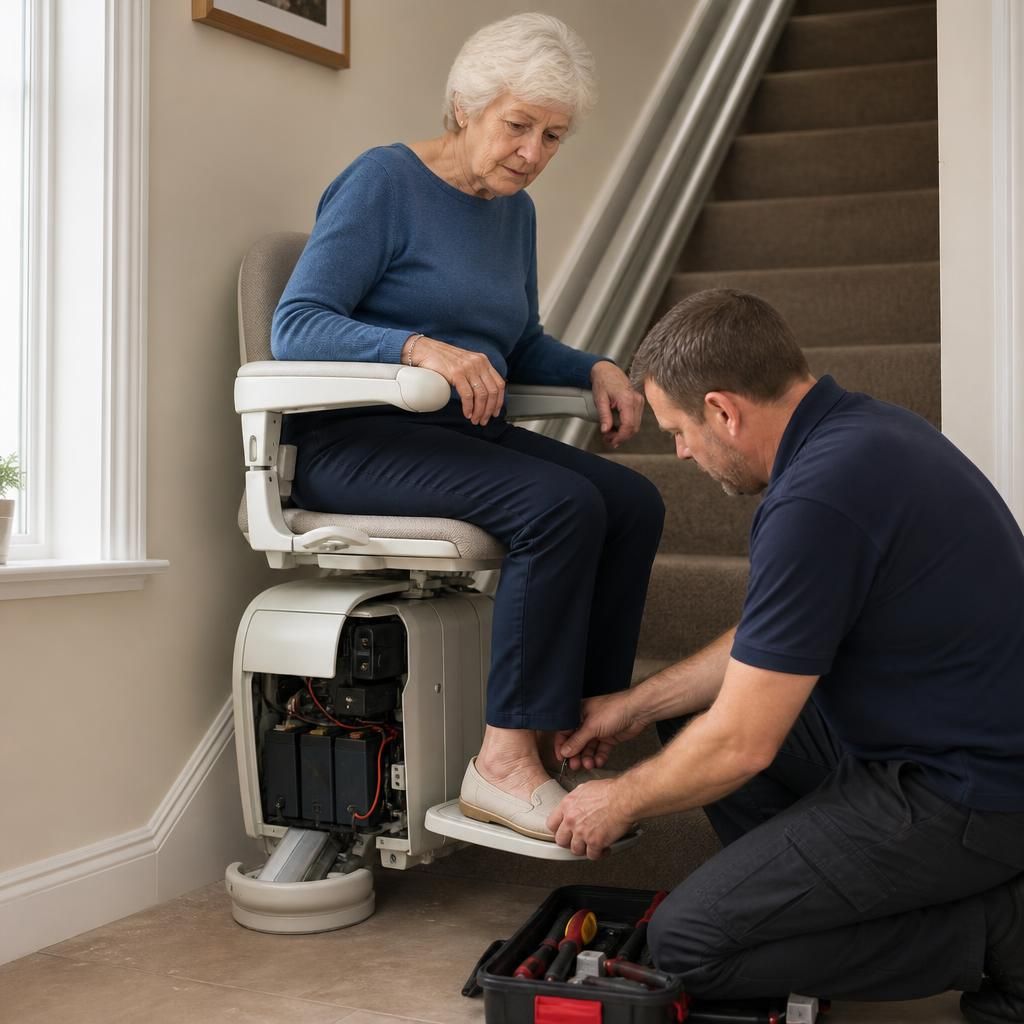
Need help with a stairlift that has stopped working?
If your stairlift has stopped working and the basic checks have not resolved the problem, contact Independent Stairlifts for advice or to arrange a qualified engineer inspection.