
What could be causing my stairlift to move slowly or jerk during operation?
A stairlift may move slowly or jerk because of low or ageing batteries, an obstruction or dirt on the track, worn drive components, or a developing mechanical or electrical fault. Stop using it if the movement is sudden or worsening, check for obvious obstructions and charging issues, and arrange a qualified engineer’s inspection rather than attempting repairs yourself.
Slow or jerky movement usually indicates a power, charging, track, drive or control issue rather than normal operation. Ageing batteries are a common cause, but dirt or an obstruction on the rail, worn drive components, poor charging contact or an electrical fault can produce similar symptoms. If the movement is sudden, worsening or accompanied by unusual noises, stop using the stairlift and arrange an inspection by a qualified engineer.
Low or ageing batteries
Stairlift batteries gradually lose capacity. When they are no longer holding a reliable charge, the stairlift may move more slowly, hesitate under load or jerk during travel. This can be more noticeable when travelling upwards, after the lift has been used repeatedly, or when it has not been left correctly on a charging point.
Check that the stairlift is parked fully on its designated charging point and that the power supply to the charger has not been switched off. Some models have a charging indicator or display that can help identify whether the batteries are receiving power. If the lift works briefly after charging but the problem returns, the batteries may need testing and replacement rather than repeated resetting.
Dirty or obstructed track
Dust, pet hair, grit or an object caught around the rail or drive area can interfere with the carriage and cause uneven movement. Look along the accessible parts of the track for anything visibly obstructing the lift. Remove loose items from the stairs and wipe accessible surfaces with a dry or slightly damp cloth if this is permitted by your operating instructions. Do not put your hands near the drive mechanism, rollers or other moving parts, and do not apply oil or grease unless the manufacturer specifically instructs you to do so.
Worn drive components
The motor, gearbox, drive belt, rack, pinion or rollers may wear over time. Wear can result in a judder, hesitation, changes in speed or a grinding or clicking sound. On a curved stairlift, the problem may be more apparent around bends because the carriage and drive system must follow the shaped rail accurately. These components require professional inspection; adjusting or replacing them yourself can create a safety risk and may damage the lift.
Charging contacts or power supply problems
Dirty, misaligned or damaged charging contacts can prevent the batteries from charging properly. A tripped supply, switched-off socket, loose connection or charger fault can have the same effect. Check only the accessible power connection and confirm that the charger is switched on. Do not remove covers or test internal electrical parts. If the stairlift repeatedly loses power or does not remain charged, it should be checked by an engineer.
Safety sensors, controls or electrical faults
A partially operated safety edge, a seat or swivel mechanism that has not returned to its travelling position, or a fault in the control system can interrupt power to the motor. In some cases, this may feel like hesitation or intermittent movement rather than a complete stop. Make sure the seat, armrests and footrest are in their normal travelling position and that no safety edge is being pressed. If the lift continues to jerk, stop using it rather than repeatedly operating the controls.
Temperature, load and operating conditions
Very cold conditions can temporarily reduce battery performance, particularly on an outdoor stairlift. A heavily loaded lift may also reveal a battery or drive problem that is less noticeable when travelling without additional weight. Always stay within the user and equipment limits provided for your model. Do not carry bulky items that could catch on the rail, obstruct the stairs or alter your position in the seat.
Safe checks you can make
- Release the control and allow the stairlift to stop safely.
- Check for loose objects, dirt or visible obstructions on the stairs and accessible rail.
- Confirm that the lift is parked correctly on its charging point and that the charger has power.
- Check the display, indicator lights or audible warnings and make a note of what they show.
- Ensure the seat, swivel function, armrests and footrest are correctly positioned before a brief test.
- Keep clear of the track and moving parts while the stairlift is operating.
Do not continue making test journeys if the lift jerks, stalls, moves at an inconsistent speed, smells hot, sparks, produces new mechanical noises or shows a fault warning. Do not remove covers, bypass safety switches, adjust the motor or drive system, lubricate the rail without specific instructions, or attempt to change internal batteries or wiring.
When to contact an engineer
Arrange a qualified engineer’s assessment if the problem persists after checking the charging position and obvious obstructions, or if it has started suddenly. Prompt attention is particularly important when the stairlift stops and starts, becomes slower over time, makes a grinding noise, fails to charge, or behaves differently in one section of the track. The engineer can test the batteries under load, inspect the charger and contacts, examine the rail and drive components, and check the safety and control systems.
If you cannot use the stairs safely while the stairlift is unavailable, keep the lift parked in a safe position and follow your usual support arrangements until it has been inspected. A slow or jerking stairlift should not be treated as a condition to work around: it is a sign that the equipment needs an appropriate check before normal use continues.
A stairlift that moves slowly or jerks during travel commonly has batteries that are weak, ageing or not charging correctly. This may be more noticeable when travelling uphill or after repeated use. Check that the lift is parked fully on its charging point and that the charger is switched on, but do not remove covers or test internal wiring.
If the problem continues after the stairlift has been charged, or if it is accompanied by unusual noises, stopping and starting, a burning smell or a fault warning, stop using it. A qualified engineer should test the batteries under load and inspect the charger, contacts and drive system before the stairlift is used again.
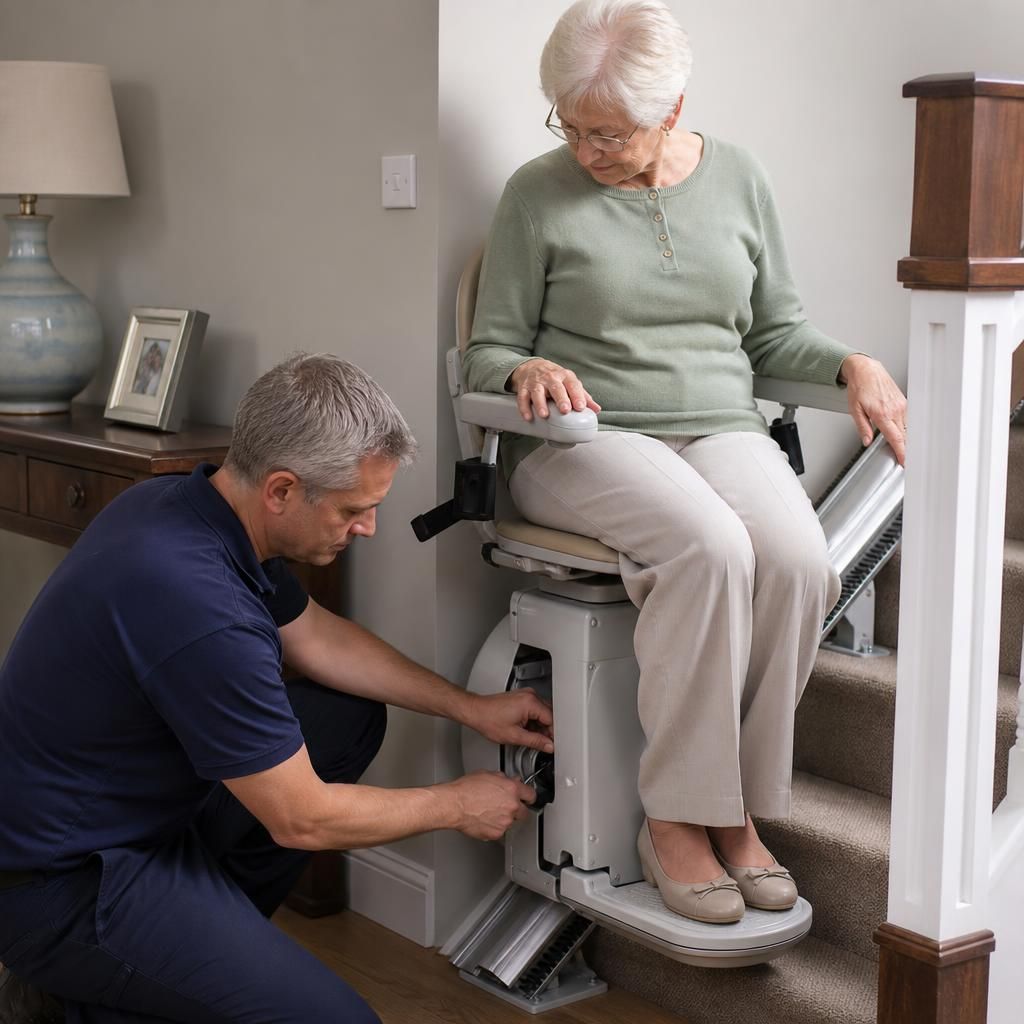
Arrange a Qualified Stairlift Inspection
If your stairlift is moving slowly or jerking, arrange a qualified stairlift inspection before continuing to use it. An engineer can check the batteries, charger, track, drive components and safety systems, and identify the correct repair.