
What should I do if my stairlift makes unusual noises during operation?
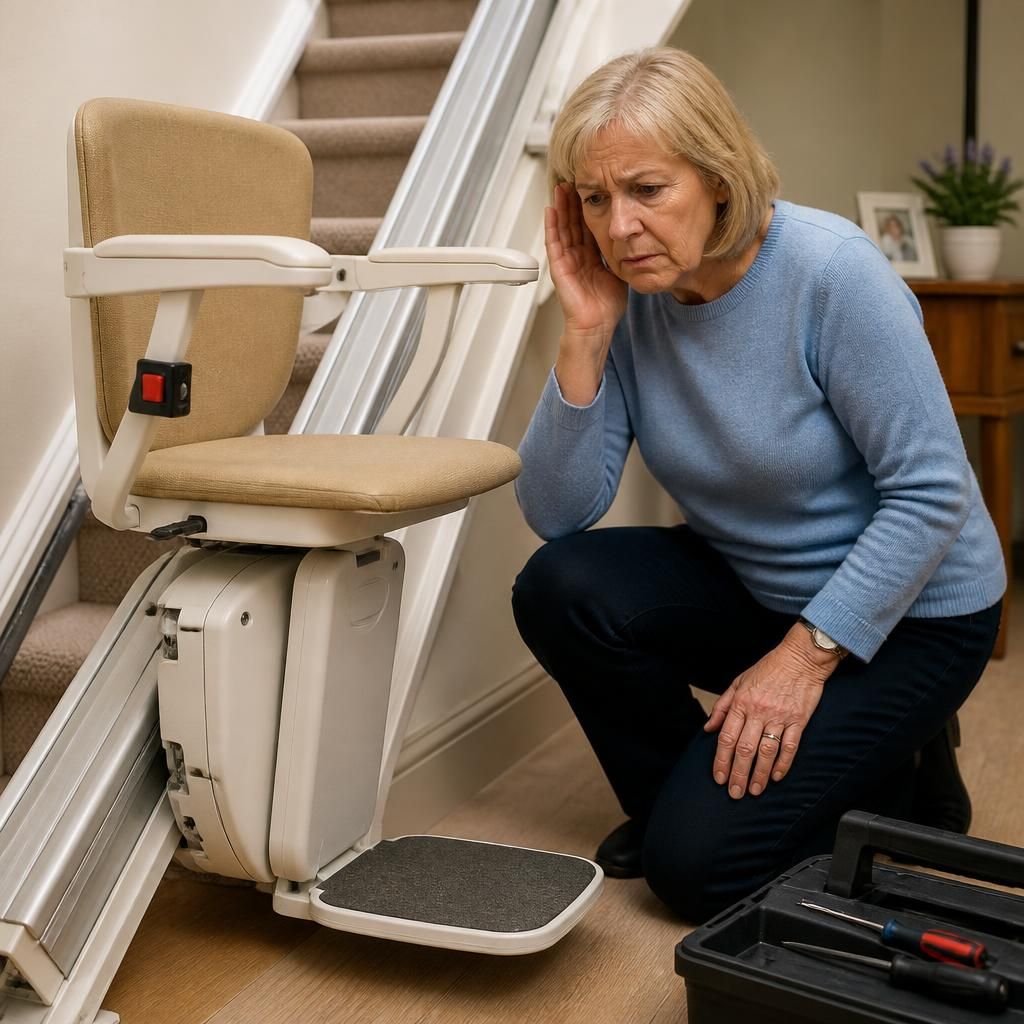
If your stairlift makes unusual noises, stop using it if you hear grinding, scraping, knocking or repeated clicking, and switch it off safely. Check for visible obstructions around the track, seat and footrest, but do not remove covers or attempt repairs; contact Independent Stairlifts for an assessment if the noise continues or the lift’s movement changes.
Unusual stairlift noises should not be ignored, particularly if they are accompanied by jerky movement, reduced speed, stopping, a burning smell or visible damage. Stop the lift safely, keep the passenger seated until it has come to a controlled stop, and switch it off according to the operating instructions. You can check for obvious obstructions, but do not remove covers, lubricate internal parts or continue using the stairlift if the noise persists.
What to do immediately
- Release the control. Allow the stairlift to stop normally rather than trying to overcome the noise by holding the control for longer.
- Assess the situation from a safe position. If you are on the stairs or at a landing, do not attempt to climb around the stairlift while it is moving.
- Switch the stairlift off using its normal on/off or isolation control, if this can be reached safely and your model’s instructions require it.
- Look for simple, visible obstructions. Check the track, footrest, seat area and the space around the carriage for clothing, toys, bags, pet items or other objects. Remove an obstruction only if it is loose, clearly accessible and can be taken away without touching moving or electrical components.
- Contact Independent Stairlifts for advice or an inspection if the noise remains, returns, or is associated with a change in operation.
Do not keep testing the lift if it is grinding, scraping, knocking heavily, juddering, making repeated clicking sounds or producing a burning smell. Continued use can make a mechanical or electrical fault worse and may leave the stairlift stopped in an inconvenient position.
What different noises may indicate
- Grinding or scraping: this can be associated with debris or contact near the track, carriage or drive mechanism. It may also indicate wear in a component. Stop using the lift unless a qualified engineer confirms that it is safe.
- Repeated clicking: occasional clicks may occur when a control, switch or charging connection operates, but repeated clicking during travel can indicate a control, sensor, battery or drive-related issue.
- Knocking or clunking: a loose object, worn mechanical part or problem with the carriage or track may cause a knock. A new or progressively louder clunk needs professional assessment.
- Squeaking or whining: this may come from normal contact between moving parts, dirt around the track or a component that requires servicing. Do not apply household oil or grease, as unsuitable lubrication can attract dirt, affect sensors or damage parts.
- Rattling or vibration: this may point to a loose external fitting, an obstruction or a fault affecting the carriage. Stop the lift if the vibration is strong or the seat no longer travels smoothly.
- Beeping with an unusual sound: the beeping may be a warning linked to charging, a safety sensor, a control position or a fault condition. Note any display message or error code and tell the service team exactly what you heard.
Check the circumstances in which the noise occurs
Before calling, note whether the sound happens when the stairlift starts, stops, travels in one direction, passes a particular point on the track, approaches a landing or returns to its charging position. Also record whether the seat is swivelled, the armrests or footrest are in a different position, and whether the lift has recently been moved, cleaned or affected by a power interruption. This information can help an engineer identify whether the issue is related to the track, drive system, charging equipment, safety sensors or a mechanical fitting.
Only carry out checks described in your stairlift’s user instructions. Keep the track and travel path clear, make sure the seat and footrest are in their normal travelling positions, and check that the stairlift is not being operated against an obstruction. Do not remove the carriage, open electrical covers, adjust the track, tighten hidden fixings or bypass a safety switch. These actions can create a further hazard and may prevent the fault from being diagnosed correctly.
Stop using the stairlift and request urgent assistance if you notice smoke, a burning or electrical smell, sparks, exposed wiring, fluid leakage, a damaged track or seat, a sudden loss of control, severe vibration, or any movement that is different from normal. If someone is left on the stairlift, they should remain seated with the seat belt fastened, follow the available assistance procedure and avoid attempting to climb off on to the stairs unless there is an immediate danger. If there is smoke or fire, follow your household emergency procedure and contact the emergency services.
A stairlift that makes a minor intermittent noise may still need servicing, even if it continues to move. Noises often provide an early indication of wear, contamination, a loose fitting, charging trouble or a developing drive fault. Arrange an assessment rather than waiting for the lift to stop completely. Independent Stairlifts can help determine whether the cause is a simple obstruction, an adjustment or a component requiring repair, and can advise when the stairlift is safe to use again.
Unusual stairlift noises can indicate an obstruction, a loose fitting or developing mechanical or electrical fault, so they should not be ignored. Stop the lift normally and switch it off if the sound continues, particularly if you hear grinding, scraping, heavy knocking, repeated clicking or strong vibration.
From a safe position, check for obvious loose items such as clothing, toys, bags or pet items around the track, carriage, seat and footrest. Only remove an obstruction if it is clearly accessible and does not require contact with moving or electrical parts. Do not open covers, apply household oil or grease, adjust the track or bypass a safety switch. If the noise returns, the lift moves differently, or you notice a burning smell, sparks or exposed wiring, stop using it and contact Independent Stairlifts for an assessment.
Arrange a Stairlift Noise Assessment
If your stairlift is making an unusual noise, contact Independent Stairlifts to arrange an assessment before continuing to use it. Our team can identify the likely cause and advise whether a repair or adjustment is needed.