Safety-first fault assessment
An engineer checks the stairlift’s controls, sensors, rail and seat to identify risks before recommending any repair.

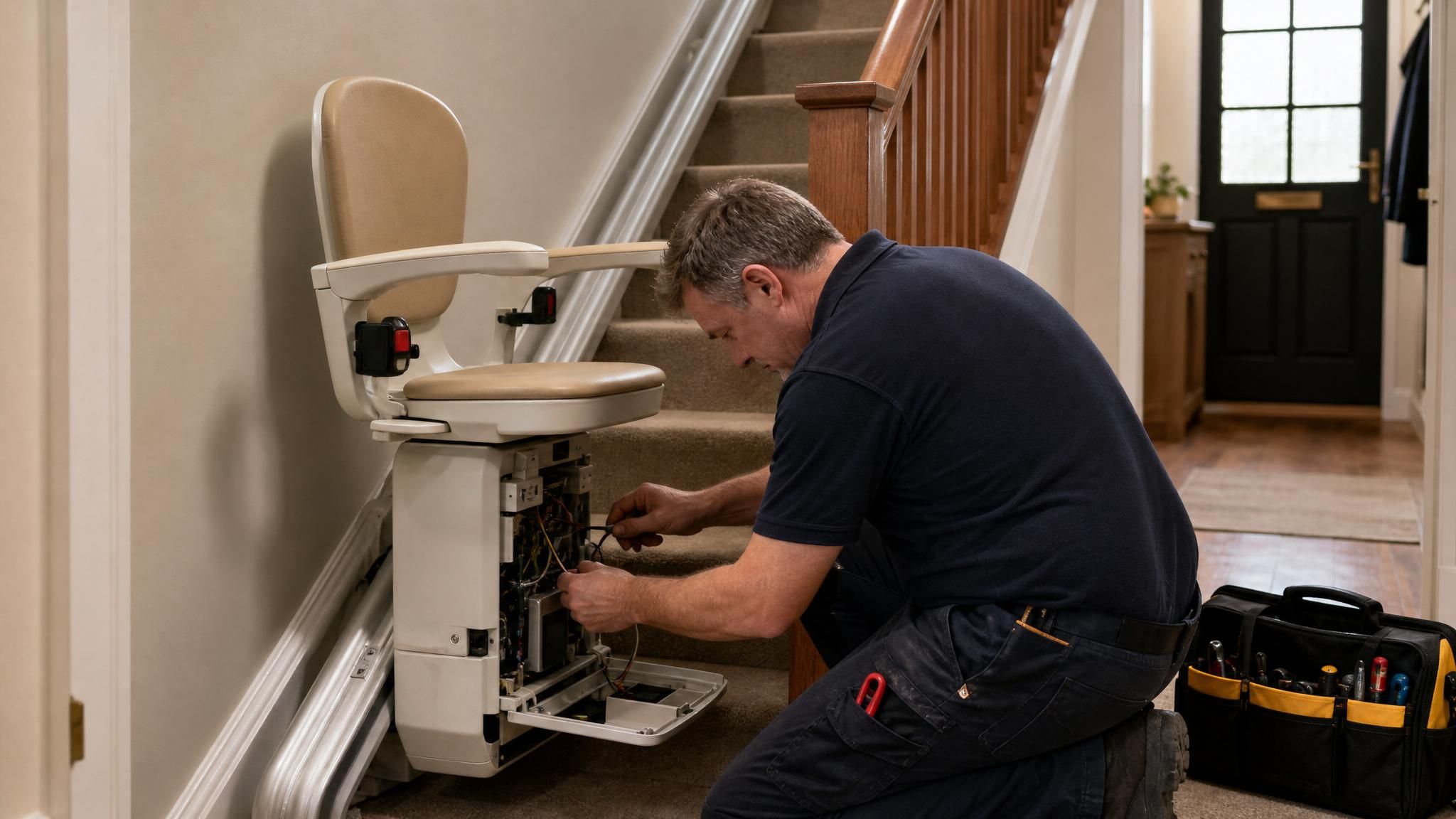
Stairlift repairs and emergency support diagnose and resolve faults that prevent safe movement, including power loss, control problems, unusual noises and charging issues. Switch off the lift if unsafe, then contact a qualified engineer for advice, assessment and repair.
Stairlift repairs and emergency support cover the diagnosis and correction of faults that affect safe operation, including a lift that will not move, stops unexpectedly, makes unusual noises or fails to charge. If the stairlift is unsafe or stranded, stop using it, keep the user secure and contact a qualified engineer for advice.
Our repair assessment identifies the fault, checks the stairlift’s safety systems and explains the recommended work before repairs proceed. The sections below explain what to do during an emergency, how repair costs and parts are handled, and what aftercare you can expect following an installation or service visit.
A stairlift that stops between floors should be treated as unavailable until it has been checked by a qualified engineer. Keep the user seated, avoid forcing the controls and contact us for repair advice.
Keep the stairlift switched off if there is a burning smell, smoke, exposed wiring or any other immediate hazard. If the user is stranded, provide reassurance without attempting to lift or move them manually; contact a carer or the emergency services if there is an urgent risk to their health. When safe, note any warning lights, sounds or recent changes in operation so the engineer can assess the fault more efficiently.
Repair work begins with a safety assessment rather than replacing parts immediately. The engineer checks the stairlift, its controls, charging system and relevant safety features before recommending the next step.
The engineer will identify the cause of the fault, explain whether the lift can remain in use and advise if it should be isolated. After a repair, the stairlift is tested for reliable movement, stopping, charging and operation of the controls that have been affected. Do not use the lift again if the fault returns or it behaves differently from normal operation.
A repair assessment establishes whether the problem relates to power, batteries, controls, the track, sensors or another component. It also helps distinguish a repairable fault from equipment that may need more extensive work.
The engineer will inspect the reported symptoms and the stairlift’s condition, then explain the recommended repair in practical terms. Where further work or parts are needed, you should be told what is required and why before the work proceeds. This gives you the information needed to decide whether to repair, monitor or consider an alternative solution.
The cost of a stairlift repair depends on the fault, the parts required and the time involved. You should receive clear information about the proposed work before chargeable repairs are carried out.
Ask the engineer to confirm the labour, parts and any follow-up requirements that apply to your repair. Replacement components should be suitable for the stairlift model and installed in line with the manufacturer’s requirements where applicable. If the repair is not practical or further diagnosis is needed, the options and likely implications should be explained rather than assuming that replacement work is the only answer.
After a repair or emergency visit, correct use and follow-up support help identify recurring faults early. Any warranty or guarantee applying to the work should be confirmed in writing at the time of repair.
Ask the engineer to show the user or carer how to operate the stairlift safely and how to respond if the same symptom appears again. Keep the repair documentation and contact details available, and report a returning fault promptly instead of repeatedly resetting the lift. The paperwork should state any parts or labour cover provided, its conditions and who to contact if the repair needs further attention.
Emergency stairlift repairs restore safe operation after power loss, failed charging, control problems or unusual noises. An engineer assesses the chair, rail, batteries and safety controls before recommending adjustment, replacement parts or testing.
If the lift stops, keep the passenger seated, avoid forcing controls and call for advice. Report symptoms promptly so repairs can be arranged before the fault worsens.
An engineer checks the stairlift’s controls, sensors, rail and seat to identify risks before recommending any repair.
Systematic testing helps distinguish electrical, mechanical and charging faults so the correct repair is carried out.
Battery condition, charging contacts and the power supply are examined when the stairlift loses charge or stops unexpectedly.
Repairs can include adjustment, component replacement or corrective work selected for the stairlift and its installation.
You receive an explanation of the fault, the recommended work and any further action needed before proceeding.
The stairlift is tested after the repair to confirm reliable movement and correct operation of its safety controls.
Independent Stairlifts supports stairlift repairs with practical fault-finding and UK-wide coverage. Engineers can investigate movement, charging, battery and safety-control problems, explain repair options clearly, and arrange appropriate aftercare for domestic users and their families.
Practical emergency guidance
When a stairlift stops or becomes unsafe, the team can help establish what to do before an engineer attends. This may include switching off the lift, keeping the user secure and avoiding actions that could worsen the fault.
Fault-finding across key systems
Repair assessments cover the components that commonly affect operation, including batteries, charging points, controls, switches, sensors and the drive mechanism. Identifying the cause helps avoid replacing parts unnecessarily.
Repairs matched to the stairlift
Engineers assess the make, model, age and condition of the lift before recommending work. This is important where replacement parts, compatibility or the condition of an older stairlift need to be considered together.
Clear repair recommendations
The condition of the stairlift and the proposed repair are explained before work proceeds. You can ask about the fault, required parts and any practical alternatives, making it easier to decide whether repair or replacement is appropriate.
Support for varied stairlift settings
The service can address faults in straight, curved and outdoor stairlift installations, where the layout and exposure to weather can affect access, controls and mechanical components.
UK-wide service coverage
Independent Stairlifts supports customers across the UK, providing a route to professional repair advice whether the stairlift is in a private home, supporting an older relative or part of a wider accessibility arrangement.
Emergency stairlift repairs address faults that leave the lift stopped, unsafe or unable to charge. Common causes include a flat or failing battery, loss of mains power, an activated safety sensor, a control fault or a mechanical problem. Do not force the lift or continue using it if it is making unusual noises, moving unevenly or stopping unexpectedly.
If the stairlift stops with someone on the stairs, keep the user seated and secure, switch off the lift if this can be done safely, and use the emergency lowering or manual release procedure only if you have been shown how. Check that the charger is connected and that the power supply has not tripped, but do not remove covers or attempt electrical repairs. Contact a qualified stairlift engineer and explain what happened, including any warning lights or sounds.
An engineer should assess the fault, test the batteries, charger, controls and safety systems, and explain the required repair before work begins. Independent Stairlifts can advise on the next practical step and arrange appropriate support across the UK. Keep the stairlift switched off until it has been checked if there is any doubt about its safety.
Emergency stairlift repairs restore safe operation when a lift will not move, stops unexpectedly, loses power or develops a control or charging fault. Keep the user seated and secure, stop using the lift if its movement or sound seems unsafe, and contact a qualified engineer.
An engineer should inspect the batteries, charger, controls, safety edges and drive system before recommending a repair. They can identify whether a simple power or charging issue is involved, or whether parts require replacement. Do not remove covers, bypass safety features or attempt electrical work yourself; these actions can increase risk and may affect future support.
After the fault is assessed, you should receive a clear explanation of the work required, any replacement parts and the expected next steps. Independent Stairlifts can help arrange practical repair support across the UK, so contact the team promptly if your stairlift is not operating safely.
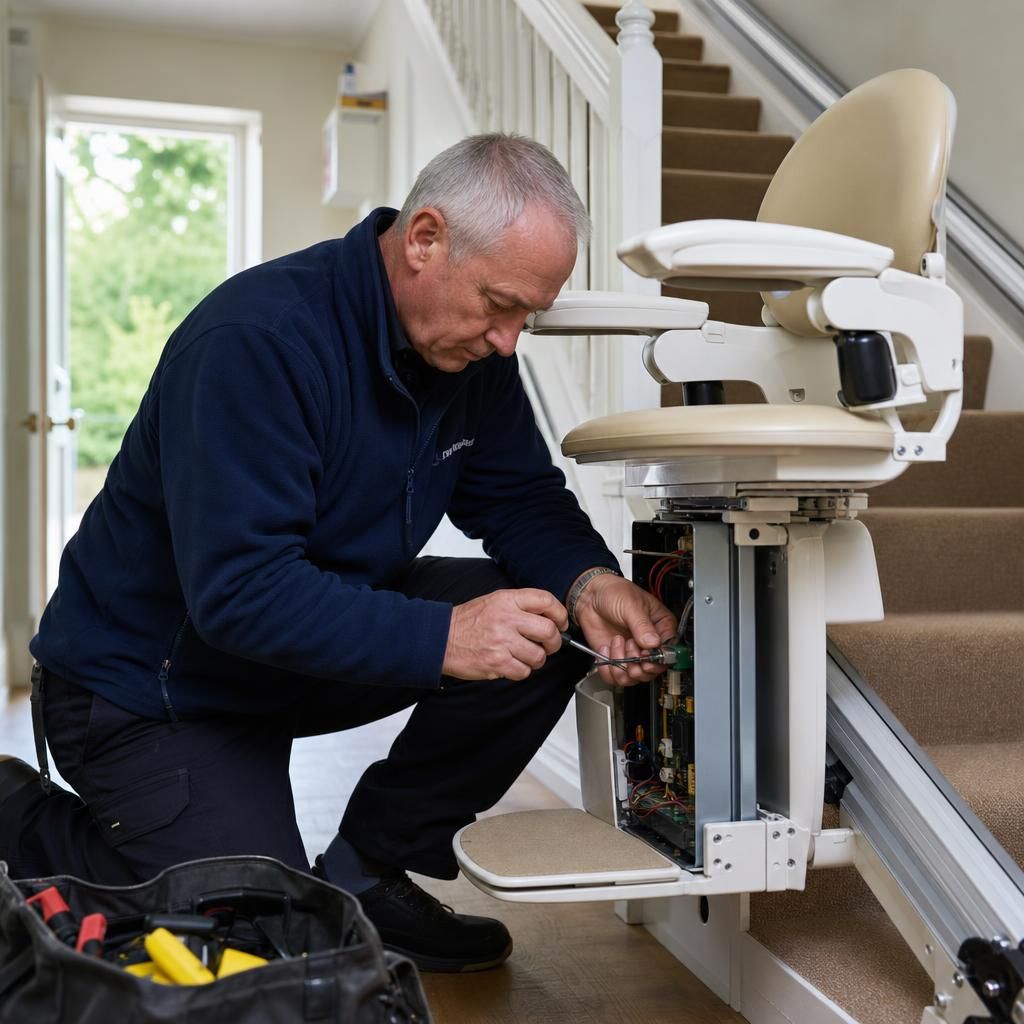
To reset a Stannah stairlift, locate the reset button on the carriage, press it firmly, then cycle the unit's power off and back on. This resolves minor glitches.
Check the power supply and ensure the stairlift is securely plugged in. Inspect any visible cables for damage and ensure the emergency stop switch isn't activated.
Mechanical faults in stairlifts often involve track obstructions, worn drive gears, or loose belts. These issues can usually be resolved through thorough inspection, tightening, lubrication, or replacing worn components by a technician.
First, check the stairlift’s power status. If all is well, replace the remote batteries and verify the battery contacts are clean. If issues persist, consult an expert for further diagnostics.
Unusual noises in your Bruno SRE 3000 stairlift can indicate mechanical wear or misalignment. Schedule an inspection promptly to prevent further damage and ensure safe operation.
Before any repair goes ahead, the engineer should explain the fault, recommended work, parts and costs clearly. You can then arrange suitable support with confidence, knowing safety checks and applicable guarantees form part of the aftercare.
Contact UsEmergency stairlift repairs offer rapid solutions to restore functionality, minimising downtime and ensuring safety. Our expert team prioritises swift and effective service, allowing continuous accessibility in your home.
A sudden halt may result from a temporary power issue, an obstacle on the track, or internal mechanical faults requiring professional inspection and repair to ensure safe operation.
Unusual noises or vibrations often indicate a potential mechanical issue. Seek professional assistance promptly for a thorough inspection to prevent further damage and ensure your stairlift operates smoothly and safely.
Stairlifts should undergo professional maintenance every 6 to 12 months to ensure optimal performance and prevent emergency breakdowns, addressing wear and tear, mechanical issues, and software updates.
Ensure the stairlift is powered, check for any obstructions, and attempt to reset it. If unresponsive, contact a professional technician for immediate assessment and potential repair to restore functionality.
Is your stairlift not moving or operating safely? Contact Independent Stairlifts to arrange qualified repair support, fault diagnosis and clear advice on the next steps. Keep the lift switched off until an engineer confirms it is safe to use.
Contact Us