
What are the common mechanical faults that can occur in stairlifts, and how can they be resolved?
Common mechanical stairlift faults include worn drive components, obstructions on the rail, loose fixings, damaged safety sensors, and problems with the seat, armrests or swivel mechanism. Remove any visible obstruction and check that the seat and safety features are correctly positioned, but arrange a professional inspection for persistent faults, unusual noises, juddering or any issue requiring dismantling or replacement parts.
Common mechanical stairlift faults include worn or damaged drive components, obstruction or damage to the rail, loose fixings, worn rollers, and problems with the seat, swivel, armrests or footrest. Some faults can be resolved by removing a visible obstruction and checking that the stairlift is correctly positioned, but persistent noise, juddering, slipping, uneven movement or any fault requiring dismantling should be assessed and repaired by a qualified stairlift engineer.
Before checking the stairlift
Stop using the stairlift if it is behaving unusually, making a grinding or knocking sound, moving unevenly, or stopping in an unsafe position. Keep the user seated until the lift has stopped securely and follow the manufacturer’s instructions for leaving the stairlift if it cannot be moved. Do not remove covers, work beneath the carriage, adjust the drive system or attempt to bypass a safety feature. Mechanical parts can move unexpectedly, and an incorrect adjustment may cause further damage or make the stairlift unsafe.
If the stairlift has stopped because of a simple obstruction, switch it off as instructed in the user manual before checking the area. Keep hands, clothing and tools away from the rail, drive mechanism and moving parts.
Worn or damaged drive components
The carriage is moved along the rail by a drive mechanism that may use a gear, rack, chain or another manufacturer-specific arrangement. Wear in these parts can cause the stairlift to move slowly, jerk during travel, slip, stop under load or produce a repetitive clicking, grinding or whining noise. A worn drive component may also leave visible debris or appear to engage unevenly with the rail.
There is no safe user adjustment for most drive faults. An engineer will inspect the drive system, motor mounting, gearbox, gear or rack and associated fixings. Depending on the condition, the solution may involve cleaning, lubrication where specified by the manufacturer, tightening a mounting point or replacing a worn component. A drive mechanism that has been allowed to deteriorate may damage other parts, so arrange an inspection rather than continuing to operate the lift.
Obstructions, contamination or damage on the rail
Small objects, carpet fibres, pet hair and accumulated dirt can interfere with the carriage or its rollers. An obstruction may cause the stairlift to stop at a particular point, scrape against the rail or make a knocking sound as it passes. Damage to the rail, such as a bent section or a loose joint, can produce similar symptoms.
With the stairlift stopped and switched off as directed, look along the accessible parts of the rail for objects, loose items or anything that has fallen into its path. Remove only an object that is clearly accessible without reaching into the mechanism. Do not force the carriage past a blockage, straighten the rail yourself or apply general-purpose oil. If the rail is damaged, contaminated internally or still causes a problem after a visible obstruction has been removed, professional attention is required.
Worn or misaligned rollers
Rollers support and guide the carriage as it travels. If they become worn, damaged or misaligned, the stairlift may wobble, rock from side to side, vibrate or produce a rumbling sound. Movement can become more noticeable on bends or when the user’s weight shifts.
Rollers need to be inspected for wear and correct alignment. Replacing or adjusting them normally requires access to the carriage and should not be attempted by the user. Continued use can place additional strain on the rail and drive system, particularly if the carriage is visibly leaning or the movement is getting worse.
Loose fixings or mounting brackets
Stairlift rails and brackets are secured to the stairs or structure of the staircase. Over time, vibration, repeated use or movement in the surrounding structure can cause a fixing to loosen. Warning signs include rattling, movement in the rail, a change in the stairlift’s alignment or a new noise when the carriage passes a particular point.
Do not assume that tightening an accessible screw will resolve the problem. Each fixing contributes to the stability and alignment of the installation, and tightening the wrong part may damage the rail or conceal a more serious issue. An engineer should check the brackets, fixings, rail alignment and the condition of the supporting stairs before carrying out any adjustment.
Seat, swivel and armrest faults
A seat that does not lock firmly, a swivel mechanism that will not return to its travel position, or an armrest that is loose can prevent the stairlift from operating. These features are designed to keep the user correctly positioned and may be linked to safety switches. The stairlift may therefore remain stationary even though the drive system itself is working correctly.
Check that the seat is fully returned to its normal travel position and that the armrests are lowered and secure. If the seat swivels at the top or bottom of the stairs, make sure it has locked into the position specified in the instructions. Do not force the swivel seat, operate it while it is between positions or tape down a switch. A damaged latch, hinge, interlock or swivel mechanism needs examination and possible replacement by an engineer.
Footrest and safety-edge damage
The footrest and its edges can be struck by furniture, skirting boards, steps or objects left on the staircase. Damage may cause the footrest to flex, catch against the stairs or activate a safety sensor. The stairlift may stop immediately or refuse to move if the sensor detects resistance.
Remove any item that is clearly blocking the footrest and check that the footrest is not visibly bent or trapped. Never continue using the stairlift if the footrest is loose, cracked or catching against the staircase. An engineer can check the footrest frame, hinges, safety edges and associated mechanism, then realign or replace damaged parts.
Safety sensors and mechanical interlocks
Although a sensor may involve an electrical switch, it is often activated by a mechanical safety edge, seat position, swivel lock, armrest or obstruction. A stairlift that stops when it meets resistance is usually responding to its safety system rather than suffering a drive failure. Repeated stopping at the same point may indicate a misaligned edge, a worn actuator or a physical obstruction.
Check the user-operable parts are in their normal locked positions and remove only visible obstructions. Do not hold a safety edge in, bypass an interlock or continue resetting the stairlift to make it run. If the safety feature activates without an obvious cause, the stairlift should be inspected before further use.
When to arrange a professional repair
Contact Independent Stairlifts for an assessment if the fault returns after a simple obstruction has been removed, if the stairlift makes unusual noises or vibrations, or if it moves more slowly, unevenly or unpredictably. Professional attention is also needed when:
- the rail, brackets, seat, footrest or carriage appears loose or damaged;
- the stairlift stops at the same point during travel;
- the seat does not lock securely or the swivel mechanism is stiff;
- the carriage slips, judders or struggles on bends;
- there is a burning smell, visible damage or fluid leakage; or
- a safety sensor or interlock appears to be operating incorrectly.
When reporting the fault, describe what the stairlift was doing, where it stopped, whether the problem occurs in one direction or both, and any sounds or recent changes you have noticed. If it is safe to do so, note whether the problem occurs with the seat, armrests, swivel or footrest in a particular position. This information helps the engineer bring suitable parts and reduces the time needed to identify the cause.
Preventing mechanical faults
Keep the staircase and rail clear, avoid placing objects on or against the stairlift, and use the seat, armrests, footrest and swivel mechanism as instructed. Do not use unsuitable lubricants or attempt to modify the installation. Regular servicing allows an engineer to check drive components, rollers, fixings, safety edges and moving mechanisms before wear develops into a breakdown. If you notice a new noise or change in movement, report it promptly rather than waiting for the stairlift to stop completely.
Mechanical stairlift faults affect the drive system, rail, rollers, fixings, seat or safety mechanisms. Common warning signs include grinding or knocking noises, juddering, uneven movement, wobbling, slipping, or stopping at the same point on the stairs.
Switch the stairlift off as instructed and remove only any clearly visible obstruction that can be reached safely. Do not dismantle the carriage, force the lift past a blockage, tighten structural fixings or bypass a safety switch. If the fault remains, returns, or involves a loose seat, damaged footrest, unusual noise or unpredictable movement, stop using the stairlift and arrange a professional inspection. An engineer can identify worn components, check alignment and replace or adjust parts safely.
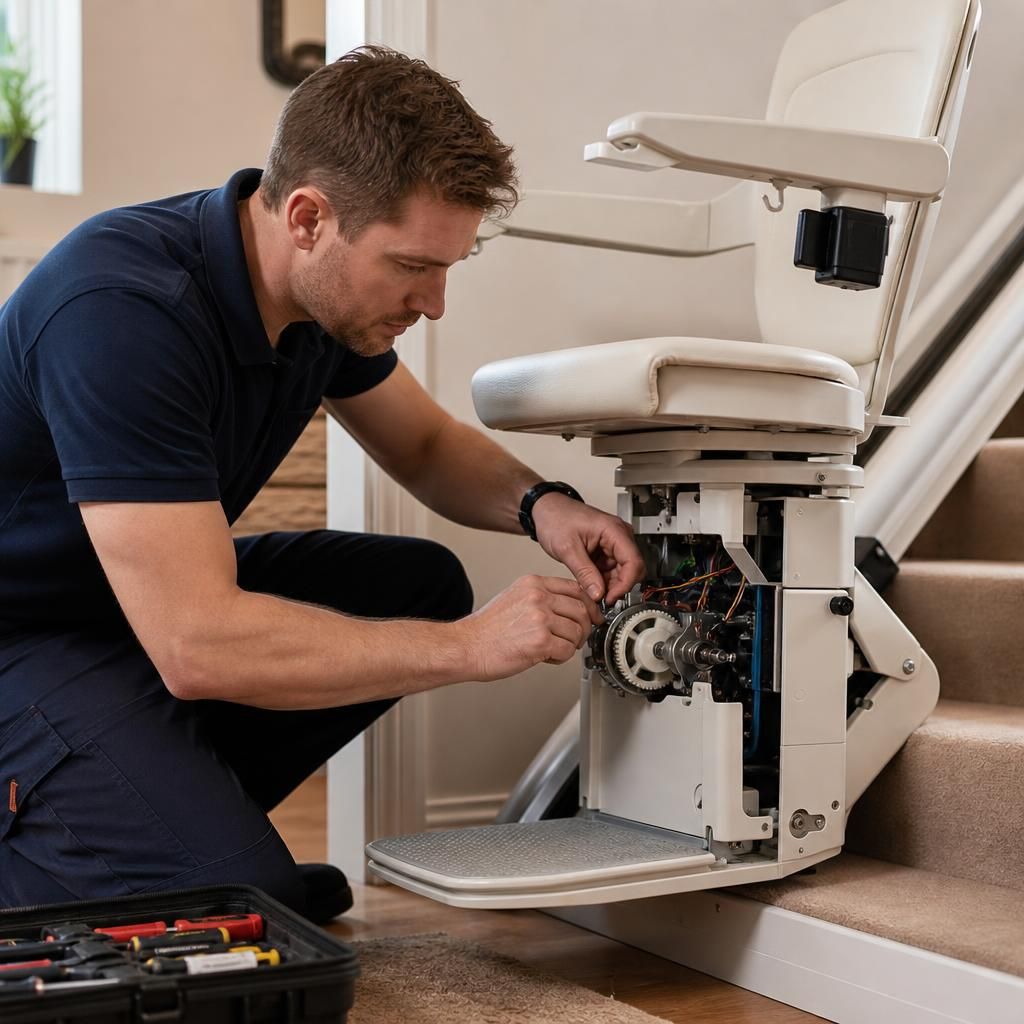
Arrange a Professional Stairlift Repair Assessment
If your stairlift is making unusual noises, juddering, stopping repeatedly or showing any mechanical fault, contact Independent Stairlifts to arrange a professional repair assessment. Our engineer can identify the cause and safely repair or replace the affected components.