
How often should stairlifts undergo maintenance to prevent emergency breakdowns?
Most stairlifts should have a professional maintenance service at least once a year, or as often as the manufacturer recommends. Arrange an earlier check if the lift is heavily used, older, exposed to demanding conditions, or showing changes such as unusual noises, jerky movement or reduced battery performance.
Most stairlifts should receive a professional maintenance service at least once a year, or at the interval specified by the manufacturer. Arrange a service sooner if the lift is heavily used, older, installed outdoors, exposed to dust or damp, or showing changes such as unusual noises, jerky movement, stopping, reduced speed or weaker battery performance. Regular servicing helps identify wear before it develops into a breakdown, but it cannot remove the need for everyday checks and prompt repairs.
Why regular maintenance matters
A stairlift combines a powered motor, drive mechanism, batteries, charging equipment, safety sensors and moving track or rail components. Wear in one part can affect the lift’s movement, stopping distance or ability to charge correctly. During a planned service, an engineer can inspect and test these systems under controlled conditions rather than waiting until the stairlift fails during use.
Maintenance also provides an opportunity to identify faults that may not yet be obvious. For example, a battery can appear to work normally but hold less charge than before, while a gradual increase in operating noise may indicate wear or contamination in the drive system. Addressing these signs early is usually more practical than dealing with an emergency call-out and an unusable lift.
What determines the appropriate service interval?
- Manufacturer guidance: The operating and maintenance instructions should take priority. Different models and drive systems can have different servicing requirements.
- Level of use: A lift used several times a day may need closer monitoring than one used occasionally. Frequent journeys increase battery cycling and mechanical wear.
- Age and condition: Older stairlifts may require more frequent inspection, particularly if replacement parts are becoming worn or the equipment has previously needed repairs.
- Installation environment: Outdoor stairlifts and lifts in damp, dusty or particularly cold conditions can need additional attention. Moisture and debris may affect electrical connections, sensors and moving components.
- Usage pattern: Long periods without use can also affect a stairlift, especially its batteries. A lift that is rarely used should still remain connected to its charger as instructed.
There is no single interval that is suitable for every installation. An engineer can recommend a suitable maintenance plan after considering the model, age, usage and environment.
What a professional service normally includes
A service should be more than a visual inspection. The engineer will normally check the track or rail, drive system, carriage, seat, armrests, footplate, swivel mechanism, safety sensors, control switches, remote controls, charging points and batteries. They may clean relevant components, tighten or adjust parts where appropriate, test the lift through its full travel and confirm that safety features operate correctly.
The engineer should also look for worn rollers, damaged wiring, loose connections, obstruction risks and signs of corrosion. Battery performance and charging behaviour are particularly important because a stairlift may stop away from its charging point if its batteries are no longer holding sufficient capacity. Any findings and recommended repairs should be recorded so that deterioration can be monitored over time.
Checks you can make between services
Routine user checks do not replace professional maintenance, but they can help identify a developing problem. Keep the track and the area around the stairlift clear of clothing, bags, toys and other obstructions. Check that the lift is parked at a charging point when not in use, if this is how the model is designed to charge. Keep the seat, controls and footplate clean and report any visible damage.
Pay attention to changes in operation, including hesitation, jolting, unusual sounds, vibration, intermittent stopping, a warning light, a beeping alert or a battery that appears to discharge quickly. Do not apply oil or dismantle covers unless the manufacturer’s instructions specifically allow it. Incorrect lubrication or attempts to adjust electrical and drive components can cause further damage and may create a safety risk.
When to arrange an earlier inspection
Contact a qualified stairlift engineer promptly if the lift stops unexpectedly, stalls partway through its journey, repeatedly trips a safety sensor, fails to charge, smells of overheating, shows exposed wiring or makes a new grinding, clicking or squealing noise. Do not continue using it if movement is unsafe or the fault is worsening. If the lift stops with someone on the stairs, follow the emergency procedure supplied with the equipment and obtain assistance rather than attempting to move the carriage manually.
A planned service is not a substitute for repairing an active fault. Likewise, a stairlift that has passed a recent service should still be reported if its behaviour changes afterwards. Keeping a record of service visits, battery replacements and recurring symptoms can help the engineer diagnose faults more quickly and decide whether adjustment, repair or replacement is appropriate.
For most domestic stairlifts, annual professional maintenance combined with sensible user checks provides a reasonable baseline. The manufacturer’s instructions, the lift’s condition and the advice given after inspection should determine whether a shorter interval is more suitable.
Most stairlifts need a professional maintenance service at least once a year, although the correct interval depends on the manufacturer’s guidance, how often the lift is used and its installation environment. A lift used several times a day, installed outdoors or showing signs of wear may need an earlier inspection.
Between services, keep the rail and surrounding stairs clear, leave the lift on its charger as instructed and report changes such as jerky movement, unusual noises, repeated stopping or reduced battery performance. These checks can identify developing faults, but they do not replace professional servicing. Arrange an earlier inspection if the stairlift is not charging, stops during travel, smells hot or has exposed wiring.
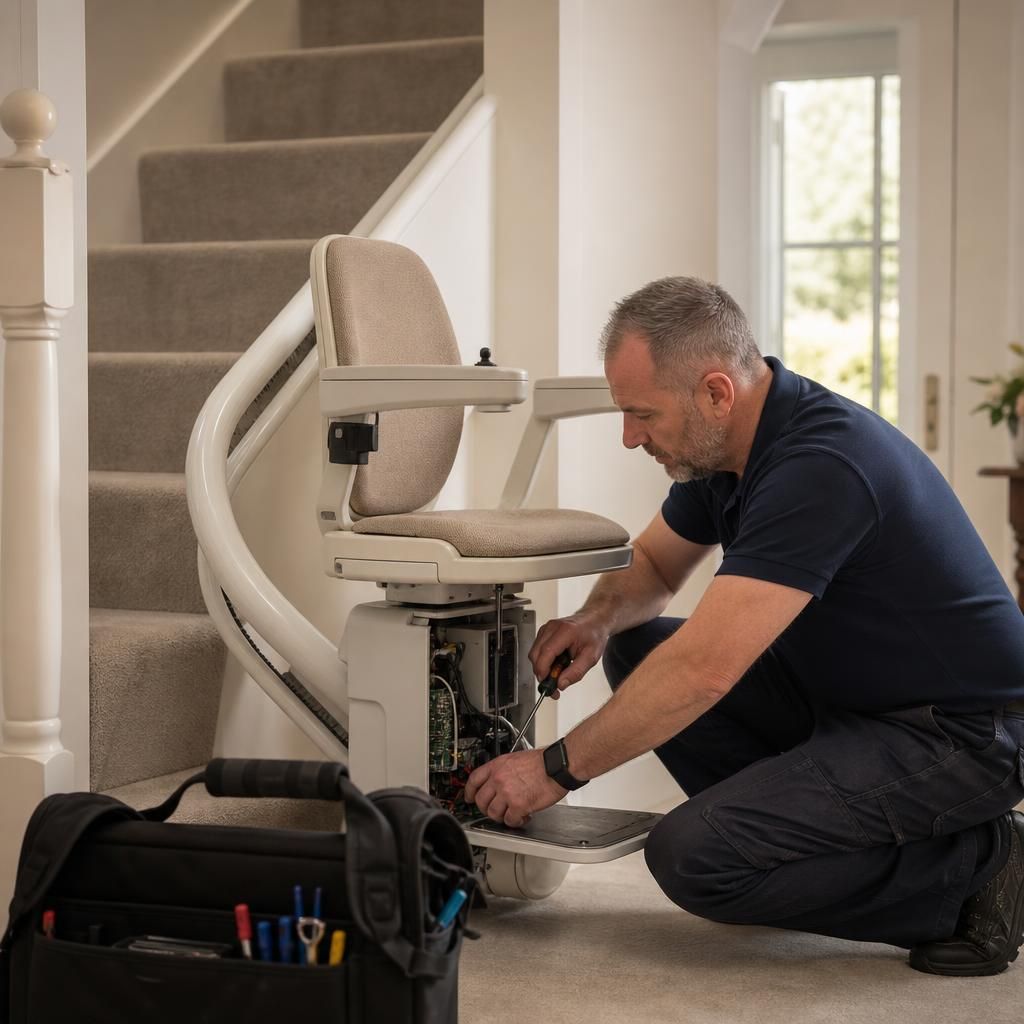
Arrange Your Stairlift Maintenance Service
If your stairlift is due for its annual service, or you have noticed changes in its operation, arrange a maintenance inspection with our team. We can assess the lift and advise whether servicing, repair or replacement parts are needed.