
What does it mean if my Bruno SRE 3000 stairlift makes unusual noises during operation?
Unusual noises from a Bruno SRE 3000 stairlift can indicate debris or a lack of lubrication on the rail, wear in the drive or carriage components, or an electrical or mechanical fault. Stop using the lift if the noise is sudden, loud, worsening or accompanied by jolting, and arrange a professional inspection rather than attempting repairs yourself.
A Bruno SRE 3000 stairlift making an unusual noise may have debris on the rail, insufficient or unsuitable lubrication, a worn drive wheel or carriage component, or an electrical or mechanical fault. A brief, familiar motor or charging sound can be normal, but a new, loud, repetitive or worsening noise should be investigated. Stop using the stairlift if the noise is accompanied by jolting, slipping, burning smells, smoke, loss of power or uncontrolled movement, and arrange a professional inspection.
Identify when the noise occurs. Note whether it happens when the lift starts, while it is travelling, when it stops, during a turn, or when the seat or armrests are folded. Also note whether the sound comes from the motor and carriage, the rail, the seat, or the charging area. This information can help an engineer distinguish between a drive problem, a carriage or roller issue, an obstruction, and an electrical fault.
- Squeaking or squealing: this can be caused by dirt on the rail, dry contact points, or wear in rollers, guides or other moving parts. Do not apply household oil, grease or cleaning products unless the Bruno instructions specifically permit them, as the wrong product can attract dirt or affect the drive system.
- Grinding, scraping or crunching: this is more concerning and may indicate a worn drive component, damaged guide or roller, an obstruction, or misalignment. Stop using the lift rather than continuing to test it, particularly if the sound is getting louder.
- Clicking, clunking or knocking: a single click may occur as a control or switching component operates, but repeated clicking or a heavy knock during travel can indicate looseness, wear, a problem with the carriage, or an issue as the lift starts and stops.
- Whining or a change in motor pitch: this may relate to the motor, gearbox, drive wheel, battery condition or charging system. If the lift is also moving more slowly, stopping, or struggling on the stairs, professional testing is needed.
- Vibration or rattling: vibration can result from a loose trim panel, an obstruction, worn rollers or a drive problem. A stairlift should not shake noticeably during normal travel, especially where the vibration is new or becomes worse under load.
- Beeping or repeated warning tones: these may indicate that the lift is not correctly parked, the key switch or safety sensor is affected, the batteries are not charging, or a safety edge has detected an obstruction. The meaning depends on the sound pattern and the condition of the lift.
Safe checks you can make at home
- Remove obvious items from the stairway and check that clothing, bags, pets or other objects are not touching the carriage, footrest or safety edges.
- With the lift switched off and parked safely, look along the visible rail for dust, grit or an object caught in its path. Do not reach into the carriage, drive mechanism or electrical housing.
- Check that the stairlift is fully parked at its charging point and that the charger is connected to the mains. If your model has a visible power or charging indicator, note whether it shows the usual status.
- Check that the seat, armrests and footrest are in their normal travel position and that nothing is pressing a safety sensor.
- Try the lift only if the sound is minor, the lift is otherwise operating normally and there is no sign of damage or danger. If the noise returns, stop the test and report it.
Do not remove covers, adjust the rail, tighten internal components, bypass a safety switch or continue travelling to see whether the noise clears. Do not use the stairlift if it is jerking, stopping unexpectedly, moving unevenly, showing exposed wiring or producing a burning smell. If it stops on the stairs, follow the user instructions for your Bruno SRE 3000 and remain seated with the safety belt fastened while seeking assistance, unless there is an immediate danger that requires you to leave.
An engineer will normally assess the rail and carriage, drive wheel, rollers, gearbox, motor, batteries, charging points, safety sensors and electrical connections. They may also check for wear, alignment and correct braking. A repair may involve cleaning or replacing a worn component, correcting an obstruction or connection, servicing the drive system, or replacing batteries. The correct remedy cannot be confirmed from the noise alone, so avoid ordering parts based only on a description.
When contacting Independent Stairlifts, provide the stairlift model, where the noise occurs, how long it has been present, whether it happens in one direction or both, and whether the lift is slow, jerky or failing to charge. A short recording can help if it can be made safely from a distance; never place a phone or hand near moving parts. Prompt reporting is particularly important where the sound is sudden, accompanied by a change in performance, or occurs after an impact, spill or electrical problem.
Regular servicing can identify wear and charging problems before they develop into a breakdown, but it does not make a new noise safe to ignore. If you are uncertain whether the sound is normal for your Bruno SRE 3000, stop using it and arrange professional advice.
Unusual noises from a Bruno SRE 3000 stairlift can indicate debris, worn carriage or drive components, or an electrical fault. A new grinding, scraping, repeated knocking, loud squealing or worsening motor noise is not something to ignore, particularly if the lift is also jerking, slowing down or stopping unexpectedly.
Stop using the stairlift if the noise is accompanied by vibration, slipping, a burning smell, smoke or uncontrolled movement. From a safe position, check for obvious objects, clothing or debris near the visible rail, footrest and safety edges, but do not remove covers, reach into the carriage or apply household oil. Note when the sound occurs and arrange a professional inspection so the rail, rollers, drive system, batteries and safety components can be checked correctly.
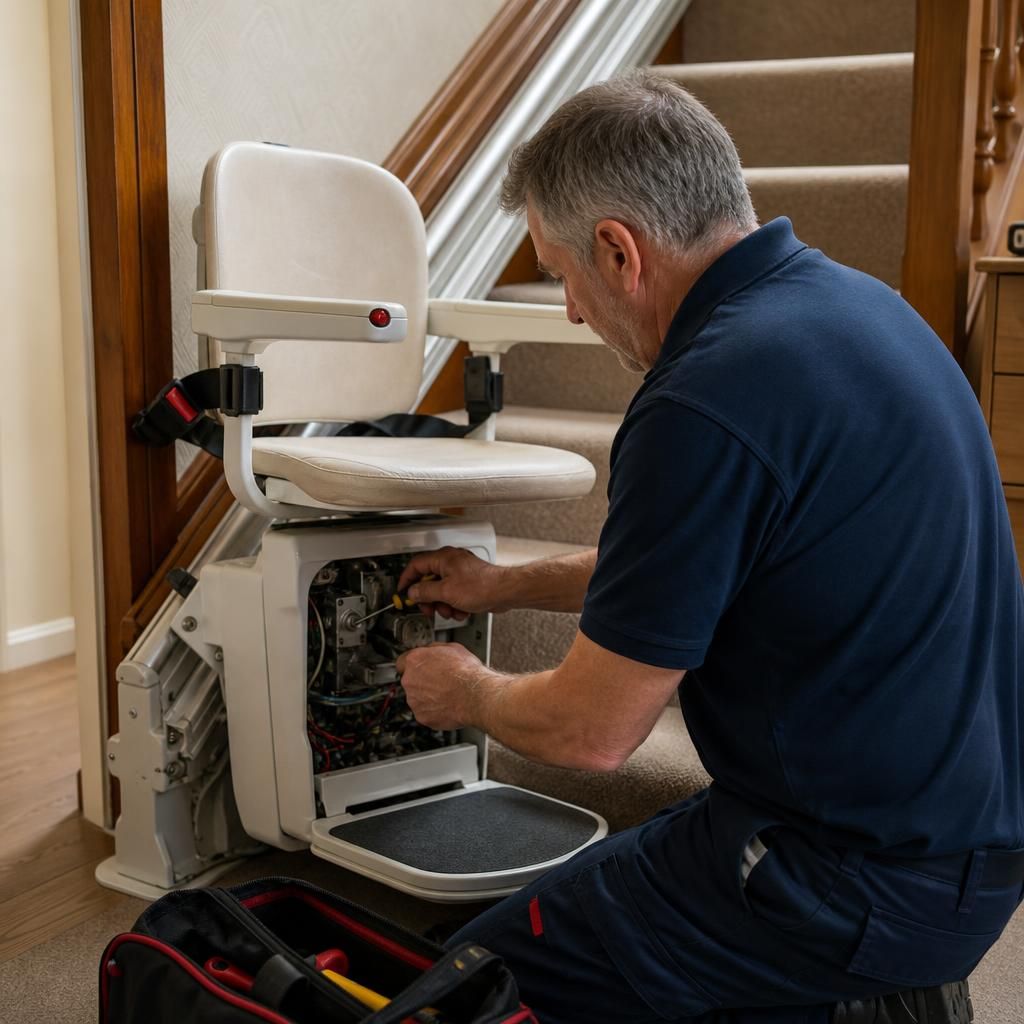
Arrange an Expert Inspection for Your Bruno SRE 3000
If your Bruno SRE 3000 stairlift is making a new, loud or worsening noise, arrange an expert inspection with Independent Stairlifts. We can assess the rail, carriage, drive system and safety components, and advise whether the lift is safe to use.