
What should I do if my stairlift makes unusual noises or vibrations during use?
Unusual stairlift noises or vibrations can indicate debris on the rail, a loose component, worn drive parts or another mechanical fault. Stop using the lift if the sound is loud, worsening or accompanied by jolting, and contact Independent Stairlifts for a professional inspection rather than continuing to operate it.
Unusual stairlift noises or vibrations should not be ignored. Stop the lift and arrange a professional inspection if the sound is loud, worsening, accompanied by jolting, or appears with a burning smell, smoke, a fault light or unexpected movement. Minor sounds can sometimes be caused by debris or normal movement, but persistent noise may indicate a mechanical, electrical or installation problem.
First, make the stairlift safe
- If the stairlift is moving unpredictably, shaking severely or making a grinding, clunking or screeching sound, release the controls and allow it to stop safely.
- Do not continue travelling up or down the stairs to see whether the noise clears. Repeated use can worsen wear or leave the lift stopped in an unsuitable position.
- If you are on the stairs and cannot safely reach the landing, use the normal stop or emergency stop control if fitted, keep clear of the moving parts and contact Independent Stairlifts for advice.
- Keep other people away from the stairlift until its condition has been assessed, particularly children and anyone who could trip over it or reach the mechanism.
Do not remove covers, access the motor or gearbox, adjust the rail, tighten electrical connections or apply lubricant unless this is specifically instructed for your model by a qualified technician. Incorrect adjustment or unsuitable lubricant can damage the drive system, affect braking or create a safety risk.
What different noises may indicate
A light, consistent operating sound from the motor or drive system can be normal, although it should remain broadly unchanged. A new or noticeably louder sound is more significant. Common examples include:
- Clicking or tapping: this may be caused by an object on or near the rail, a loose trim or cover, or a component that needs inspection. It can also occur when a drive part is worn.
- Grinding or screeching: these sounds may point to worn rollers, bearings, drive components or inadequate contact within the mechanism. Stop using the lift until it has been checked.
- Clunking or knocking: a loose fixing, rail obstruction, worn gear or movement in the seat or carriage can produce this noise. A clunk that occurs at the same point on every journey can help a technician identify where to investigate.
- Rattling: this may come from a loose cover, armrest, footrest or other fitting, but the source should not be assumed without checking the lift safely.
- Whining or straining: this can be associated with the motor, batteries, charging system or drive mechanism, especially if the lift is also slower than usual or stops under load.
These descriptions are only indications, not a diagnosis. The same noise can have different causes depending on the stairlift design, rail layout, age, installation and maintenance history.
What vibrations or jolting can mean
Vibration through the seat, armrests or footrest may result from debris on the rail, uneven contact, worn rollers, a damaged drive component or a loose fixing. A lift that jolts when starting, stopping, changing direction or passing a particular section of rail needs attention. Intermittent vibration can be especially important because it may not occur during a brief test but can still develop into a breakdown.
Check visually for obvious items such as clothing, toys or other objects touching the rail or obstructing the footrest. Only remove an item if you can do so without reaching into the mechanism, standing on the stairs in an unsafe position or moving the lift. Do not test the stairlift repeatedly after finding an obstruction; contact a technician if the lift has made contact with it or the noise remains.
Information to record before calling
If it is safe to do so, note when the noise or vibration occurs. Useful details include whether it happens when starting, stopping, travelling in one direction, carrying a passenger, using a swivel seat or passing a particular point. Also note any change in speed, battery warning, error indication, burning smell or difficulty charging. A short recording made from a safe position can help, but do not ask anyone to ride the stairlift solely to reproduce the fault.
Tell Independent Stairlifts whether the lift can still be used safely, where it has stopped, whether anyone is stranded upstairs or downstairs, and whether there has been a recent obstruction, impact, spill, power interruption or maintenance visit. This helps determine the safest response and the parts or tools that may be needed.
When the stairlift may be used again
Do not resume normal use merely because the noise has temporarily disappeared. A technician should inspect the rail, carriage, rollers, drive system, seat and footrest fixings, electrical connections and safety devices as appropriate. The cause may need cleaning, adjustment, tightening, replacement of a worn part or further electrical testing. The lift should be returned to service only when the fault has been identified or ruled out and it operates smoothly and safely.
Prompt reporting is particularly important where the noise is worsening, the stairlift vibrates throughout its journey, the lift loses power, the seat or footrest moves unexpectedly, or there is any smell of overheating. Contact Independent Stairlifts for professional repair advice rather than continuing to operate a stairlift that is noisy, unstable or unpredictable.
Unusual stairlift noises or vibrations are a change from the lift’s normal operation and may indicate debris, a loose fitting, worn drive components or another fault. Stop using the stairlift if it grinds, screeches, jolts, shakes severely or moves unpredictably.
Release the control and allow the lift to stop safely. Check visually for an object touching the rail, footrest or carriage, but do not remove covers, reach into the mechanism, adjust the rail or apply lubricant. If the noise continues, becomes louder, or is accompanied by a burning smell, fault light, loss of power or unexpected movement, keep the lift out of use and contact Independent Stairlifts for professional advice.
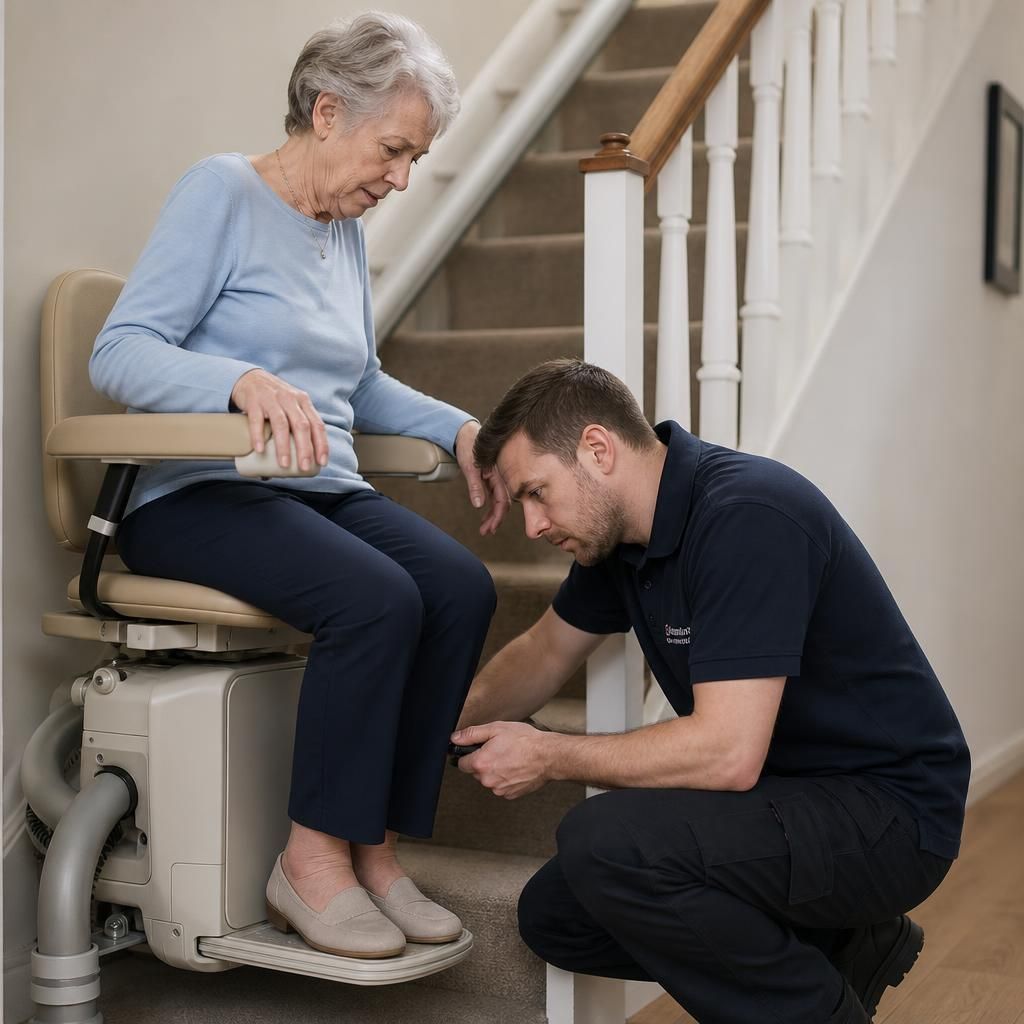
Arrange a Professional Stairlift Inspection
If your stairlift is making unusual noises or vibrations, arrange a professional inspection with Independent Stairlifts before using it again. Contact us for advice and repair support.