Safety-led assessments
Safety systems, controls and moving parts are checked methodically so recommended work is based on the lift’s condition.

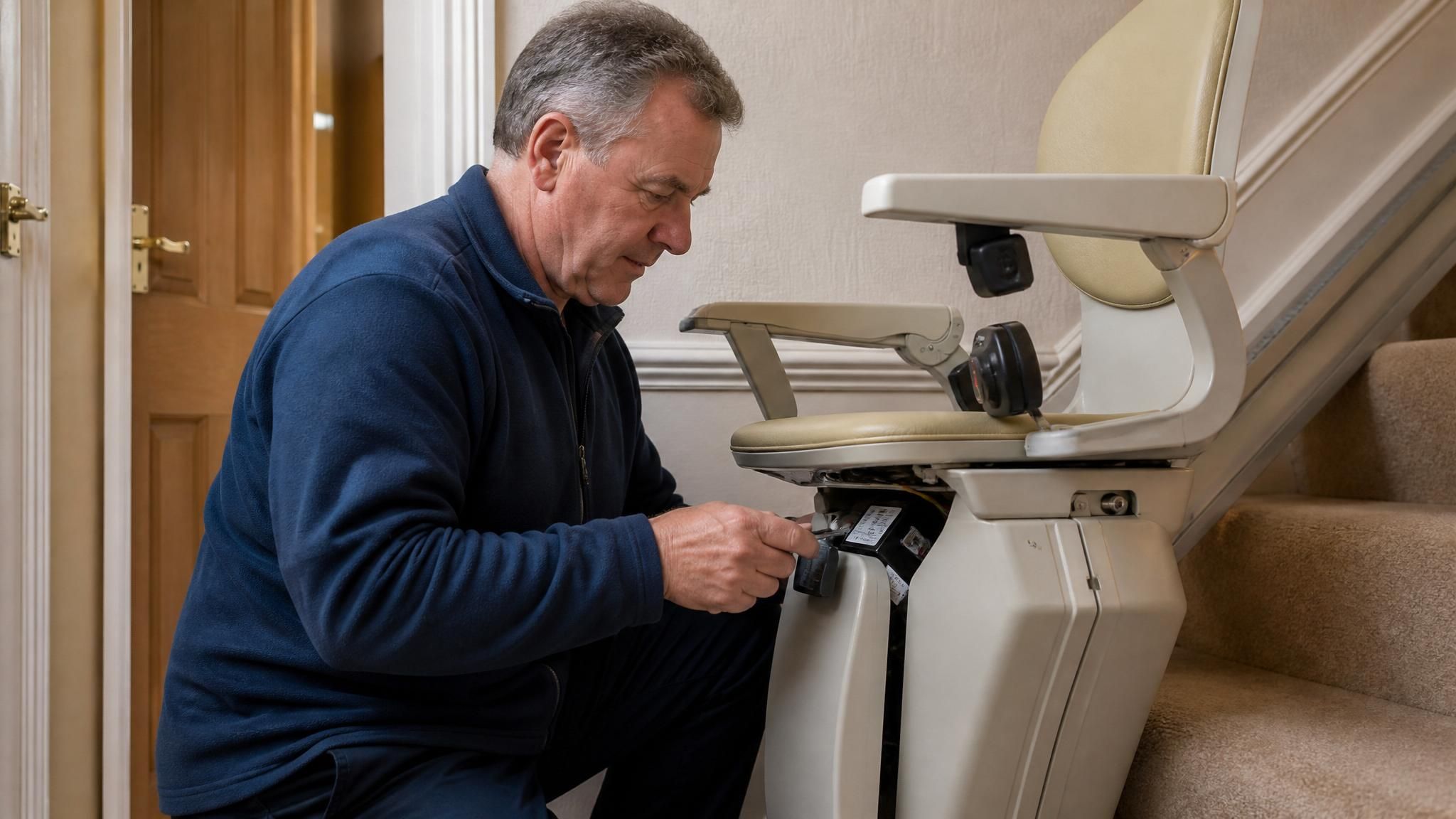
Handicare stairlift maintenance involves planned servicing, safety checks, fault diagnosis and replacement of worn components. Independent Stairlifts can assess your lift, explain necessary work clearly and arrange repairs or genuine Handicare spares across the UK.
Handicare stairlift maintenance is the planned inspection, testing and servicing needed to keep a Handicare lift safe and reliable. A professional assessment can identify wear, battery deterioration, loose connections or problems with the carriage, rail and safety sensors before they cause a breakdown.
During a service, an engineer checks controls, safety edges, seat belt, swivel mechanism, charging points and batteries, then tests the lift under normal conditions. Recommended repairs are explained clearly, including whether a genuine Handicare spare is required and whether work may fall under your Handicare warranty.
Independent Stairlifts can diagnose faults, arrange servicing and source parts nationwide. If the lift stops, makes unusual sounds or struggles on the rail, seek advice rather than continuing to use it.
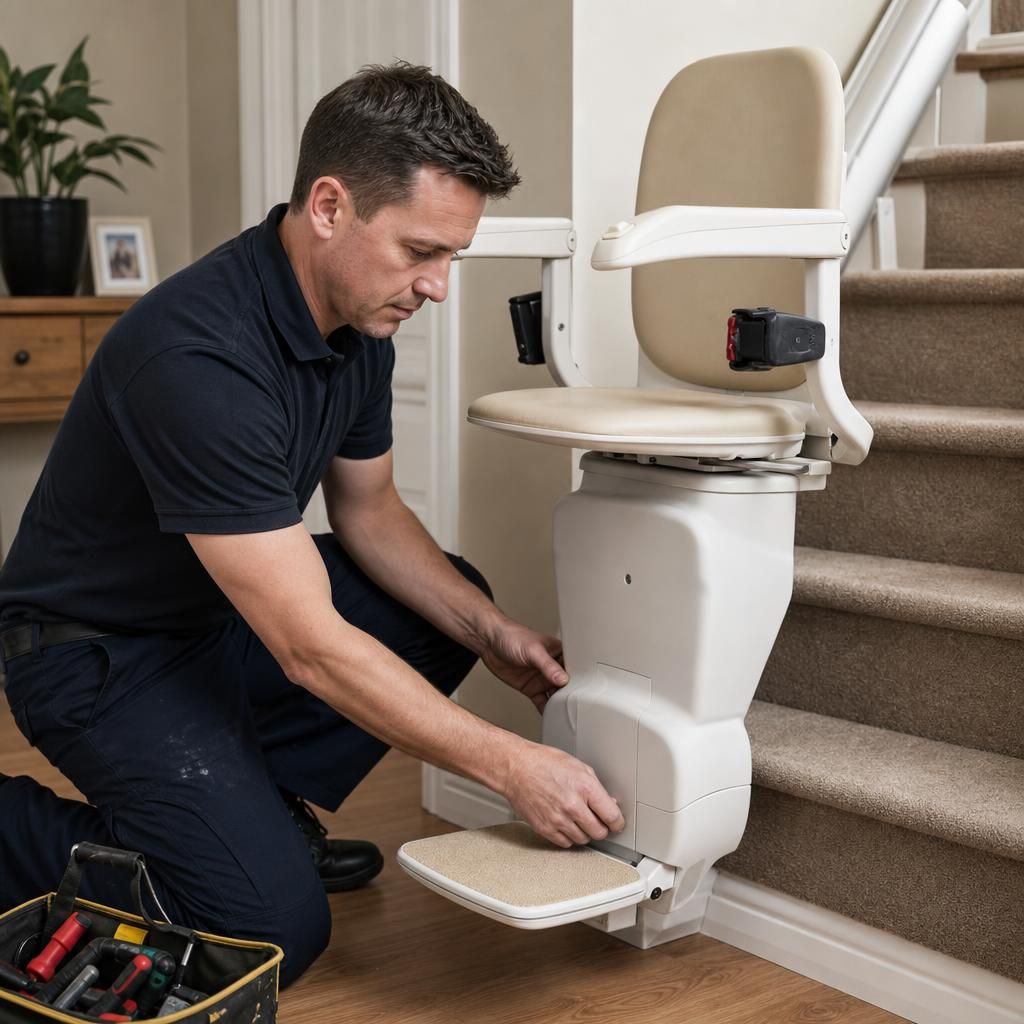
These FAQs explain the main points of Handicare stairlift maintenance, including servicing, fault diagnosis, replacement parts and warranty considerations. Regular checks can identify issues with the batteries, controls, carriage, rail and safety features before they affect safe operation.
Use the answers below to understand when professional assistance is needed, what a service may include and what information to provide when requesting help. Independent Stairlifts can assess Handicare stairlifts and arrange maintenance or repairs nationwide.
Handicare stairlift servicing is recommended at intervals based on the model, age, usage and operating environment. The correct schedule should be confirmed against the manufacturer’s guidance and the lift’s service history.
A lift used several times a day, installed in a demanding environment or showing signs of wear may need attention sooner than a lightly used lift. A maintenance record helps an engineer identify recurring issues and assess whether planned servicing, battery replacement or a more detailed inspection is appropriate. If the lift is used by someone who depends on it for daily access, arranging advice promptly when performance changes can reduce the risk of an avoidable interruption.
A Handicare stairlift service involves inspecting the lift’s mechanical, electrical and safety systems, followed by operational testing. The engineer should explain any defects, adjustments or replacement parts identified during the visit.
Checks may include the rail, carriage movement, drive system, seat, armrests, swivel and locking mechanisms, controls, seat belt, safety edges, charging points and batteries. The engineer may also examine connections, fixings and the condition of accessible components before testing the lift through its normal operation. The exact checks depend on the Handicare model and the symptoms reported.
Beeping from a Handicare stairlift commonly indicates a charging issue, a safety control being triggered or a fault that needs investigation. The sound should not be ignored if it continues after basic checks.
Make sure the lift is fully parked at a designated charging point and that the power supply has not been switched off. Check that the seat, swivel mechanism and safety controls are correctly positioned, but do not bypass a safety feature or dismantle the lift. If the beeping persists, the lift stops unexpectedly or the display shows a fault code, record the symptoms and arrange professional diagnosis.
Handicare stairlift batteries normally require replacement when they no longer hold sufficient charge or the lift becomes unreliable away from its charging point. Reduced travel, repeated low-battery warnings and difficulty completing a journey can indicate battery deterioration.
An engineer can test the batteries and charging system to determine whether the batteries are the cause or whether a charger, connection or control issue is involved. Replacement batteries must be suitable for the specific Handicare model and installed correctly; fitting an unsuitable battery can affect performance and safety. Continued use of a lift that repeatedly loses power should be avoided until it has been assessed.
Whether Handicare stairlift maintenance or repair is covered depends on the lift’s warranty terms, age, model, purchase history and the cause of the fault. Warranty cover should be checked before chargeable work is authorised.
Provide the model details, installation or purchase information, service history and a clear description of the problem. Accidental damage, wear items, batteries or work carried out outside the warranty conditions may be treated differently from a manufacturing defect, so the terms should be reviewed rather than assumed. Independent Stairlifts can assess the fault and explain which work appears covered and which may be chargeable.
Parts availability for an older Handicare stairlift depends on the model, component and continued manufacturer support. Identifying the exact lift is essential before ordering a replacement part.
An engineer will usually need the model information, photographs or a site assessment to distinguish compatible components from visually similar alternatives. This is particularly important for batteries, chargers, controls, safety switches and drive-related parts. Independent Stairlifts can investigate availability, explain whether a genuine Handicare spare or an approved alternative is appropriate, and advise when repair is less practical than replacement.
If a Handicare stairlift stops, first check for an obvious power or charging issue without forcing the controls or moving safety components. A stopped lift should be treated as a fault until its cause has been established.
Note where the lift stopped, whether it makes a sound, whether any indicator lights or codes appear and whether the problem occurs in one direction or at a particular point on the rail. Tell the adviser the model if known, how the lift is powered and what checks have already been made. Do not continue using the lift if it moves unevenly, smells of overheating, makes unusual mechanical noises or has a damaged seat belt, rail or safety control.
Handicare stairlift maintenance checks safety systems, controls, batteries and moving parts, helping identify faults before they affect reliable operation. Independent Stairlifts provides assessments and repairs nationwide.
If your Handicare warranty may apply, Independent Stairlifts can review the available documentation and explain the next step. You receive clear advice before any replacement parts or repair work is arranged.
Safety systems, controls and moving parts are checked methodically so recommended work is based on the lift’s condition.
You receive an explanation of the fault, proposed repair and likely parts requirement before any work is arranged.
Available warranty documents can be reviewed so you understand whether the issue may qualify for manufacturer support.
Where a component needs replacing, suitable genuine parts can be sourced and the reason for replacement explained.
Assessments, servicing and repair arrangements are available for customers throughout the UK.
Independent Stairlifts’ Handicare maintenance service covers safety inspections, fault diagnosis, repairs and suitable replacement parts for Handicare stairlifts. An engineer can assess the lift’s carriage, rail, controls, batteries and safety features, then explain whether servicing, repair or warranty support is appropriate.
Independent Stairlifts explains the work required and coordinates nationwide support.
The service focuses on the way Handicare controls, carriage systems, charging equipment and safety features work together, helping identify the likely cause rather than treating only the visible symptom.
Recommendations take account of the lift’s installation, usage, staircase layout and the user’s mobility needs, so proposed work is relevant to the individual home.
You receive a straightforward explanation of the issue, the work recommended and any practical alternatives, making it easier to decide whether maintenance or further repair is appropriate.
Independent Stairlifts can coordinate suitable Handicare components and repair work, reducing the need for you to identify technical parts or arrange separate support.
Where warranty cover may apply, the assessment can help clarify which issue has been found and what information may be needed before further work is authorised.
Nationwide coordination makes it possible to request Handicare maintenance support whether the stairlift is in a private house, bungalow or another domestic setting.
If a lift stops, sounds unusual or behaves inconsistently, you can receive advice on safe next steps while an assessment or repair is arranged.
The right Handicare stairlift support depends on the problem, the lift’s age and whether parts or warranty assistance may be needed. Use these options to compare suitable next steps for common maintenance situations.
Choose planned maintenance when the stairlift is used every day but has not recently been inspected. An engineer can review its operating condition, charging behaviour and safety functions, then identify deterioration before it develops into a more disruptive fault. Keep any service records, as they help track recurring issues and support future assessments.
Arrange a battery-focused assessment if the lift completes less travel than usual, stops away from its charging point or repeatedly reports low power. Batteries are affected by age, use and charging conditions, so replacing them may not solve the problem if the charger, contacts or wiring also need attention.
A fault diagnosis is the appropriate option when the stairlift stops unexpectedly, moves unevenly or only works after repeated attempts. Avoid bypassing safety features or continuing to use a lift that behaves unpredictably. Record when the problem occurs and any display message or warning sound to help the engineer investigate efficiently.
Request an inspection if there is new noise, vibration, looseness or difficulty when swivelling or folding the seat. Wear may affect components such as the carriage, drive system, seat mechanism or rail interface. The engineer can distinguish an adjustment or replacement-part requirement from a wider mechanical fault.
Use a maintenance assessment when you need to clarify whether a repair may be covered by the Handicare warranty or whether a suitable spare part is available. Provide the lift model, installation details and previous service information where possible. Warranty decisions depend on the applicable terms, product condition and nature of the fault.
Regular Handicare stairlift maintenance involves checking and cleaning rails, lubricating moving parts, and testing safety sensors to ensure reliability and safety.
Professional servicing of a Handicare stairlift is recommended at least once a year to ensure optimal performance, identify wear or issues early, and maintain warranty conditions.
Common issues include unusual noises, power interruptions, and erratic movements. Address these promptly through checks of rails, lubrication, sensor function, and use of genuine Handicare parts for effective maintenance.
Ensure compatibility and authenticity by choosing genuine Handicare parts, which maintain warranty validity and reliable performance, minimising future issues and safeguarding your stairlift's optimal functionality.
Understanding Handicare's warranty conditions ensures coverage for defects and specific repairs. Regular professional servicing and using genuine parts are often required to maintain warranty validity, preventing unexpected costs.
Independent Stairlifts provides Handicare stairlift maintenance through detailed assessments, safety testing, fault diagnosis and parts support. Customers can compare practical service advantages, including nationwide assistance, clear repair recommendations, genuine spares where appropriate and advice on warranty options.
Handicare Model Identification
Handicare stairlifts can vary by model, age and specification. Independent Stairlifts can identify the lift and investigate the reported symptom before recommending work, helping avoid unsuitable parts or unnecessary repairs.
Maintenance Matched to the Installation
A service is considered in the context of the staircase, daily use and the lift’s condition. This allows attention to be focused on relevant areas such as the rail, carriage, seat or charging position rather than applying an unsuitable generic checklist.
Repair-or-Replacement Guidance
When a component is worn or a fault recurs, the available options are explained in practical terms. Customers can compare repair requirements with the condition and likely future needs of the stairlift before deciding how to proceed.
Support for Existing Handicare Lifts
Independent Stairlifts can help with maintenance for customers who already have a Handicare lift, including those who need a new service provider. The assessment starts with the equipment currently installed rather than assuming a replacement is required.
Advice for Safer Continued Use
If a lift behaves unpredictably, loses power or develops an unusual noise, customers can receive guidance on whether it should remain in use while an engineer assesses it. This helps reduce the risk of treating a developing fault as a minor inconvenience.
UK-Wide Service Coordination
Independent Stairlifts supports Handicare maintenance enquiries across the UK, making it easier to arrange assessment, servicing or follow-up work when the customer or their family lives away from the property.
Routine Handicare stairlift maintenance helps prevent unexpected breakdowns by identifying issues early, ensuring reliable performance, and maintaining safety features. Independent Stairlifts offers expertise and genuine parts for dependable service.
Inspect sensor systems, seat belts, and emergency stop buttons regularly to ensure operational safety. Confirm all components function as intended to maintain reliable and secure stairlift usage.
Genuine Handicare spares ensure compatibility and reliability, preserving your stairlift's performance and manufacturer warranty. Using authentic parts reduces malfunction risks, fostering safety and efficiency in your stairlift's operation.
Consistent maintenance enhances energy efficiency by ensuring smooth operation, reducing friction and wear. This lowers operating costs and extends the lifespan of your stairlift, offering long-term savings on energy expenses.
Listen for unusual noises, observe any changes in speed or smoothness, and inspect the stairlift for visible wear to identify when maintenance is due. Regular checks prevent costly repairs.
Need Handicare stairlift maintenance, repairs or genuine spares? Contact Independent Stairlifts for a practical assessment, clear advice and nationwide support. We can help identify faults, review warranty considerations and arrange the appropriate next step for your lift.
Contact Us