
What are the recommended steps for maintaining a Handicare stairlift?
Maintain a Handicare stairlift by keeping the track, seat and controls clean, checking the safety features and charging system, and reporting unusual noises, movement or error messages promptly. Arrange professional servicing at the recommended intervals, use genuine replacement parts, and avoid attempting electrical or mechanical repairs yourself.
Maintaining a Handicare stairlift involves regular cleaning, visual checks, correct charging, safe everyday use and professional servicing. Keep the track and lift free from dirt and obstructions, check the seat and safety controls before use, and report unusual noises, movement, warning lights or error messages rather than attempting electrical or mechanical repairs yourself.
Follow the instructions for your specific model first. Handicare stairlifts vary in design, including straight and curved models, so the owner’s manual remains the correct reference for controls, indicator lights, charging arrangements and user adjustments. If you are unsure which model you have, an installer or service engineer can identify it and confirm the appropriate maintenance routine.
Keep the stairlift and track clean
- Wipe the seat, armrests, controls and footrest with a soft, slightly damp cloth.
- Use a mild household cleaning product where suitable, following the product and stairlift instructions. Do not pour or spray liquid directly onto the lift.
- Remove dust and loose dirt from the rail and the area around the lift with a dry or lightly damp cloth.
- Keep the track clear of clothing, bags, toys, pet items and other objects that could obstruct travel or activate a safety sensor.
- Do not apply oil, grease or other lubricant to the rail unless the manufacturer’s instructions specifically require it. The track and drive mechanism may need specialist products or adjustment.
Check the seat and user safety features
Before regular use, make sure the seat is secure and that the armrests, footrest and swivel mechanism operate as intended. If the stairlift has a seat belt, check that it fastens and releases correctly and that the belt is not frayed, cut or damaged. Use the belt as instructed, particularly where the user has reduced balance or movement control.
Test the controls without placing yourself at risk. The lift should respond smoothly to the relevant control, and the remote control should work if one is fitted. Check that safety edges or sensors stop the stairlift when they meet an obstruction. Never deliberately place a hand, foot or object in the lift’s path to test this feature; report a suspected fault to a qualified engineer.
On models with a swivel seat, verify that it locks securely in the travel position before moving and that it releases only as intended at the top or bottom of the stairs. Folding parts should move without excessive force and should not be used if they are loose, damaged or interfering with the lift’s travel.
Check charging and battery condition
- Leave the stairlift parked on its designated charging point when it is not in use, as specified for your model.
- Check that the charger or charging indicator shows the expected status. If the lift repeatedly reports a low battery after being charged, arrange an assessment.
- Keep charging contacts clean and free from visible dirt, but do not use metal tools or abrasive materials on them.
- Do not remove, open or replace batteries unless this is specifically authorised and carried out by a suitably qualified person.
- Report a burning smell, heat, damaged cable, sparking or other electrical concern immediately and stop using the lift if it is safe to do so.
Short journeys, leaving the lift away from its charging point or a failed charger can reduce battery performance. A battery that is nearing the end of its service life may show reduced travel, slow operation or repeated low-charge warnings. Battery replacement and charging faults should be diagnosed by a trained engineer using parts compatible with the particular Handicare model.
Pay attention to changes in operation
During use, note any change in speed, stopping, starting, vibration or alignment. Unusual clicking, grinding, squeaking or humming can indicate wear, an obstruction or a fault in the drive system. Error messages, flashing indicators, intermittent controls, unexpected stops or movement in the wrong direction also require attention.
Stop using the stairlift and seek advice if it does not stop normally, the seat or footrest becomes unstable, the safety belt will not secure, the lift runs unevenly, or any part appears damaged. Do not continue using it simply because it still completes the journey. If the stairlift stops on the stairs, follow the emergency and manual-lowering instructions in the user guide and contact the service team; do not try to push or dismantle it.
Arrange professional servicing
Routine cleaning and user checks do not replace professional maintenance. Arrange servicing at the interval recommended for your model, installation and level of use, and sooner if a fault or change in performance is reported. During a service, a qualified engineer can inspect the rail, drive system, batteries, charging points, wiring, controls, safety edges, seat mechanisms, fixings and emergency functions. They can also test the stairlift under operating conditions and identify wear before it develops into a breakdown.
Keep a record of services, reported faults, repairs and replacement parts. This is useful when monitoring recurring issues and can help confirm whether work is covered by the applicable warranty or service agreement. Use genuine or approved Handicare parts that match the exact model and serial number. A visually similar part may not have the correct electrical rating, dimensions or safety function.
Avoid unsafe maintenance
- Do not remove covers or work on the motor, control board, wiring, batteries or charging equipment.
- Do not bypass a safety switch, sensor, belt interlock or other protective feature.
- Do not alter the rail, tighten structural fixings or adjust the drive mechanism without professional guidance.
- Do not use the stairlift if water has entered the controls or electrical components.
- Keep children and other users away while cleaning or when an engineer is inspecting the lift.
In practice, the most effective routine is to keep the lift and rail clean, leave it charging correctly, carry out a brief visual and functional check before use, and arrange professional servicing in line with the manufacturer’s guidance. Promptly reporting faults and using approved replacement parts helps maintain safe, reliable operation without putting the user or the stairlift at unnecessary risk.
Correct charging is essential to maintaining a Handicare stairlift because the batteries power the lift and support reliable operation. Park the stairlift on its designated charging point whenever it is not in use, following the instructions for your particular model.
Check that the charging indicator shows the expected status and keep the charging contacts free from visible dirt. Do not clean them with metal tools or abrasive materials. If the lift repeatedly shows a low-battery warning, travels more slowly than usual or stops unexpectedly, arrange an assessment with a qualified engineer. These symptoms may indicate a charging fault, a worn battery or another issue that requires professional attention.
Never open the battery compartment, replace batteries or work on the charger and wiring yourself unless this has been authorised and carried out by a suitably qualified person. Stop using the stairlift and seek advice if you notice a burning smell, excessive heat, sparking or a damaged cable.
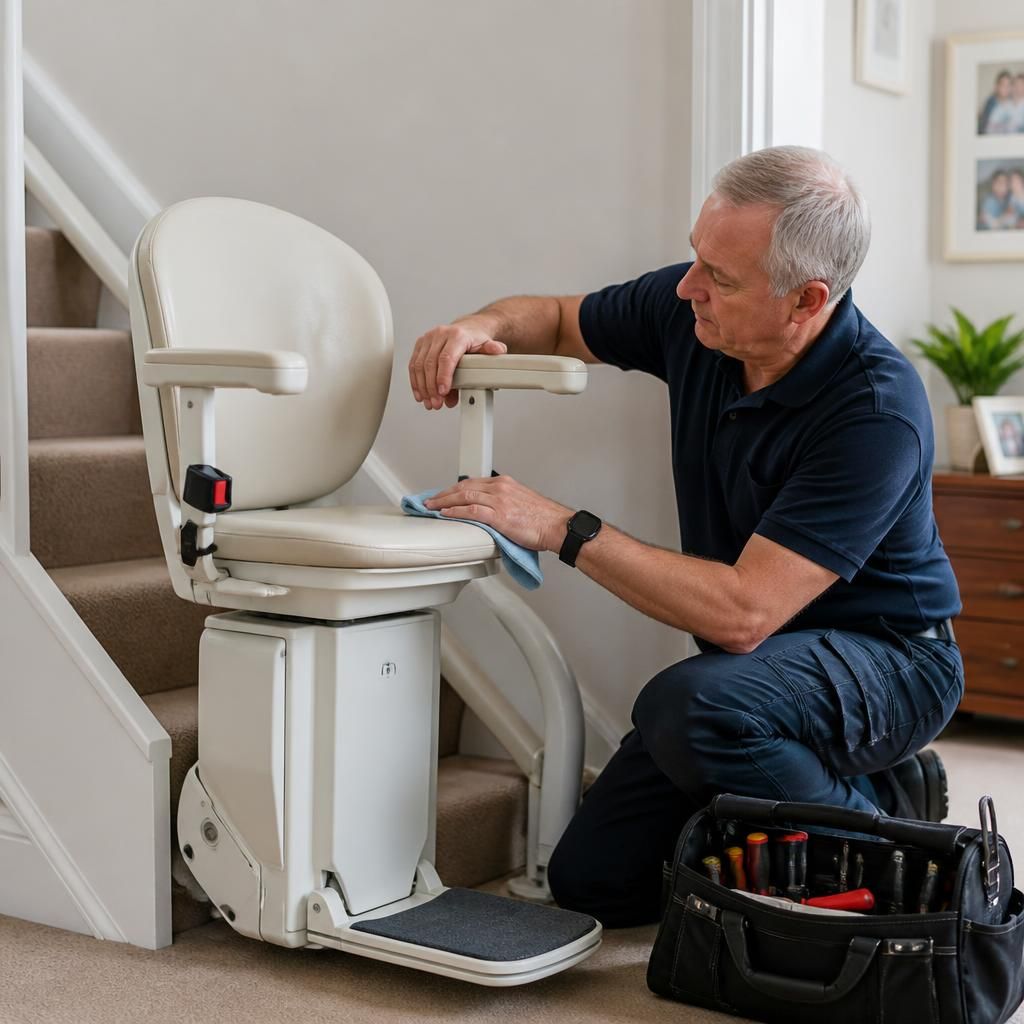
Arrange your Handicare stairlift service
Arrange your Handicare stairlift service with Independent Stairlifts to have its safety features, batteries, controls and drive system checked by a qualified engineer.