
What are the common issues that might require Handicare stairlift maintenance?
Common issues that may require Handicare stairlift maintenance include weak or failing batteries, charging faults, unusual noises, jerky movement, problems with the rail or carriage, and worn safety components such as the seat belt or sensors. A qualified engineer should inspect the stairlift if it stops unexpectedly, struggles to move, shows a fault warning, or no longer operates smoothly and reliably.
Common issues requiring Handicare stairlift maintenance include weak or failing batteries, charging problems, uneven or jerky movement, unusual noises, rail or carriage faults, and worn safety components. A professional inspection is advisable if the stairlift stops unexpectedly, displays a fault warning, struggles on the stairs, or no longer operates smoothly and reliably.
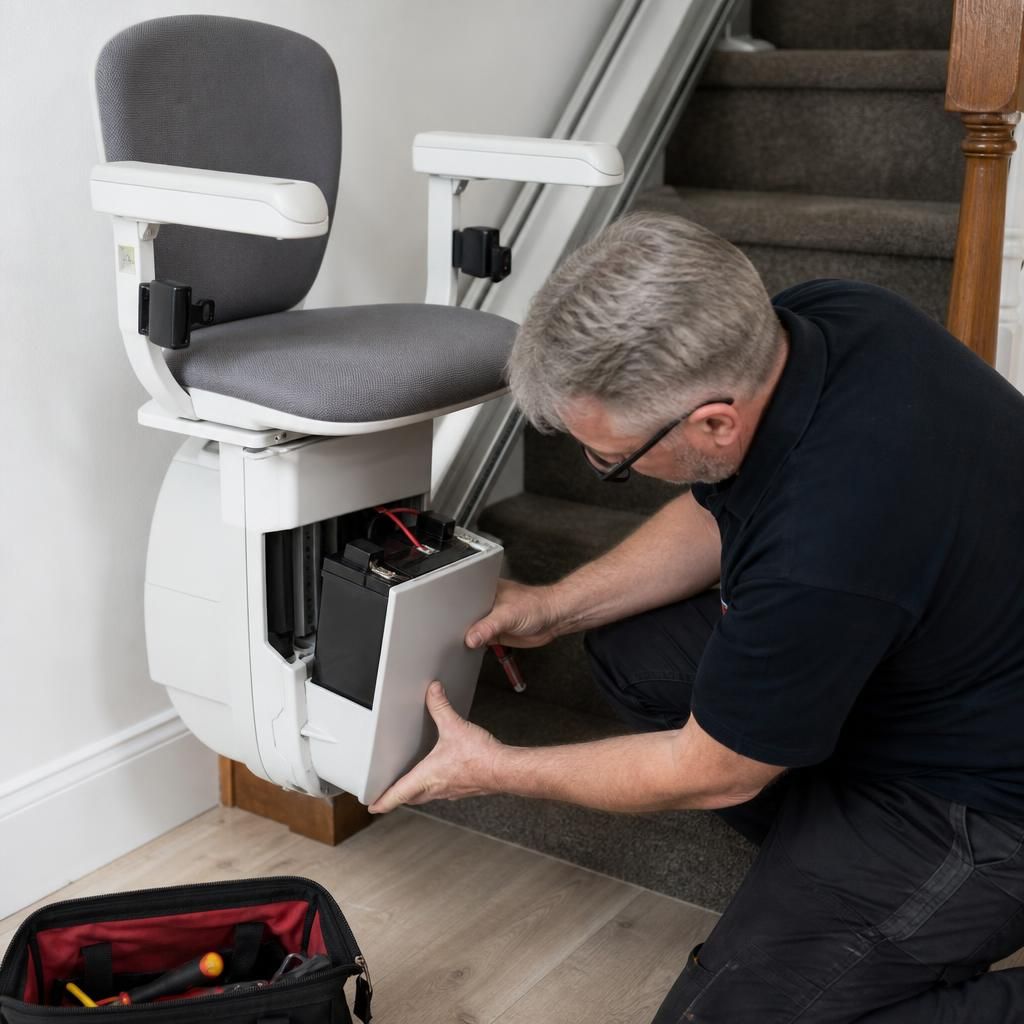
Battery and charging faults
Stairlift batteries gradually lose capacity and may eventually be unable to hold enough charge for normal use. Typical signs include slower operation, the lift stopping before reaching the top or bottom of the stairs, or a low-battery warning appearing more often. If the stairlift works only when it is positioned at a charging point, or fails to start after being left on charge, the batteries, charging contacts, charger, or electrical supply may need checking.
Charging points and contacts can become dirty, misaligned, or worn. An engineer can test the batteries and charging system rather than replacing parts unnecessarily. Keep the stairlift parked at its designated charging position when it is not in use, unless your operating instructions state otherwise.
Unexpected stopping or failure to start
A stairlift may stop because a safety sensor has detected an obstruction, the seat or armrests are not in the correct position, the footrest is interfering with the stairs, or the carriage has encountered a fault. It may also stop if the batteries are too weak or if an electrical connection has failed.
Check that the seat is correctly positioned, the armrests are lowered, the footrest and carriage path are clear, and the controls are being used as instructed. Do not repeatedly operate the lift if it continues to stop or refuses to start. Note any message, light, or audible warning and provide this information to the service engineer.
Jerky, slow, or uneven movement
Changes in movement can indicate battery deterioration, worn drive components, a problem with the carriage, or an issue affecting the rail. A stairlift that hesitates, judders, travels more slowly than usual, or needs repeated commands should be assessed before the problem becomes more serious.
Do not attempt to lubricate or adjust the drive mechanism yourself. Stairlift rails and carriage components require the correct adjustment and approved materials; unsuitable lubrication can attract dirt or affect operation.
Unusual noises and vibration
Clicking, grinding, squeaking, scraping, or increased vibration can result from wear, loose fittings, debris, or a problem with the carriage, drive system, or rail interface. Some operating sounds are normal, but a new or worsening noise should not be ignored, particularly if it is accompanied by jerky movement or a change in speed.
Stop using the stairlift if there is loud grinding, a strong burning smell, smoke, or visible damage. Switch it off if this can be done safely and contact a qualified engineer. Do not remove covers to investigate internal components.
Rail, carriage, and installation issues
The rail must remain secure and clear along the full staircase. Loose fixings, damage, an obstruction, or a change in the surrounding flooring can affect the carriage or create a safety risk. On a curved stairlift, the track follows a bespoke route, so changes in alignment or unusual resistance should be investigated by an engineer rather than corrected at home.
Dust, pet hair, or objects near the rail can also interfere with sensors and moving parts. Keep the route clear, but avoid placing fingers or tools near the carriage, rack, drive components, or pinch points while the lift is powered.
Seat, swivel, armrest, and footrest problems
Maintenance may be needed if the seat does not swivel or lock correctly, an armrest is loose, the footrest does not fold or deploy properly, or the seat, backrest, or upholstery has become damaged. These components help the user get on and off safely, so they should not be treated as cosmetic features only.
Do not travel if the seat is not locked in its normal travelling position, an armrest will not stay in place, or the footrest is obstructing the stairs. An engineer can inspect the locking mechanism, hinges, switches, and fixings and replace worn parts where necessary.
Seat belt and safety sensor faults
The seat belt should latch securely, release correctly, and show no signs of fraying or damage. Safety sensors around the footrest, carriage, and other protected areas should respond when an obstruction is detected. If the lift moves when a safety control is not correctly positioned, or if it stops without an obvious obstruction, professional testing is required.
Never bypass, tape down, disconnect, or modify a safety switch or sensor. These devices are designed to prevent movement in unsafe conditions and must be tested as part of maintenance.
Control, remote, and electrical problems
A handset or remote control may stop responding because of flat batteries, damaged buttons, signal problems, or a fault in the stairlift controls. If one control works but another does not, the faulty handset may need attention. If none of the controls work, the cause could be the stairlift power supply, batteries, charger, or control system.
Look for obvious damage to the handset and ensure it is being used within the range specified in the operating instructions. Avoid using the stairlift if there are exposed wires, damaged plugs, signs of overheating, or repeated electrical faults. Electrical repairs should be carried out only by a suitably qualified engineer.
Outdoor stairlift and environmental problems
Outdoor installations can require additional attention because rain, frost, temperature changes, dirt, and prolonged exposure can affect covers, controls, charging contacts, batteries, and electrical connections. Water ingress, corrosion, fading or cracking of protective components, and difficulty operating the controls should be reported promptly.
Use the supplied weather protection and follow the care instructions for the particular model. Do not pressure-wash the lift or apply household cleaning products to electrical parts.
When to arrange maintenance
Arrange an inspection when a fault warning appears, performance changes, the stairlift is repeatedly losing charge, or any safety component does not work as expected. Prompt attention is particularly important if the user has been left on the stairs, the lift has stopped between floors, or the equipment has been affected by a power cut, impact, damp, or another incident.
Before contacting the service team, record the model if known, the symptoms, when they occur, any warning message or indicator, and whether the issue affects the handset, remote, charging position, or movement. This helps the engineer prepare appropriately.
Routine professional servicing can identify wear before it develops into a breakdown, but it does not replace daily checks. Keep the stairs and rail clear, park the lift as instructed, check that the seat belt and controls appear intact, and report changes rather than attempting a repair yourself. Use approved replacement parts and a qualified Handicare stairlift engineer for diagnosis, adjustment, and safety testing.
Battery and charging faults are among the most common reasons a Handicare stairlift needs maintenance. As batteries age, they may hold less charge, causing slower movement, unexpected stops or difficulty completing the full journey. A lift that only works from a charging point, or repeatedly displays a low-battery warning, may also have a problem with its charging contacts, charger or electrical supply.
Keep the stairlift parked in its designated charging position when not in use, as advised in the operating instructions, and keep the charging contacts clean and unobstructed. If performance continues to change, arrange a professional inspection. An engineer can test the batteries and charging system together, identify the actual fault and replace approved parts where necessary. Do not attempt to adjust electrical connections or continue using the lift if it stops unexpectedly.
Arrange professional Handicare stairlift maintenance
If your Handicare stairlift is stopping unexpectedly, making unusual noises, losing charge or showing a fault warning, arrange professional maintenance with Independent Stairlifts. Our qualified engineers can diagnose the issue, inspect safety components and carry out any necessary repairs using approved parts.