
What specific safety features should be regularly inspected during Handicare stairlift maintenance to ensure user safety?
During Handicare stairlift maintenance, the seat belt, swivel-seat lock, arm and footrest safety sensors, controls, obstruction sensors, braking system, carriage and track should be inspected for secure operation and signs of wear. The batteries, charging points and safety cut-outs should also be checked, with any fault or unusual movement assessed by a qualified technician before the stairlift is used again.
The safety features that should be inspected during Handicare stairlift maintenance include the seat belt and its locking mechanism, the swivel-seat lock, armrest and footrest sensors, operating controls, obstruction sensors, braking system, carriage and track, batteries, charging contacts and safety cut-outs. Each should be checked for secure operation, damage, contamination and signs of wear. The exact equipment varies between Handicare models, so a qualified technician should follow the relevant manufacturer’s service procedure and installation specifications.
Seat belt and restraint: The belt should pull out smoothly, latch securely and release correctly. The buckle, webbing, mounting points and retractor should be checked for fraying, cuts, looseness or other damage. A stairlift should not be used if the belt will not lock, is difficult to fasten or does not hold the user securely.
Swivel seat and locking mechanism: The seat should rotate and return to its travelling position smoothly, where the model is fitted with a swivel function. Its locking mechanism must hold the seat securely before travel begins. The stairlift should prevent movement if the seat is not correctly positioned or locked. The handle, seat base and fixings should also be checked for looseness or excessive movement.
Armrests, footrest and safety sensors: Armrests should move or latch as intended, without damaged hinges or loose fixings. The footrest should be secure and free from cracks or distortion. Sensors or pressure edges around the footrest and armrests should respond correctly when an obstruction or unsafe position is detected. A technician will normally test that the lift stops safely and will not restart until the obstruction or unsafe condition has been cleared.
Controls and direction switches: The controls on the armrest, and any remote controls supplied with the stairlift, should operate consistently in both directions. Buttons or switches should not stick, require unusual force or activate intermittently. The technician should also check that the stairlift stops promptly when the control is released and that the controls cannot be operated accidentally when they are not intended to be in use.
Obstruction detection: Sensors and safety edges beneath or around the footrest and carriage help stop the stairlift if it encounters an object on the stairs. The track and stair area should be kept clear of shoes, toys, furniture and other items, but clearing the route does not replace a service inspection. A technician should test the detection system using the approved method rather than forcing the stairlift against an obstruction.
Braking, stopping and movement: The stairlift should start, run and stop without jolting, slipping, unusual vibration or excessive noise. Its braking system, drive mechanism and speed control should be assessed for safe operation. Unexpected movement, a delayed stop, a change in travel speed or a lift that rolls when parked requires prompt investigation and should not be ignored.
Carriage, track and fixings: The rail should be inspected for damage, contamination, loose fixings and anything that could affect the carriage’s travel. The carriage, rollers, drive components and any joints or charging points along the track should be checked for abnormal wear. On a curved installation, particular attention is needed at bends, joins and parking positions. Lubrication should only be carried out where specified for that model; unsuitable products can attract dirt or affect operation.
Batteries and charging system: Batteries should be checked for condition, secure connections and adequate charging performance. The charging points, charger, power supply and indicators should be inspected for damage, overheating, corrosion or poor contact. A stairlift that repeatedly fails to charge, stops away from a charging position or gives a low-battery warning despite charging may need professional diagnosis. Batteries are typically replaced as a matched set where required by the model, using suitable parts.
Safety cut-outs and electrical protection: The main isolation switch, emergency stop, limit switches and other safety cut-outs should be tested to confirm that they interrupt operation as intended and allow safe reset where applicable. Covers, wiring and connectors should be inspected for damage or signs of overheating. Electrical checks should be completed by a suitably qualified technician; users should not remove covers or attempt to bypass a safety device.
At home, you can safely check that the route is clear, the belt fastens, the seat and armrests appear secure, the controls respond normally and the stairlift reaches its charging point. Do not test a sensor by placing a person or valuable object in the stairlift’s path, and never continue using the lift after a safety feature fails.
Stop using the stairlift and arrange an assessment if it moves unexpectedly, fails to stop, makes a new grinding or scraping noise, shows a fault indication, will not charge, has a loose seat or track, or operates without a working restraint or sensor. Keep a note of the warning light, sound, direction of travel and circumstances in which the problem occurred, as this can help the technician identify the cause. Maintenance records should also show which safety functions were inspected, any parts replaced and any follow-up action required.
Obstruction sensors and safety edges are essential Handicare stairlift safety features because they should stop the lift if the footrest, carriage or another protected area meets an object on the stairs. During maintenance, a qualified technician should check that these sensors respond promptly, stop movement safely and allow the stairlift to operate again only after the obstruction has been removed.
Users should keep the stairs and track clear of shoes, toys and furniture, but should not test a sensor by placing a person or valuable object in the lift’s path. Never bypass a sensor or continue using the stairlift if it fails to stop, gives a fault indication or behaves unexpectedly; arrange a professional inspection instead.
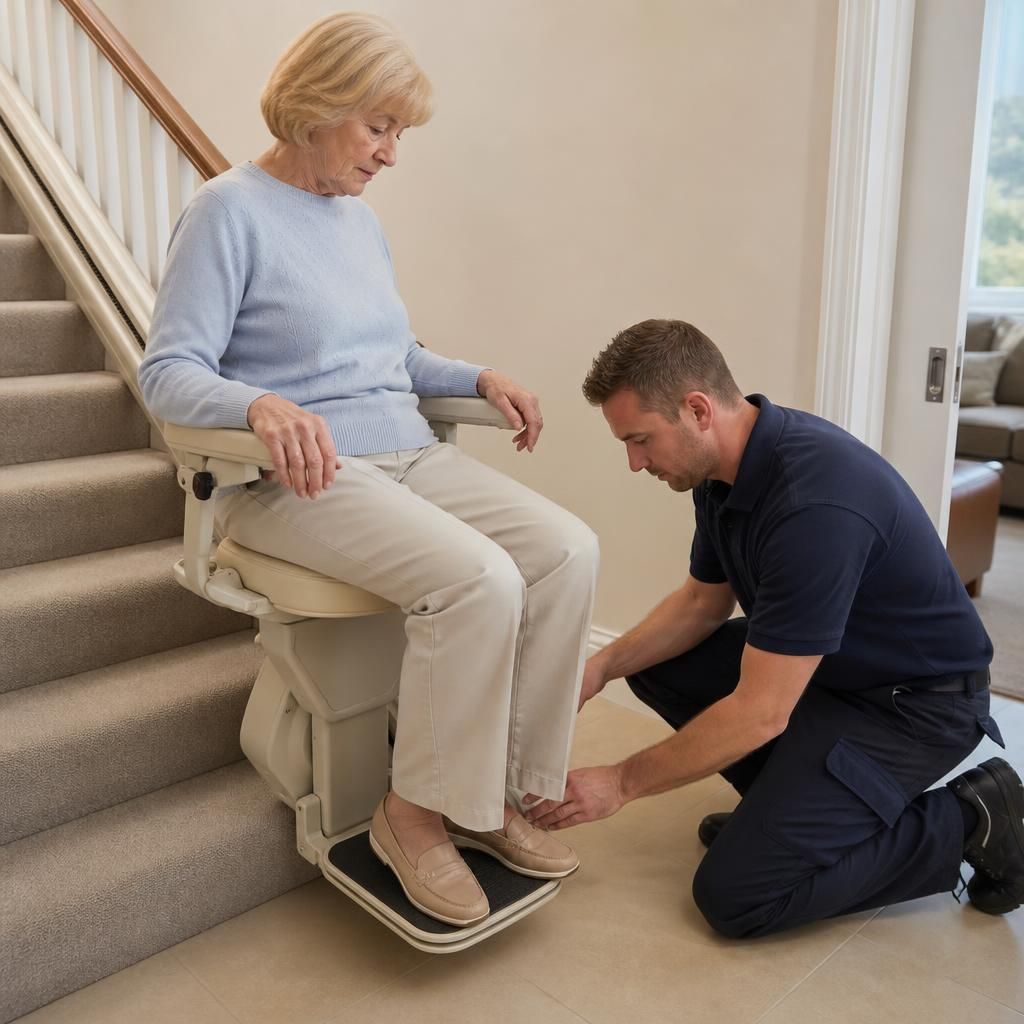
Arrange a professional Handicare stairlift safety inspection
If your Handicare stairlift shows unusual movement, fails to stop, will not charge or has a fault indication, stop using it and arrange a professional safety inspection. Contact Independent Stairlifts to book an assessment with a qualified technician.