
What is the importance of using genuine Handicare spares during maintenance and repairs?
Using genuine Handicare spares during maintenance and repairs helps ensure your stairlift remains safe, compatible and reliable. These parts are designed for the specific lift system, supporting correct operation, protecting performance and helping prevent avoidable damage caused by unsuitable replacements.
Using genuine Handicare spares during maintenance and repairs helps preserve the stairlift’s safety, compatibility and intended performance. Genuine parts are designed and approved for the relevant Handicare model, so they are more likely to fit correctly, communicate properly with the lift’s control systems and operate within the specifications set by the manufacturer.
A stairlift is made up of interdependent components, including the carriage, drive system, batteries, charger, controls, sensors and safety circuits. Replacing one part with an unsuitable alternative can affect how these components work together. A part may appear to fit but have different electrical characteristics, dimensions, materials or operating tolerances. This can lead to intermittent faults, reduced performance or additional wear elsewhere in the lift.
Genuine spares support safe operation. Handicare stairlifts use safety features such as obstruction sensors, seat and swivel-lock mechanisms, armrest controls, braking components and safety edges. These parts must respond consistently when the user operates the lift or when an obstruction is detected. Correct replacement components help the engineer restore the system in accordance with the lift’s design rather than relying on an unverified substitute.
Genuine parts are also matched to the specific stairlift model and, where relevant, its version or production specification. This is particularly important for batteries, chargers, remote controls, circuit boards, drive components and control switches. Even where two parts look similar, they may not be interchangeable. An engineer should identify the model and assess the fault before ordering a replacement.
They help maintain reliability and performance. Correctly specified spares can reduce the risk of recurring faults caused by poor fit, incompatible connections or unsuitable materials. This is important for customers who depend on their stairlift for everyday access between floors. Replacing a worn component with the correct part can also prevent the fault from placing unnecessary strain on related systems.
Battery and charging problems are a common example. A stairlift requires batteries that are suitable for its charging system and operating demands. An unsuitable battery may not charge correctly, may provide inadequate power or may deteriorate prematurely. Using the correct battery type, together with a compatible charger and properly fitted connections, supports dependable starting, stopping and travel.
Genuine spares can protect the wider stairlift from avoidable damage. A replacement part that does not match the lift’s electrical or mechanical requirements may cause repeated resets, error indications, excessive noise, poor charging or unexpected stoppages. Continuing to use the lift with an unsuitable part can make diagnosis more difficult and may increase the eventual repair required. Correct parts help an engineer identify and resolve the original issue more accurately.
They also make maintenance more predictable. Genuine components are supplied for the intended application and can be checked against the manufacturer’s technical information. This gives the servicing engineer a clearer basis for testing the lift after installation, including its movement, charging, controls and safety devices. The engineer can then confirm that the replacement has been fitted correctly and that the stairlift is safe to return to use.
Using genuine parts may also be important for warranty and service support. Warranty terms can vary according to the lift, the part and the work carried out. Unauthorised modifications or unsuitable replacement components may affect what support is available, particularly if they contribute to a later fault. Always check the warranty conditions for your specific stairlift and use a suitably qualified engineer for repairs rather than fitting safety-critical parts yourself.
Genuine does not mean that every component must be replaced immediately. A professional assessment should establish whether a part is worn, damaged or causing a fault, and whether adjustment, cleaning or another repair is appropriate. Replacing parts unnecessarily can add cost, while delaying replacement of a safety-critical or badly worn component can compromise reliability. The correct approach is to diagnose the problem first and fit the specified spare when replacement is required.
When arranging maintenance or a repair, provide the engineer with the stairlift model details and describe any symptoms, such as unusual sounds, slow movement, stopping on the track, charging problems or controls that do not respond. Ask whether the proposed part is a genuine Handicare spare and whether it is correct for your particular model. After the repair, the lift should be tested for smooth travel, secure seating, control response, charging and operation of its safety features.
If your stairlift is showing a fault, do not continue using it if it stops unexpectedly, moves erratically, emits a burning smell or has a damaged cable, control or safety component. Switch it off where appropriate, keep the lift clear for the user and arrange an assessment. Using genuine Handicare spares as part of a properly diagnosed repair helps maintain the lift’s designed operation and supports safe, dependable access around the home.
Genuine Handicare spares are important because they are specified for the electrical, mechanical and safety requirements of the relevant stairlift model. A part that looks similar may have different connections, dimensions or operating tolerances, which can affect the lift’s performance and create further faults.
This is particularly important for batteries, chargers, controls, sensors and circuit boards. The correct replacement allows the engineer to test the stairlift against its intended operating requirements, including smooth travel, reliable charging, responsive controls and safe stopping. Always ask a suitably qualified engineer to identify the fault and confirm that any replacement part is genuine and compatible with your particular Handicare model before it is fitted.
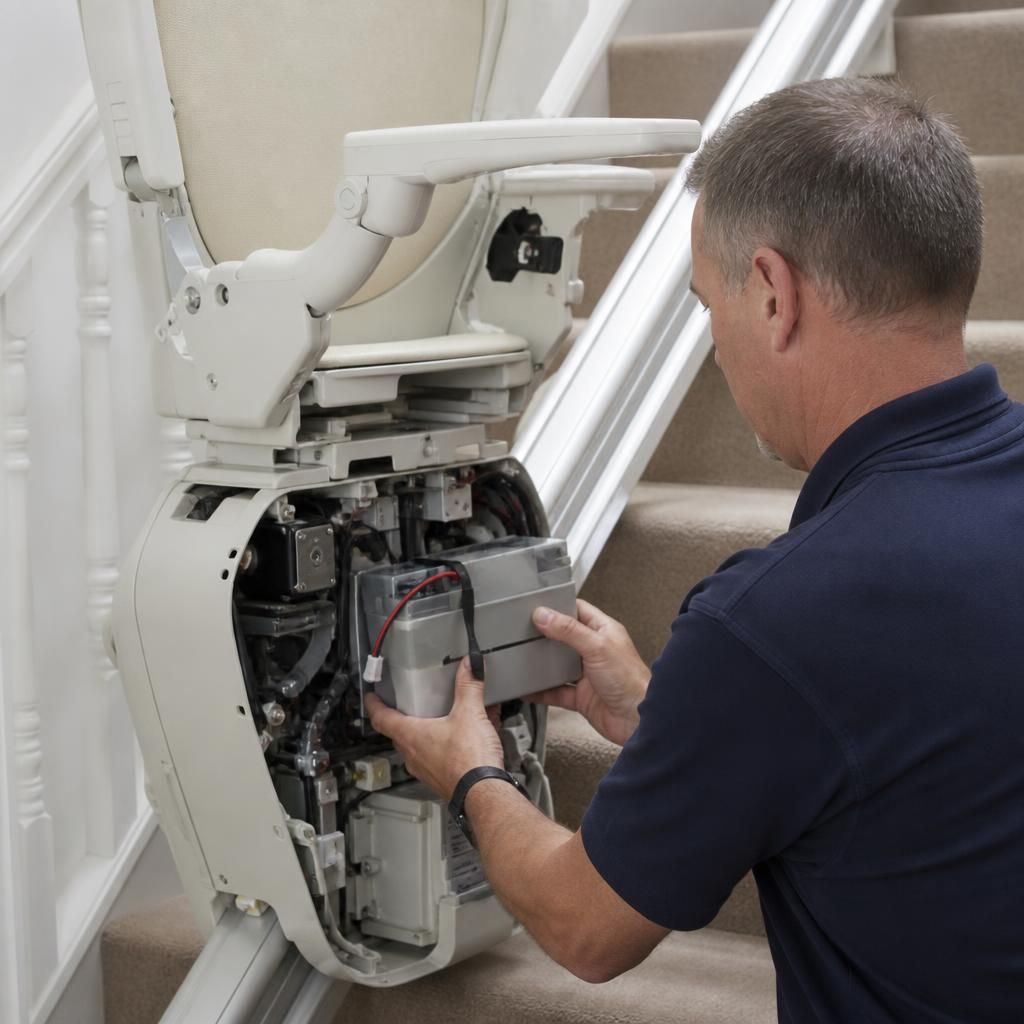
Arrange a Handicare stairlift repair with genuine spares
If your Handicare stairlift needs maintenance or repair, contact Independent Stairlifts to arrange an assessment and confirm the correct genuine spare for your model. A qualified engineer can diagnose the fault, fit the part and test the lift before returning it to use.