
How does regular maintenance impact the energy efficiency and operating cost of my Handicare stairlift?
Regular maintenance helps your Handicare stairlift use energy efficiently by keeping the batteries, charging system, motor and moving parts working as intended. It can also reduce operating costs by identifying wear early, preventing avoidable breakdowns and helping extend the service life of key components.
Regular maintenance can improve the energy efficiency of your Handicare stairlift and help control its operating cost by keeping the batteries, charger, motor, track and moving parts in good working order. A well-maintained lift is less likely to lose charge unnecessarily, work harder than intended or suffer a breakdown that requires urgent repair or replacement parts.
Maintenance does not usually make a stairlift consume dramatically less electricity, because a stairlift uses relatively little power and most of its energy is used during travel. The main benefit is that servicing prevents avoidable inefficiency and helps preserve the condition of components that affect charging, movement and reliability.
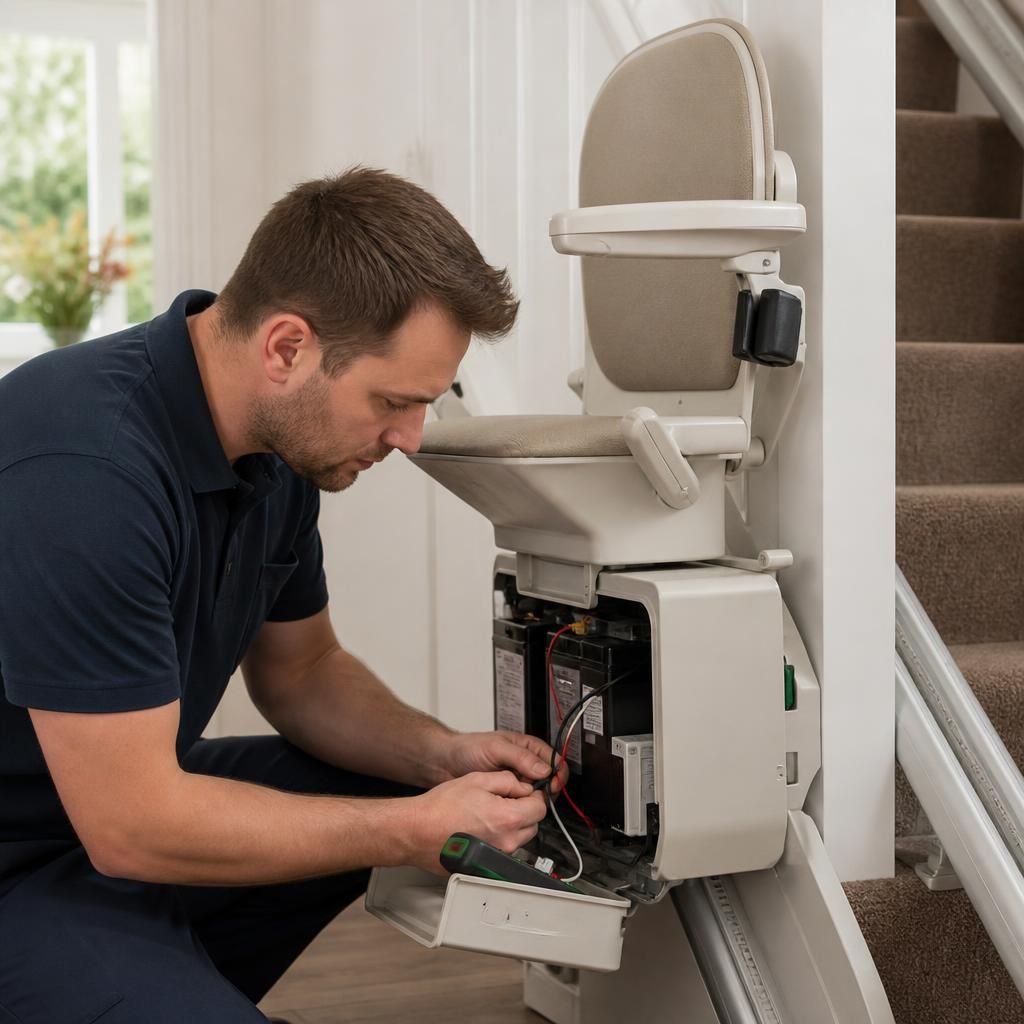
Battery condition is particularly important. Handicare stairlifts generally use rechargeable batteries, with the lift taking power from the batteries while travelling and recharging when parked correctly. During maintenance, a technician can check battery performance, charging voltage, connections and signs of deterioration. Batteries that are ageing or unable to hold a charge may cause the lift to recharge more often, stop sooner than expected or require repeated call-outs. Replacing worn batteries at the appropriate time can restore dependable operation and avoid putting additional strain on the charging system.
The charging points and charger should also be inspected. Dirt, oxidation, loose connections or damage can prevent an effective charge, even when the lift appears to be parked in the correct position. A technician can check that the charger is operating correctly and that the stairlift is making reliable contact with its charging points. Keeping the charger connected as instructed is normally important, as repeatedly allowing the batteries to become deeply discharged can shorten their service life.
Mechanical condition affects energy use as well. The motor, drive mechanism, rollers, gears and other moving parts must overcome friction as the lift travels. Wear, contamination, poor alignment or a developing mechanical fault can make movement noisier, less smooth or more demanding for the motor. Professional servicing allows these components to be inspected, cleaned or adjusted where appropriate, helping the stairlift operate as designed. Lubrication should only be carried out where specified by the manufacturer; applying the wrong lubricant or putting lubricant on unsuitable parts can attract dirt or affect braking and safety components.
A maintenance visit can also identify issues that increase operating costs indirectly. Examples include:
- batteries that no longer retain their charge;
- charging contacts that are dirty, damaged or incorrectly aligned;
- unusual resistance, juddering or noise during travel;
- worn rollers, gears or other drive components;
- loose electrical connections or damaged wiring;
- fault codes indicating a developing electrical or mechanical problem; and
- switches, sensors or safety edges that are not responding consistently.
Finding these problems early is usually more economical than waiting for a complete failure. A minor adjustment, clean or replacement of a wear component may prevent damage to more expensive parts and reduce the likelihood of the stairlift being unavailable. It can also help avoid additional costs associated with emergency attendance, repeated diagnostic visits or avoidable battery failure.
Regular servicing supports efficiency by confirming that the stairlift is working to its intended specification rather than by changing its basic power requirements. A technician should assess the overall condition of the lift, test its operation, inspect safety systems and check the charging and drive systems. The exact work depends on the model, its age, usage and installation environment. Outdoor lifts and stairlifts exposed to dust, damp or temperature changes may need particular attention because environmental conditions can accelerate corrosion and wear.
You can support efficient operation between professional services by:
- parking the stairlift at a designated charging point when it is not in use;
- keeping the track, charging contacts and surrounding area clean and free from obstructions;
- avoiding spills, excessive moisture and household cleaning products near electrical components;
- following the operating and charging guidance supplied for your model;
- not carrying loads beyond the stated limit; and
- reporting changes in speed, noise, stopping behaviour, battery performance or charging promptly.
Do not attempt to open the charger, alter wiring, repair the motor or replace internal components yourself. Unauthorised work can create a safety risk, cause further damage and may affect warranty conditions. Replacement batteries and other parts should be compatible with the specific Handicare model, and safety-critical repairs should be completed by a suitably qualified technician using appropriate parts.
Maintenance cannot eliminate every operating cost. Batteries and other wear components eventually need replacement, and the cost of a service depends on the stairlift model and its condition. However, planned maintenance generally gives you a clearer view of upcoming requirements and helps prevent small faults from becoming more disruptive and expensive. If your Handicare stairlift is travelling less smoothly, requiring more frequent charging or showing a warning, arrange an assessment rather than continuing to use it until it stops.
Regular maintenance helps your Handicare stairlift charge reliably and avoid unnecessary strain on its batteries and motor. A technician can check battery condition, charging contacts, connections and charger performance, helping the lift use power as intended.
Worn batteries, dirty contacts or mechanical resistance may lead to repeated charging, reduced travel performance or an unexpected breakdown. Identifying these issues early can reduce avoidable repair costs and help prevent damage to more expensive components. Keep the stairlift parked at its designated charging point when not in use and report changes in charging, speed, noise or movement promptly.
Book a Handicare Stairlift Maintenance Assessment
Book a Handicare stairlift maintenance assessment to check its batteries, charging system, drive mechanism and safety features. An assessment can identify developing faults early and help maintain reliable, efficient operation.