
How often should I schedule maintenance for my Handicare stairlift to ensure its optimal performance?
Schedule a professional service for your Handicare stairlift at least once every 12 months, or more frequently if advised for your model, usage or environment. Arrange an earlier inspection if you notice unusual noises, jerky movement, reduced battery performance, warning lights or repeated faults.
For most Handicare stairlifts, arrange a professional service at least once every 12 months. The precise interval should follow the recommendations for your model and any service agreement, because usage, the stairlift’s age and its environment can affect how often maintenance is needed. A lift used several times a day, installed outdoors or exposed to dust, damp or temperature changes may need more frequent attention.
Annual servicing is a preventative measure rather than a response to a fault. During a professional visit, the engineer can inspect the stairlift’s mechanical and electrical systems, check safety devices, assess the condition of the batteries and charging system, and identify wear before it affects reliability. The engineer should also test the lift under normal operating conditions and explain whether any adjustment, cleaning or replacement part is advisable.
Arrange an earlier inspection if you notice:
- Jerky, hesitant or unusually slow movement
- Grinding, clicking, squeaking or other unfamiliar noises
- The stairlift stopping unexpectedly or failing to complete a journey
- Reduced battery performance, charging difficulties or a low-battery warning
- Warning lights, fault codes or repeated error messages
- The seat, armrests, footrest or swivel mechanism becoming loose or difficult to operate
- The safety belt, sensors, controls or remote handset not working consistently
- Visible damage, corrosion, contamination or an obstruction on the rail or at the charging points
Do not wait for the next scheduled service if the stairlift behaves differently from normal. Stop using it if there is a serious safety concern, such as uncontrolled movement, a damaged safety belt, exposed wiring or a failure of the brakes or sensors, and contact a qualified stairlift engineer.
Usage and installation conditions should influence the schedule. A stairlift used by one person on a relatively infrequent basis may remain suitable for annual servicing, provided it is operating correctly. More regular servicing may be sensible where it carries a user many times each day, is used by more than one person, or is installed in a busy household. Outdoor models require particular attention because rain, moisture, dirt and temperature changes can affect electrical connections, batteries, sensors and exposed moving components.
Between professional services, carry out simple user checks without removing covers or attempting repairs. Keep the rail, footrest and travel path clear, wipe accessible surfaces with a suitable dry or slightly damp cloth, and make sure the stairlift is left on its charging point when it is not in use, unless the operating instructions state otherwise. Check that the seat belt fastens correctly and that the controls, swivel seat and safety sensors respond as expected. Never apply lubricant, dismantle the lift or use non-approved cleaning products unless the manufacturer’s instructions specifically allow it.
Battery condition is particularly important. Stairlift batteries can gradually lose capacity, even when the lift still appears to work normally. Frequent low-battery warnings, shorter journeys between charges or a lift that struggles away from the charging point should be reported to an engineer. Battery replacement should be based on test results and the condition of the existing batteries, using compatible, suitable parts rather than relying solely on appearance.
Keep a record of each service, including the date, work completed, parts fitted and any recommendations. This makes it easier to identify recurring faults and helps ensure that follow-up work is not missed. It can also support warranty or service-contract requirements, which may specify approved maintenance arrangements or particular servicing intervals. The manufacturer’s instructions and the terms applying to your stairlift should take priority where they differ from general guidance.
In practical terms, book the next professional service when the previous visit is completed rather than waiting until the lift develops a problem. If your Handicare stairlift is overdue, has recently developed symptoms or is used in demanding conditions, arrange an assessment with a qualified engineer so the appropriate maintenance interval can be confirmed.
Most Handicare stairlifts should receive a professional service at least once every 12 months, although the appropriate interval depends on the model, frequency of use and installation environment. A lift used several times a day, outdoors or in a dusty or damp setting may need more frequent inspection.
Do not wait for the annual appointment if you notice jerky movement, unusual noises, reduced battery performance, warning lights, charging problems or repeated stoppages. These signs can indicate wear or an emerging electrical, mechanical or safety fault. Stop using the lift if there is uncontrolled movement, exposed wiring or a damaged safety belt, and arrange an inspection with a qualified stairlift engineer.
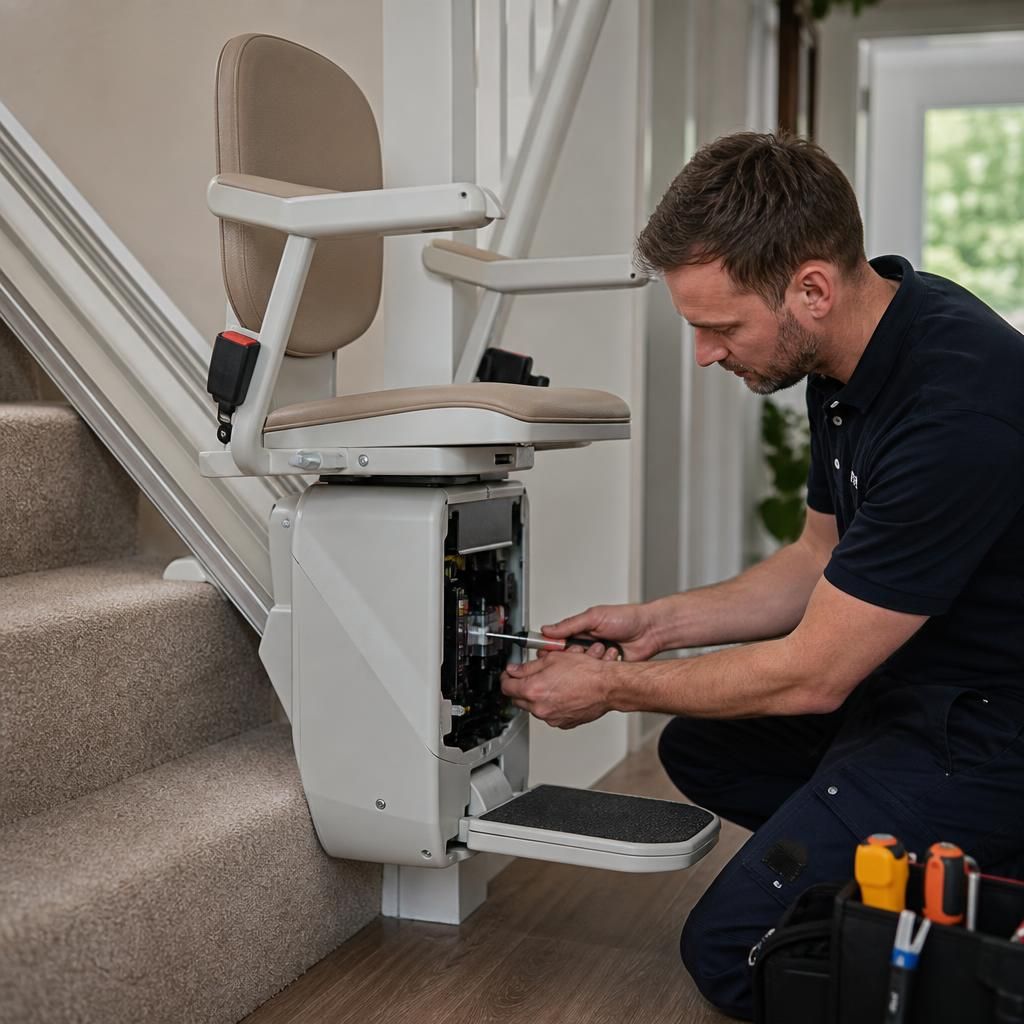
Book Your Handicare Stairlift Service
If your Handicare stairlift is due for its annual service, or you have noticed unusual movement, noises or battery problems, contact Independent Stairlifts to arrange a professional inspection. We can assess the lift and advise on any maintenance or parts required.