
How can I tell if my Handicare stairlift is due for maintenance, and what are the signs of potential issues or wear?
Your Handicare stairlift may be due for maintenance if it is making unusual noises, moving unevenly, stopping unexpectedly, showing warning lights, or needing more frequent charging. Visible wear to the seat, armrests, footrest, track or safety sensors should also be checked, and any safety-related fault should be assessed by a qualified stairlift engineer before continued use.
A Handicare stairlift is due for maintenance when its performance, charging behaviour, appearance or safety operation changes from normal. Unusual noises, jerky movement, unexpected stops, warning indicators, reduced battery performance and visible damage should not be ignored. Arrange an assessment with a qualified stairlift engineer if you notice any of these signs, particularly if the stairlift affects safe access between floors.
Some issues are caused by normal wear, while others can indicate a developing fault. Early maintenance can identify worn components before they affect reliability or safety. It is also advisable to follow the servicing intervals in your user documentation or service agreement, even when the stairlift appears to be working correctly.
Signs that maintenance may be due include:
- Unusual noises: grinding, clicking, squeaking, knocking or louder-than-usual motor noise can indicate wear, debris, a track-related issue or a component that needs adjustment.
- Uneven or hesitant movement: the stairlift should travel smoothly at a consistent speed. Jerking, stopping briefly, struggling on bends or sounding as though the motor is under unusual strain should be investigated.
- Unexpected stops or restarts: stopping during travel, failing to start immediately or requiring repeated use of the control may point to a battery, control, charging, sensor or electrical fault.
- Warning lights, tones or fault indications: pay attention to any indicator that differs from the usual charging or operating display. Consult the relevant Handicare user guide and report recurring warnings to an engineer rather than repeatedly resetting the stairlift.
- Reduced battery performance: needing to charge more frequently, receiving a low-battery warning sooner than usual, or finding that the stairlift will not complete its normal journey may indicate ageing batteries or a charging problem.
- Charging difficulties: check whether the stairlift is correctly positioned at its charging point and whether the charger or power supply appears connected. If it remains unable to charge, arrange a professional inspection.
- Changes to the seat or safety equipment: a loose, stiff or difficult-to-operate swivel seat, armrest, seat belt, footrest or safety sensor requires attention. Do not use the stairlift if a belt will not secure properly or a safety feature does not operate as intended.
- Visible wear or damage: inspect the seat upholstery, armrests, footrest, track, covers and controls for cracks, looseness, sharp edges or other deterioration. Cosmetic wear may not affect operation, but damaged or loose safety-related parts should be assessed promptly.
- Control problems: intermittent response from the armrest control or remote control, sticking buttons or a control that works only from certain positions may indicate a fault, a depleted remote battery or a communication issue.
Simple checks you can carry out safely
Before reporting a fault, confirm that the stairlift has power, is parked correctly at a charging point and is not showing an obvious obstruction. Keep the track clear of clothing, bags, furniture and other objects. Check that the seat is correctly positioned, the armrests and footrest are fully deployed as intended, and the seat belt is available and undamaged.
Keep the track and surrounding area reasonably clean, following the cleaning instructions supplied for your model. Do not apply oil, grease or household cleaning products to the track or moving parts unless the manufacturer’s instructions specifically allow it. Incorrect lubrication can attract dirt or affect components that are designed to operate without user-applied lubricant.
Check the user guide for the meaning of warning tones or indicator lights. A single low-battery indication after heavy use may have a straightforward explanation, but repeated warnings, failure to charge or any fault that returns after a reset should be referred to an engineer.
When to stop using the stairlift
Stop using the stairlift and seek professional advice if it moves unpredictably, stops repeatedly, emits a burning smell, shows signs of electrical damage, has a damaged seat belt, or if the seat, armrests, footrest or swivel mechanism is loose. You should also stop use if a safety sensor does not respond, the stairlift runs without the expected safety control, or anyone feels unsafe during travel.
Do not remove covers, bypass safety switches, alter wiring or attempt to repair the motor, batteries or control system yourself. These parts can present electrical and mechanical risks, and bypassing a safety feature can make the stairlift unsafe. If the stairlift has stopped between floors, follow the emergency guidance in your user instructions and contact the appropriate service support rather than trying to move it manually.
Routine maintenance versus an urgent fault
Routine maintenance is appropriate where the stairlift remains safe to use but has developing symptoms such as increased noise, slower charging or minor control changes. An urgent assessment is more appropriate where there is an unexpected stop, uncontrolled movement, structural damage, a failed safety feature, burning smell or repeated loss of power. Explain the symptoms clearly when booking an engineer, including when they occur, whether the stairlift is on a straight or curved section, and any warning light or tone displayed.
During professional maintenance, an engineer can inspect the drive system, track, batteries, charging points, controls, seat mechanism and safety devices, as well as check for wear, secure fixings and correct operation. The engineer can then advise whether adjustment, cleaning, a replacement part or further repair is required. Using suitable Handicare parts where replacement is necessary helps maintain compatibility with the stairlift’s design and safety systems.
Keep a note of recurring symptoms and do not wait for a complete breakdown before arranging service. If you are unsure whether a change is significant, contact Independent Stairlifts for practical advice and an assessment from a qualified stairlift engineer.
A change in how your Handicare stairlift moves is one of the clearest signs that maintenance may be due. Grinding, clicking or knocking noises, jerky travel, hesitation on bends, repeated stopping or slower-than-usual movement can indicate wear in the drive system, track or controls. These symptoms should be reported to a qualified stairlift engineer rather than ignored or repeatedly reset.
Stop using the stairlift and seek professional advice if it moves unpredictably, emits a burning smell, shows electrical damage, or has a loose seat, armrest, footrest or seat belt. A failed safety sensor or damaged belt should be treated as an urgent safety issue. Do not remove covers, bypass switches or attempt repairs yourself.
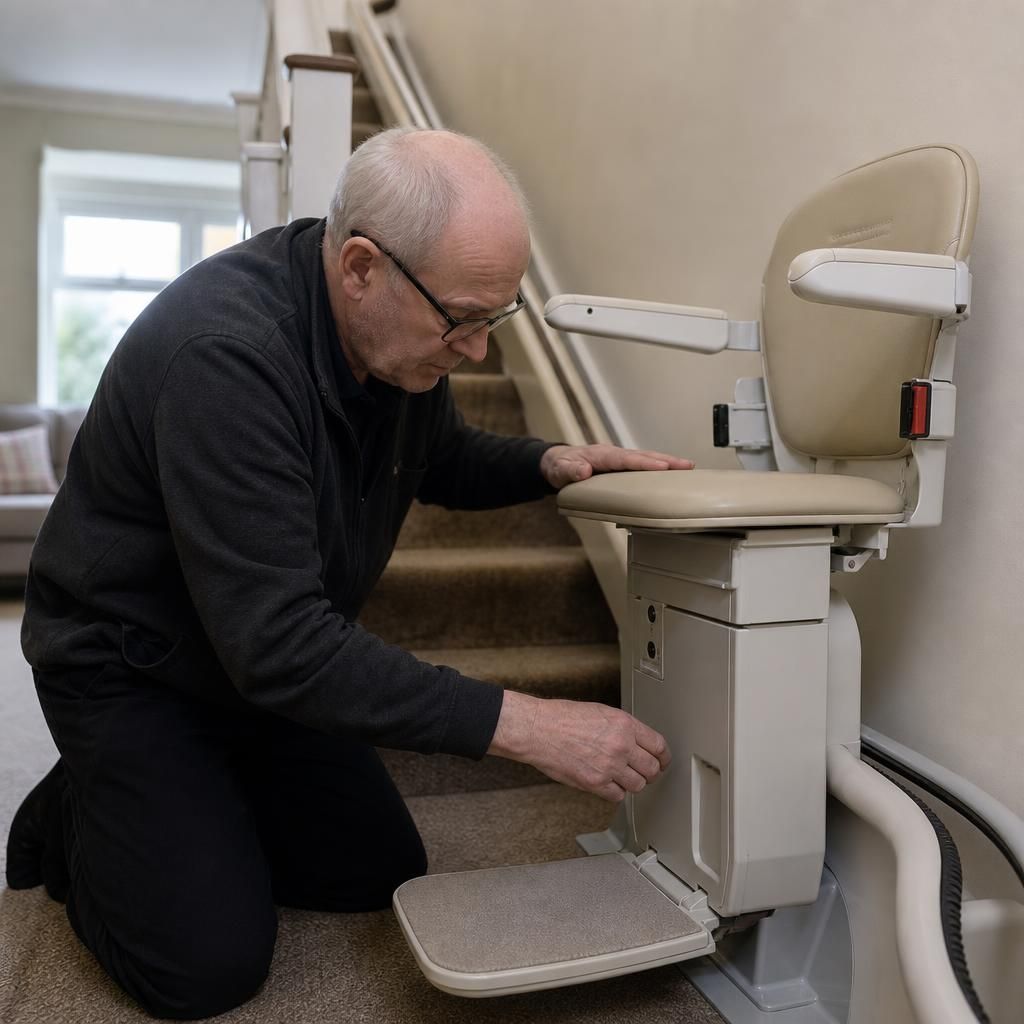
Arrange a Handicare stairlift maintenance assessment
If your Handicare stairlift is showing signs of wear, unusual movement or charging problems, contact Independent Stairlifts to arrange a maintenance assessment with a qualified engineer. We can help identify the cause and advise whether servicing, adjustment or replacement parts are required.