
What safety features are included with chairlifts for split-level stairs?
Chairlifts for split-level stairs typically include a secure seat belt or harness, swivel seat, obstruction sensors, automatic braking and safety edges that stop the lift if an obstacle is detected. Additional features may include a lockable or retractable seat, emergency stop controls, battery backup and sensors that prevent movement unless the seat and footrest are correctly positioned.
Chairlifts for split-level stairs are normally equipped with several layers of protection, including a seat belt or harness, swivel seat, obstruction sensors, safety edges, automatic braking, emergency controls and battery backup. Because a split-level staircase may include turns, landings or changes in gradient, the exact safety specification depends on the track design, chair model and assessment of your home.
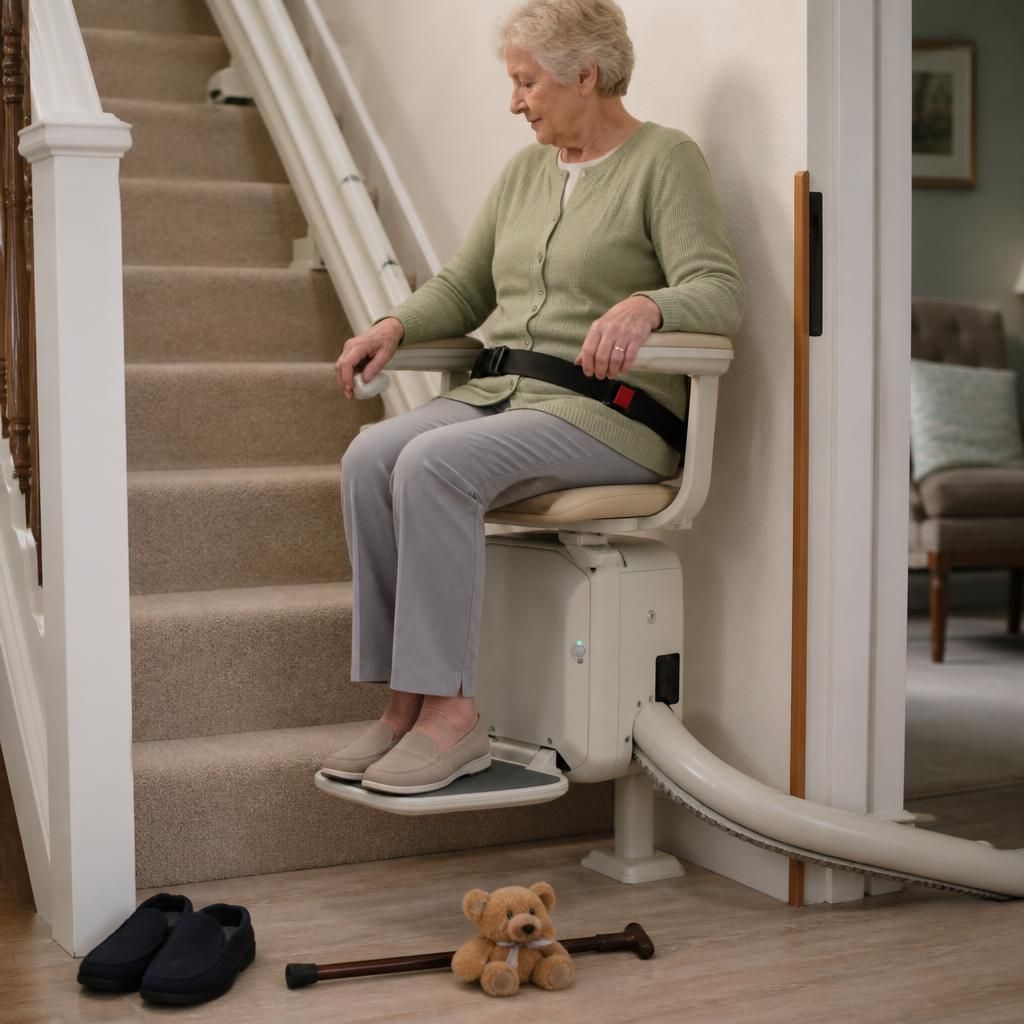
Seat belt and secure seating: A lap belt or harness helps keep the user safely positioned while the chair is moving. The lift should not be used unless the belt is fastened correctly. Many models also have armrests and a shaped seat to provide additional support, particularly when travelling around a bend or approaching an intermediate landing.
Swivel seat and safe transfer: A powered or manual swivel seat turns towards the landing when the chair reaches the top or bottom of the staircase. This allows the user to get on and off facing the landing rather than twisting towards the stairs. A safety interlock prevents the lift from travelling unless the seat is returned to its correct riding position. Some installations may also include a powered swivel or an extended swivel mechanism where the landing is narrow.
Obstruction sensors and safety edges: Sensors and pressure-sensitive edges are fitted around parts of the chair and footrest that could contact an object. If the system detects a toy, pet, walking aid, loose item or other obstruction on the stairs, it stops the chair or prevents it from moving. This is particularly important on split-level staircases, where more than one flight may be used by the household and the track can pass close to landings, walls or doorways.
The stairs should still be kept clear. Sensors are an additional safeguard, not a replacement for checking the route before use. Items left on an intermediate landing may obstruct the chair, interfere with access or become caught between the moving parts and the surrounding structure.
Braking and control systems: A chairlift usually has a controlled start and stop, together with an automatic braking system that holds the chair securely when it stops. If the control is released, the chair should stop rather than continue travelling. A speed governor or related overspeed protection may also be included, depending on the design. These systems are checked during commissioning and servicing.
Controls are commonly located on the armrest, allowing the passenger to start, stop and control the direction of travel. Remote controls may be provided so the chair can be called to another level when required. An emergency stop control allows movement to be halted immediately. The user should be shown how to reset the lift safely after an emergency stop and when to contact the service team rather than attempting a repair.
Position and movement interlocks: The lift will generally operate only when key components are in the correct position. These may include the seat, armrests, footrest, swivel mechanism and safety belt. Folding or retractable parts are designed to reduce obstruction when the chair is parked, but they must be fully secured before travel. On a split-level installation, the track and chair are also configured to maintain the required clearance around bends and landings.
Battery backup: Most modern chairlifts use rechargeable batteries, allowing the lift to complete journeys during a mains power cut. The batteries charge when the chair is parked at a charging point, so the lift should normally be left in its designated position when not in use. If the chair stops working or gives a low-battery warning, avoid repeatedly operating it and arrange advice if it does not recharge.
Track and installation safeguards: A bespoke rail is measured and positioned to follow the staircase, including any changes between flights. Correct installation helps maintain clearance from walls, balustrades, doors and other users of the stairs. At the ends of the rail, the chair is designed to stop within its programmed travel limits. Where necessary, the assessment may identify additional measures such as a hinged rail, automatic folding section or alternative parking position to prevent the track affecting a doorway or walkway.
Diagnostic and service features: Chairlifts may record fault conditions or provide audible or visual warnings for issues such as low battery, an open safety circuit or an obstruction. These warnings should not be ignored. Routine servicing checks the belt, seat, sensors, brakes, batteries, charging points, controls, rail fixings and moving parts. The service schedule should follow the manufacturer’s instructions and the conditions of the installation.
Safety equipment can differ between straight and curved chairlifts, and between indoor and outdoor installations. During the assessment, explain any concerns about balance, transferring, reduced grip, memory problems, pets or other household users. The recommended chair and controls can then be selected around the person’s abilities as well as the staircase layout. Before using the lift independently, the user should receive a practical demonstration covering boarding, fastening the belt, travelling around the split-level route, stopping in an emergency, charging and reporting a fault.
No safety feature removes the need to use the chairlift as instructed. Do not carry additional passengers or bulky items, stand while travelling, or use the lift if the belt, controls or sensors appear faulty. If the chair behaves unexpectedly, switch it off if it is safe to do so, keep the stairs clear and contact the service team for advice.
Obstruction sensors and pressure-sensitive safety edges stop a chairlift if the footrest or chair meets an object on the stairs. This helps protect against items such as footwear, toys, pets or walking aids, which can be particularly important where the rail passes around a landing or close to a doorway.
These safeguards are an additional protection, not a replacement for keeping every flight and landing clear. Check the route before travelling and contact the service team if the chair stops unexpectedly, repeatedly detects an obstruction or shows a fault warning.
Discuss safety features for your split-level stairlift
If you would like to review the safety features fitted to your split-level chairlift, contact Independent Stairlifts to discuss your staircase, mobility needs and any concerns about day-to-day use.