
How long does the installation process for a chairlift in a split-level home typically take?
A chairlift installation in a split-level home is typically completed within a day once the stairway has been assessed and the lift has been prepared, although complex layouts may take longer. The assessment, measurements and any bespoke rail manufacturing take place beforehand, so the overall process from initial survey to installation depends on the staircase configuration and equipment required.
A chairlift installation in a split-level home is often completed in a day once the survey is complete and the equipment is ready, although a more complex staircase may require additional installation time. The overall process includes an initial assessment, detailed measurements, rail design and manufacture where needed, delivery, fitting, testing and handover.
The first stage is a survey of the staircase and surrounding areas. An assessor will examine the number of flights, the position and size of any landings, the available headroom, the width of the stairs and the locations of doors, radiators and other obstructions. They will also consider how the chairlift will start and finish, where it should park and whether the user needs to transfer between separate flights.
This assessment is particularly important in a split-level home because the lift may need to negotiate a turn, stop at an intermediate landing or work across more than one staircase. Depending on the layout, the most suitable solution could be a single continuous rail, a rail with specially designed bends, or separate chairlifts serving different flights. The chosen arrangement affects both preparation time and the duration of the fitting.
For a relatively straightforward configuration, the surveyor can usually confirm the proposed design and installation requirements during the visit. If the rail must follow unusual curves, tight turns or changes in stair direction, detailed measurements are used to produce a bespoke rail. The manufacturing and delivery stage takes place before the installation appointment, so the fitting visit is not normally the point at which the design is developed.
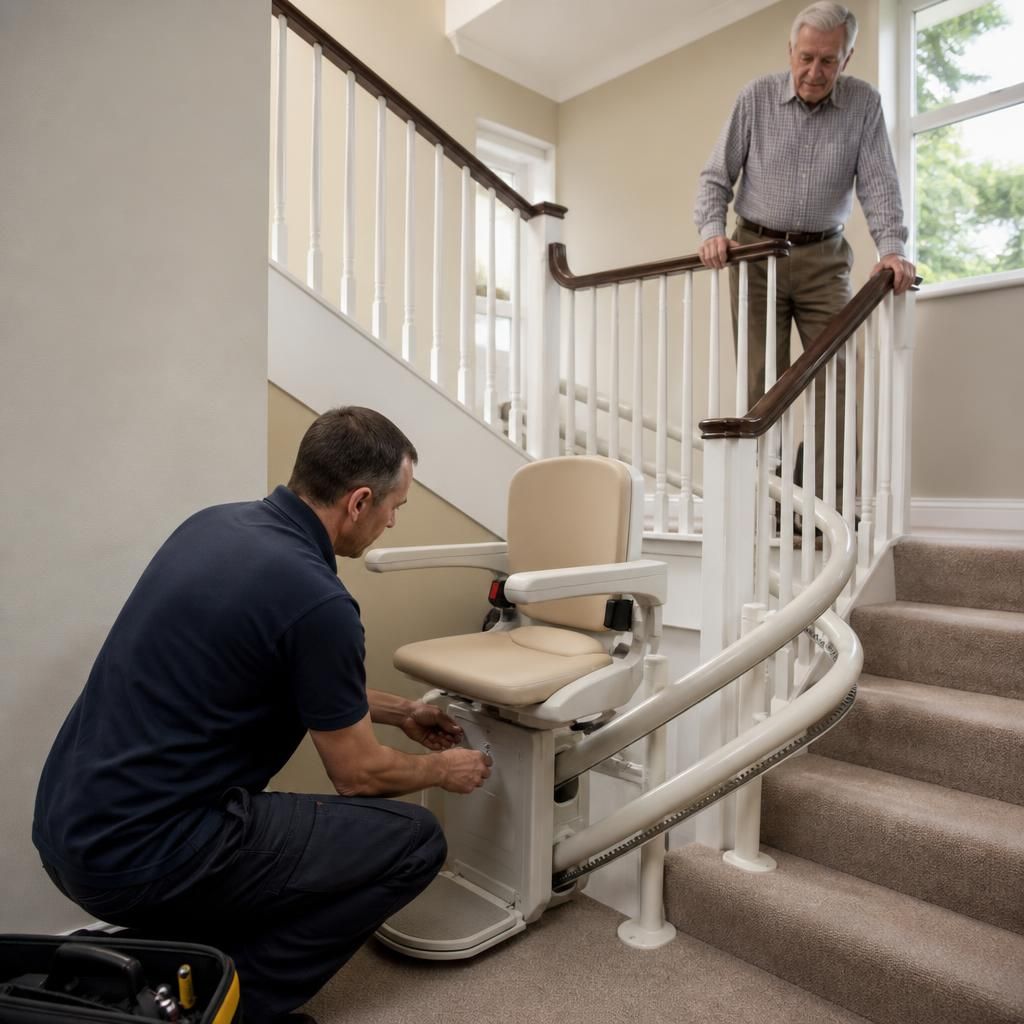
On the installation day, the fitting team will protect the relevant areas, position the brackets and secure the rail to the stairs or suitable supporting structure. The chair, drive unit, controls and charging equipment are then installed and connected. In most domestic installations, substantial structural alteration is not needed because the rail is generally fixed to the stair treads rather than the wall. However, the team may need to allow extra time if access is restricted or if minor adjustments are required to accommodate the building.
A split-level installation can take longer where there are several flights, a tight landing, limited space for parking the chair or a requirement for more than one lift. Additional time may also be needed if the staircase has unusual dimensions, if electrical work is required, or if the installation must be coordinated with other building work. In some homes, the safest arrangement involves separate lifts rather than one system covering every section, which adds to the fitting and testing process.
After the equipment has been fitted, it is checked carefully. The installer will test the movement of the chair, the operation of the controls, charging points, sensors, seat belt and safety systems. They will also check clearances at landings and turns, confirm that the chair parks correctly and make sure the lift does not obstruct normal use of doors, walkways or the staircase.
The user or a responsible family member should receive an explanation of how to operate the chairlift safely, including starting and stopping, using the swivel seat or folding components, charging the lift and responding to basic warnings. It is useful to ask questions during this handover and to practise the controls before the installer leaves. Operating instructions and information about ongoing servicing should also be provided.
To help the appointment run efficiently, keep the staircase and landings clear, make sure the installation team can reach the electrical supply and identify any access or parking restrictions in advance. Tell the surveyor about doors that must remain open, furniture that cannot be moved and any concerns about transferring on or off the chair. These details can influence the final position and the time required.
The most reliable indication of timing comes from the individual survey, because split-level staircases vary considerably. Independent Stairlifts can confirm whether the proposed chairlift is likely to be fitted in a single visit or whether the configuration requires additional preparation, bespoke rail work or more than one installation stage.
The installation appointment for a split-level chairlift is usually completed in a single visit once the staircase has been surveyed and any bespoke rail has been manufactured. The fitting team secures the rail, installs the chair and controls, connects the charging equipment, and tests the lift through every turn, landing and stopping position.
Extra time may be needed where the staircase has tight turns, restricted access, limited parking space or separate lifts for different flights. Keeping the stairs and landings clear before the appointment helps the installation proceed efficiently.
Book Your Split-Level Stairlift Assessment
Book your split-level stairlift assessment with Independent Stairlifts to confirm the most suitable design and installation timescale for your home.