
What is the installation process for wheelchair stairlifts?
A wheelchair stairlift is installed through a tailored home survey, followed by fitting the supporting rail or platform system to suit your staircase and access needs. Once installed, the system is thoroughly tested and you are shown how to use it safely before completion.
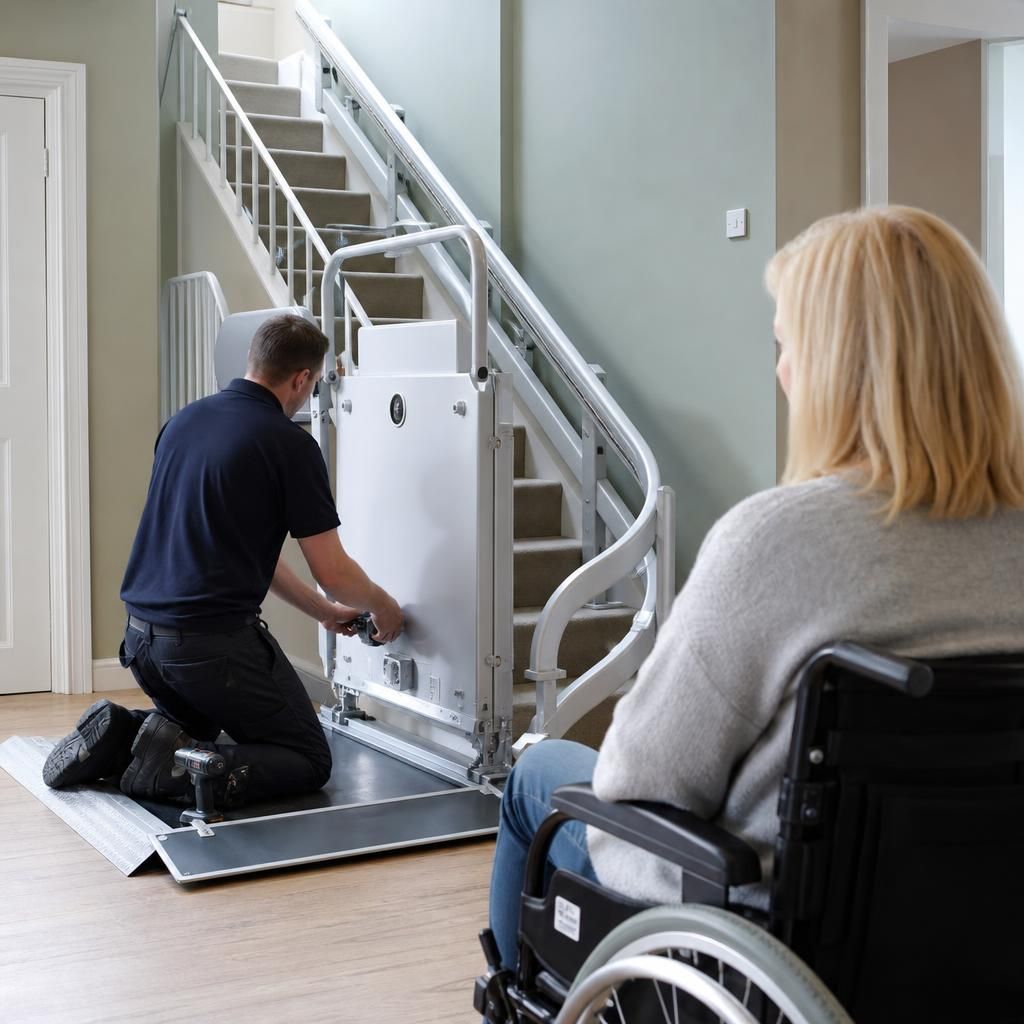
The installation of a wheelchair stairlift starts with a tailored assessment of your home and wheelchair, followed by the design and fitting of a suitable rail and platform system. The installer then connects the controls and power supply, tests every safety function, and demonstrates how to use the lift safely. The aim is to provide reliable access between floors while preserving as much stairway and landing space as the property allows.
1. Home survey and access assessment
An experienced surveyor visits your home to assess the staircase, landings and the way you use your wheelchair. This is more detailed than simply measuring the stair width. The assessment normally considers:
- Whether the staircase is straight, curved, narrow, steep or interrupted by landings.
- The available space at the top and bottom for safe boarding, parking and turning.
- Doorways, radiators, bannisters, low ceilings and other obstructions.
- How the rail can be fixed securely to the stairs or supporting structure.
- The dimensions, weight and turning requirements of your wheelchair.
- Whether you will remain in the wheelchair during travel or need to transfer to a separate seat.
- The position of controls, call stations, charging points and any remote controls.
- Suitable locations for the platform when it is folded or parked, so that it does not unnecessarily restrict the staircase.
The surveyor should also discuss how you approach the lift, whether a carer will assist you, and what would happen if the lift stopped during a journey. These practical details help determine the most suitable platform size, access direction and control arrangement.
2. Design and installation planning
After the survey, the proposed system is matched to the staircase and your mobility needs. A wheelchair stairlift may use a rail fixed to the stair treads or another suitable supporting structure. On a curved staircase, the rail is normally manufactured to follow the individual route rather than relying on a standard straight section.
The installation plan should explain where the platform will travel, where it will park, how you will board and leave it, and what changes, if any, are needed to the surrounding area. It should also identify the electrical requirements and whether any minor preparation is necessary before fitting. If the proposed position could affect a doorway, hallway or escape route, this should be discussed and resolved before installation begins.
3. Preparing the property
Most preparation involves clearing the staircase and landing of furniture, ornaments and other items that could obstruct the installation team. You may also need to ensure that the wheelchair can approach the boarding points safely. The installer will confirm whether a suitable power supply is already available or whether an electrical connection needs to be arranged.
Good installers take reasonable steps to protect floors, walls and furnishings while carrying equipment into the property. Fitting can create some noise and temporary disruption, particularly where the rail is being secured to the stairs, but the work should be planned to keep disruption under control.
4. Fitting the rail and platform
The installer first positions and secures the rail according to the approved design. The rail must be aligned accurately so the platform moves smoothly and maintains safe clearance from walls, bannisters and other obstacles. The platform carriage, folding platform, ramps, safety arms and control equipment are then fitted to the rail.
Where the platform folds when not in use, the installer checks that it can be raised and lowered without trapping fingers or obstructing normal movement on the stairs. Boarding ramps and edge protection are positioned to help the wheelchair move on and off the platform safely. The final arrangement will depend on the lift model, staircase and wheelchair type.
5. Connecting power and controls
The lift is connected to its power and charging system in accordance with the manufacturer’s instructions. Many systems use rechargeable batteries so that the lift can complete journeys if the mains supply is interrupted, although the exact power arrangement varies between models.
Controls may be fitted on the platform, at the armrest or on the wall, with additional call controls at the boarding points where appropriate. They should be positioned so that you or your carer can operate the lift without stretching or leaving the wheelchair unnecessarily. The installer will explain charging positions and any indicator lights that show the battery or system status.
6. Testing and commissioning
Before the installation is handed over, the engineer carries out functional and safety checks. These normally include:
- Running the platform over the complete staircase route.
- Checking that the platform starts, stops and parks correctly.
- Testing the ramps, safety arms, restraints and platform edges where fitted.
- Confirming that sensors respond to obstacles or unsafe conditions as designed.
- Checking the emergency stop, alarms and manual lowering or recovery arrangements.
- Testing the charging system, batteries and controls.
- Confirming that the lift remains stable and that clearances are maintained throughout travel.
Any adjustment identified during these checks should be completed before you are asked to use the stairlift independently. Commissioning is an important part of the installation rather than an optional final check.
7. Demonstration and handover
The installer should demonstrate the full journey, including boarding, securing the wheelchair, operating the controls, stopping safely and leaving the platform. You should be shown how to fold or park the platform, use the call controls, connect the charger and respond to an alarm or power interruption.
If a carer or family member will help you, they should be included in the demonstration. Ask the engineer to repeat any part of the operation that is unclear, particularly the emergency procedure and what to do if the platform stops away from a landing. You should receive the operating instructions, warranty information and details of who to contact for servicing or technical support.
How long does installation take?
The time required depends on the staircase, the complexity of the rail, the availability of a suitable platform and any electrical or building preparation. A straightforward installation may involve less work than a curved or unusually configured staircase. Some bespoke systems require manufacturing before fitting, so the survey and installation will not always take place as one appointment. Your installation team should explain the expected timetable after the assessment and tell you about any preparation needed in advance.
What you should check before the team leaves
- That the platform reaches every intended boarding and exit point.
- That you can approach, board and leave the platform with your wheelchair safely.
- That the controls are within comfortable reach and clearly understood.
- That the platform folds or parks as agreed and does not create an avoidable obstruction.
- That you know how to charge the lift and recognise a fault or low-battery warning.
- That you have received the instructions and contact details for assistance.
A wheelchair stairlift should not be treated as ready for everyday use until the installation has been tested, the operating instructions have been explained and you are satisfied that the layout works for your wheelchair and normal routine. If your wheelchair, home layout or access needs change later, arrange a professional review rather than modifying the platform, rail or controls yourself.
Wheelchair stairlift installation begins with a detailed home survey, not with fitting the equipment. The surveyor assesses your staircase, landings, obstructions and wheelchair dimensions to determine how the platform should travel, where it can be boarded safely and where it will park when not in use.
The assessment also considers whether you will stay in your wheelchair during the journey, the assistance a carer may provide, the position of controls and the available power supply. These details allow the rail, platform, ramps and safety features to be configured around your home and everyday routine. Any potential obstruction to a doorway, hallway or escape route should be identified and resolved before installation begins.
Arrange Your Wheelchair Stairlift Home Assessment
Arrange your wheelchair stairlift home assessment to review your staircase, wheelchair and access requirements. Contact Independent Stairlifts to discuss the most suitable installation for your home.