
What are the safety features of wheelchair stairlifts?
Wheelchair stairlifts are designed with safety features such as a stable platform, locking access barriers, safety sensors, secure controls and an emergency stop function. Many models also include battery backup and obstruction detection to help the lift stop safely if it encounters an obstacle or power interruption.
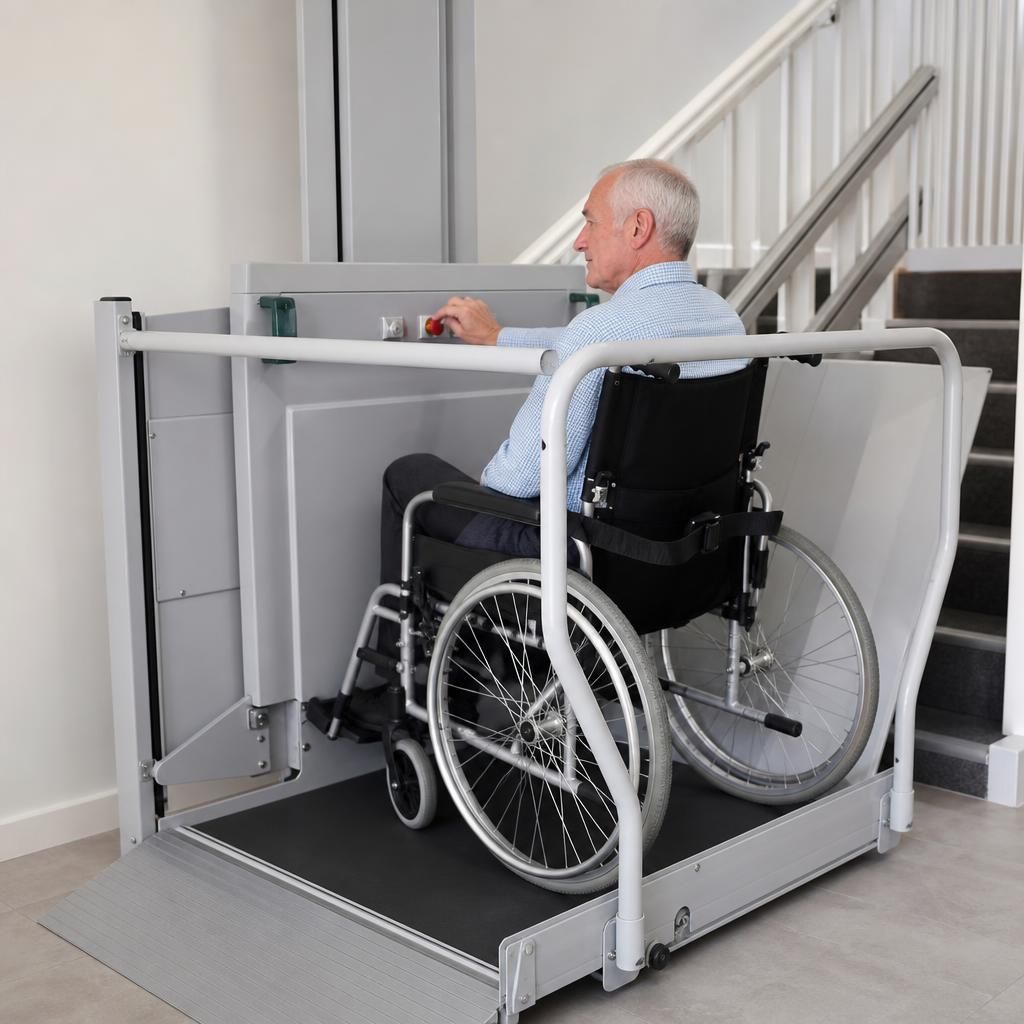
Wheelchair stairlifts use a combination of physical restraints, automatic sensors, user controls and backup systems to transport a wheelchair user safely between levels. The exact arrangement depends on the model and staircase, but the main safety features usually include a stable platform, access ramps or barriers, a wheelchair restraint, obstruction detection, emergency stopping, controlled movement and battery backup.
Stable platform and protective edges
The platform is designed to support the wheelchair and user during travel. Its surface should provide a secure, reasonably level area, with raised edges or other protective features to help prevent the wheelchair from moving towards the edge. Some platforms fold when not in use, which can help preserve access to the stairs and reduce the risk of someone walking into the equipment.
Platform size and safe working load are important. The platform must be suitable for the wheelchair’s overall dimensions, turning arrangement and combined weight of the chair and user. A professional assessment confirms these requirements rather than relying solely on the wheelchair’s seat width.
Access ramps, barriers and locking mechanisms
Many wheelchair stairlifts have folding ramps, raised edges or access barriers at the platform entrance. These help the wheelchair roll onto the platform and reduce the possibility of it moving off while the lift is travelling. Depending on the design, a barrier may rise automatically or need to be positioned by the user or carer.
Safety interlocks are used to prevent movement unless the platform, ramps and barriers are in their required positions. The lift should also prevent a barrier from being opened while the platform is moving. Never bypass an interlock or operate the lift if a barrier does not close or lock correctly.
Wheelchair and user restraints
A wheelchair stairlift may include wheelchair restraint straps, clamps or another approved securing system. These hold the chair in the correct position and help prevent unwanted movement during acceleration, travel and stopping. Some installations also require the wheelchair brakes to be applied, while others may have a dedicated docking or locking arrangement.
Restraints must be used exactly as instructed. They should be positioned around suitable structural parts of the wheelchair, not around removable trays, footrests or other components that are not designed to take restraint loads. A seat belt or harness may be available on some platforms, but this does not replace securing the wheelchair correctly.
Controls designed to prevent accidental operation
Controls are commonly provided on the platform and at the landings, with some systems also offering a remote control for a carer. Controls are normally designed to require continuous pressure: the lift moves only while the operating control is held. Releasing it should stop the platform in a controlled manner.
Some models include key switches, lockable controls or other access controls to prevent unauthorised use. Controls should be within comfortable reach without requiring the user to lean outside the platform. The installer can explain which control is intended for the wheelchair user and which is best used by a carer.
Obstruction and crush protection
Sensors and pressure-sensitive edges can detect an obstruction in the platform’s path. If the lift encounters an object, the safety system should stop or prevent movement, depending on the direction of travel and the type of sensor fitted. These features help protect against trapping at stair edges, landings or other points where the platform passes close to the building.
Obstruction detection is not a substitute for checking the route. Toys, furniture, loose rugs, storage items and people should be kept clear of the stairs and landings. A sensor may not detect every small or soft object, and the platform should never be operated when its path cannot be seen or safely monitored.
Emergency stop and manual recovery
An emergency stop control allows the user or carer to stop the lift if an unexpected problem occurs. Once activated, the lift may need to be reset according to the manufacturer’s instructions. Stopping in an emergency is different from using the normal control to park the platform.
Installers should also explain what to do if the lift stops between floors, including how to contact assistance and whether a trained person can use a manual lowering or recovery facility. Do not attempt to force the platform, release mechanical parts or climb off onto the stairs unless a qualified professional has given specific instructions and it is safe to do so.
Battery backup and controlled stopping
Most powered wheelchair stairlifts use rechargeable batteries or have a battery backup system so that the platform can complete a journey, or be moved to a safe position, during a mains power failure. Battery operation does not mean the lift can be used indefinitely without mains power. The batteries need to remain charged, and the platform should be returned to its charging point when required.
Charging points, battery condition and warning indicators should be checked as part of routine servicing. If the lift repeatedly reports a low battery, moves more slowly than usual or fails to complete its normal journey, stop using it and arrange a professional inspection.
Speed, movement and travel controls
Wheelchair stairlifts are designed to travel at a controlled speed, with gradual starting and stopping to reduce movement on the platform. The drive system and braking components are engineered to keep the platform stable on the rail or track. Limit switches and position sensors help the lift stop at the correct points at the top and bottom of the staircase.
Some installations include automatic levelling or a mechanism that keeps the platform appropriately aligned as it follows the stairs. The platform should remain stable and predictable throughout travel. Unusual vibration, jolting, slipping, noise or changes in stopping position should be reported rather than treated as normal wear.
Alarms, indicators and communication
Audible alarms, warning lights or display messages can indicate conditions such as an open barrier, an obstruction, low battery or a fault. These warnings should not be ignored. The operating instructions explain what each indicator means and whether the issue can be resolved by removing an obstruction, charging the lift or resetting a control.
If the user may be alone, consider how they would summon help if the lift stopped. A telephone or personal alarm kept within reach may be appropriate, but it should not be placed where it could fall into the platform mechanism or obstruct the controls.
Safety features depend on correct installation
Safety systems are only effective when the lift is correctly specified, installed and adjusted for the staircase and wheelchair. The assessment should consider the stair width, landings, doorways, headroom, access at both ends, the wheelchair’s dimensions and the user’s ability to operate the controls. The installer should also check that the platform does not create an unacceptable obstruction to other people using the stairs.
After installation, the user and any regular carers should receive practical instruction. This should cover positioning the wheelchair, applying brakes and restraints, closing barriers, operating the controls, responding to alarms, using the emergency stop and dealing with a power cut. Keep the operating manual available and make sure anyone who may use the lift understands the same procedure.
Daily checks for safer use
- Check that the platform, ramps and barriers are free from damage and close or lock as expected.
- Make sure the wheelchair is within the permitted size and weight limits and is positioned in the instructed location.
- Apply the wheelchair brakes and use all required restraints before travelling.
- Keep hands, feet, bags and clothing inside the platform and away from the rail, drive system and stair edges.
- Check that the route is clear and that other people are not on the stairs or at a landing where the platform will travel.
- Do not carry loose items that could fall into the mechanism or interfere with a barrier or sensor.
- Stop using the lift if a safety feature does not operate, a warning appears or the lift behaves differently.
Regular servicing is also part of safe operation. A qualified engineer can inspect the drive, brakes, rail, electrical connections, batteries, sensors, interlocks and restraint equipment, then test the lift under operating conditions. Follow the service schedule supplied with the equipment and report faults promptly. If the user’s wheelchair, weight, mobility or care arrangements change, request a review to confirm that the platform and safety procedure remain suitable.
Safety interlocks prevent a wheelchair stairlift from moving unless the platform, access ramps and protective barriers are correctly positioned. This helps reduce the risk of the wheelchair rolling from the platform or a barrier opening during travel.
Before operating the lift, apply the wheelchair brakes, position the chair as instructed and secure any required restraint straps or clamps. Keep hands, feet, clothing and loose items inside the platform, and never override an interlock. If a barrier will not close, a restraint is damaged or the lift moves before everything is secure, stop using it and arrange a professional inspection.
Arrange a wheelchair stairlift safety assessment
Arrange a wheelchair stairlift safety assessment with Independent Stairlifts to check that your platform, access route, wheelchair and safety features are suitable for your home. We can identify any concerns and advise on the safest next steps.