
What are the power options for wheelchair stairlifts?
Wheelchair stairlifts typically use mains electricity to power the stairlift, with rechargeable batteries providing movement during brief power cuts or when the lift is away from its charging point. The exact arrangement depends on the model, staircase and installation, so your assessment will confirm the most suitable power and backup system for your home.
Wheelchair stairlifts are usually powered by the mains electricity supply, with rechargeable batteries providing short-term operation when the lift is away from its charging point or the mains supply is interrupted. The precise arrangement depends on the type of lift, its track, the staircase layout and the manufacturer’s design. During your assessment, the installer will confirm how the lift is powered, where it charges and what backup operation is available.
Mains electricity
Most inclined wheelchair stairlifts connect to the domestic mains supply through a dedicated electrical connection. The mains supply powers the lift’s control system, drive motor and battery charger. Depending on the model, the connection may be made through a fixed spur or another approved arrangement. It must be installed in accordance with current electrical requirements, with suitable isolation and protection.
The lift normally uses relatively little electricity while it is parked and charging. Once the batteries are charged, the charger maintains them so the lift is ready for use. This means the lift does not generally need to draw full operating power from the household supply every time it travels. Your installer will explain the location of the isolation switch and advise you not to disconnect the lift unless instructed to do so.
Rechargeable battery power
Many wheelchair stairlifts use rechargeable batteries as part of their normal operating system, rather than relying solely on mains electricity while travelling. The batteries allow the platform or seat to move along the track without needing a trailing power cable. They can also allow the lift to complete a journey if it is not currently positioned at a charging point.
Charging contacts are commonly positioned at one or both ends of the track, although the arrangement varies. The lift must be parked correctly for the contacts to meet and for charging to take place. If it is left away from its charging position for an extended period, the batteries may gradually discharge. This is particularly important where the lift is used infrequently or where someone relies on it for essential access between floors.
Battery performance is affected by the lift’s age, usage, load, staircase gradient and the condition of the batteries. A battery that is nearing the end of its service life may charge more slowly, lose capacity or cause warning indicators to appear. Battery replacement should be carried out using the correct specification and by a suitably qualified technician.
Operation during a power cut
A battery-backed wheelchair stairlift may continue to operate for a limited period during a power cut, provided the batteries were adequately charged beforehand and the lift is otherwise functioning correctly. This can allow the user to reach a safer or more suitable level of the property rather than being left part-way along the staircase.
Backup operation is not unlimited. The available travel depends on the model and the remaining battery charge, and repeated journeys during an outage will reduce the reserve. A power cut may also affect other equipment that the wheelchair user needs, such as powered doors, hoists or charging equipment. If uninterrupted access is essential, discuss the complete arrangement during the assessment rather than considering the stairlift in isolation.
Some systems provide an audible warning, visual indicator or fault message when the mains supply is unavailable or the batteries need attention. The controls and display should be explained during handover. If the lift stops during an outage, do not attempt to bypass its controls or move it by force. Follow the supplied instructions and contact the service team if the user cannot be safely assisted.
Charging and standby arrangements
To keep the batteries ready for use:
- Park the lift at its designated charging point whenever possible.
- Keep the charging contacts and surrounding area clean and free from obstructions.
- Do not switch off the lift’s electrical supply unless the operating instructions specifically require it.
- Pay attention to battery, charging or low-power warnings.
- Report repeated charging failures, reduced travel or unusual noises rather than continuing to use the lift until it stops.
If the property is going to be unoccupied for a prolonged period, ask for advice before leaving the lift disconnected. Battery systems can be damaged by being left in a deeply discharged state.
Outdoor and exposed installations
Outdoor wheelchair stairlifts require electrical components, controls and charging equipment that are suitable for the installation environment. Weather protection, drainage and the position of the power supply are important, particularly on open stairs or near areas exposed to rain, frost and condensation. Outdoor equipment still needs a reliable mains connection and regular checks; it should not be treated as maintenance-free simply because it is designed for external use.
Alternative backup supplies
A household generator, uninterruptible power supply or domestic battery system is not automatically compatible with a wheelchair stairlift. Connecting one without professional advice could create electrical or control problems and may affect safety. If you are considering a generator or other backup supply, tell the installer before installation so compatibility, changeover arrangements and electrical protection can be assessed properly.
During an assessment, the important points to confirm are the required mains connection, the location of the isolation switch, the position of the charging points, the expected behaviour during a power cut and the procedure for reporting a fault. Independent Stairlifts can assess the staircase and your household’s access requirements so the proposed power and battery arrangement is appropriate for the lift, the property and the way it will be used.
Wheelchair stairlifts usually combine a mains electricity supply with rechargeable batteries. The mains supply charges the batteries and powers the charging system, while the batteries allow the lift to travel without relying on a trailing cable and may provide limited operation during a power cut.
Battery backup is only available if the batteries were charged correctly before the interruption. The lift should therefore be parked at its designated charging point whenever possible. Backup travel is limited and will reduce with repeated journeys, so it should not be treated as an alternative to a permanent electricity supply.
- Park the lift correctly so its charging contacts connect.
- Do not switch off the isolator unless instructed to do so.
- Report low-battery warnings, charging faults or reduced travel promptly.
- Ask for professional advice before connecting a generator, uninterruptible power supply or domestic battery system.
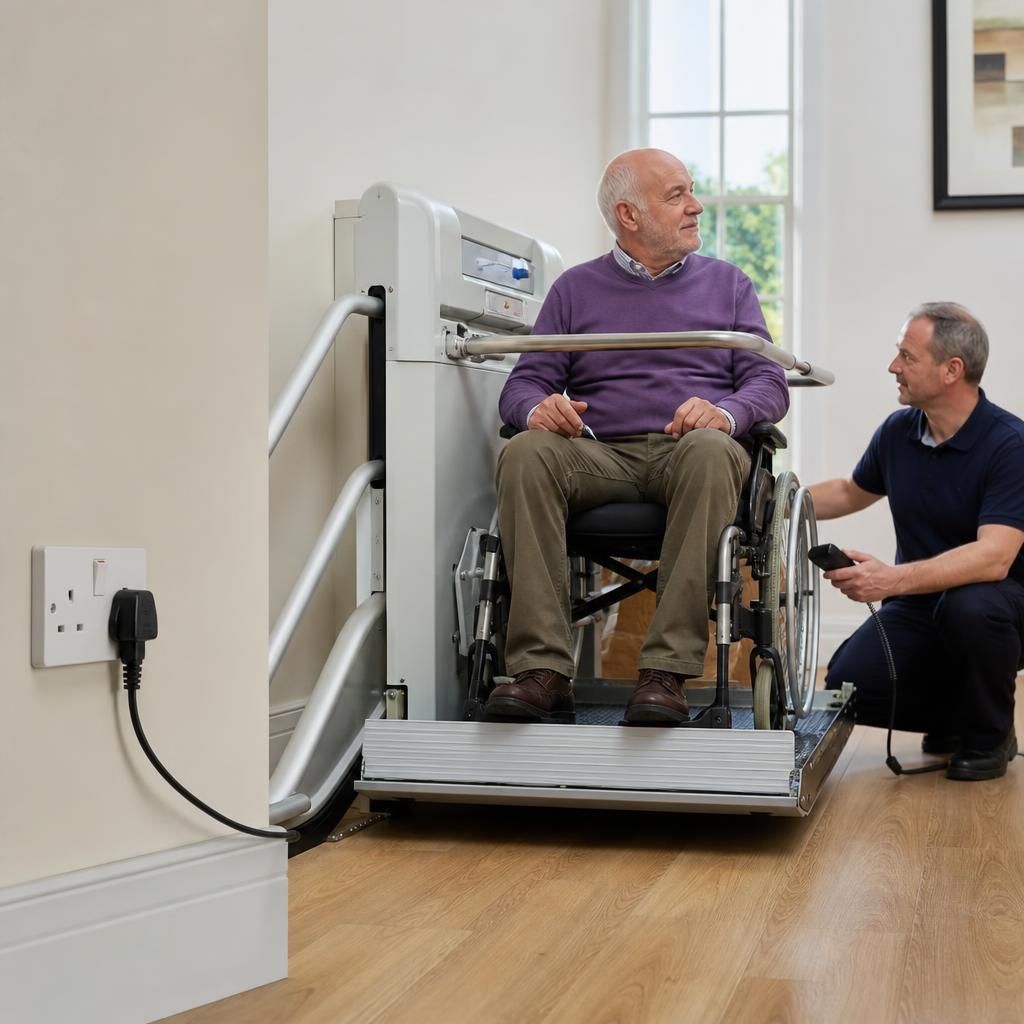
Discuss your wheelchair stairlift power options
Speak to Independent Stairlifts to discuss the most suitable mains, battery and backup power options for your wheelchair stairlift. We can confirm the charging arrangement and power-cut operation during your assessment.