
What are the potential limitations or drawbacks of installing a wheelchair stairlift in my home?
A wheelchair stairlift can provide access between floors, but potential drawbacks include the space required on the staircase and landings, the cost of the equipment and installation, and limitations caused by the staircase layout or wheelchair dimensions. A detailed home assessment is essential to confirm whether a wheelchair stairlift is suitable or whether an alternative solution would work better.
A wheelchair stairlift can provide step-free access between floors, but its main limitations are the space it requires, the cost of the equipment and installation, and the restrictions created by the staircase layout, landings and wheelchair dimensions. A detailed assessment of the home and the user’s mobility needs is therefore essential before deciding whether it is the most suitable solution.
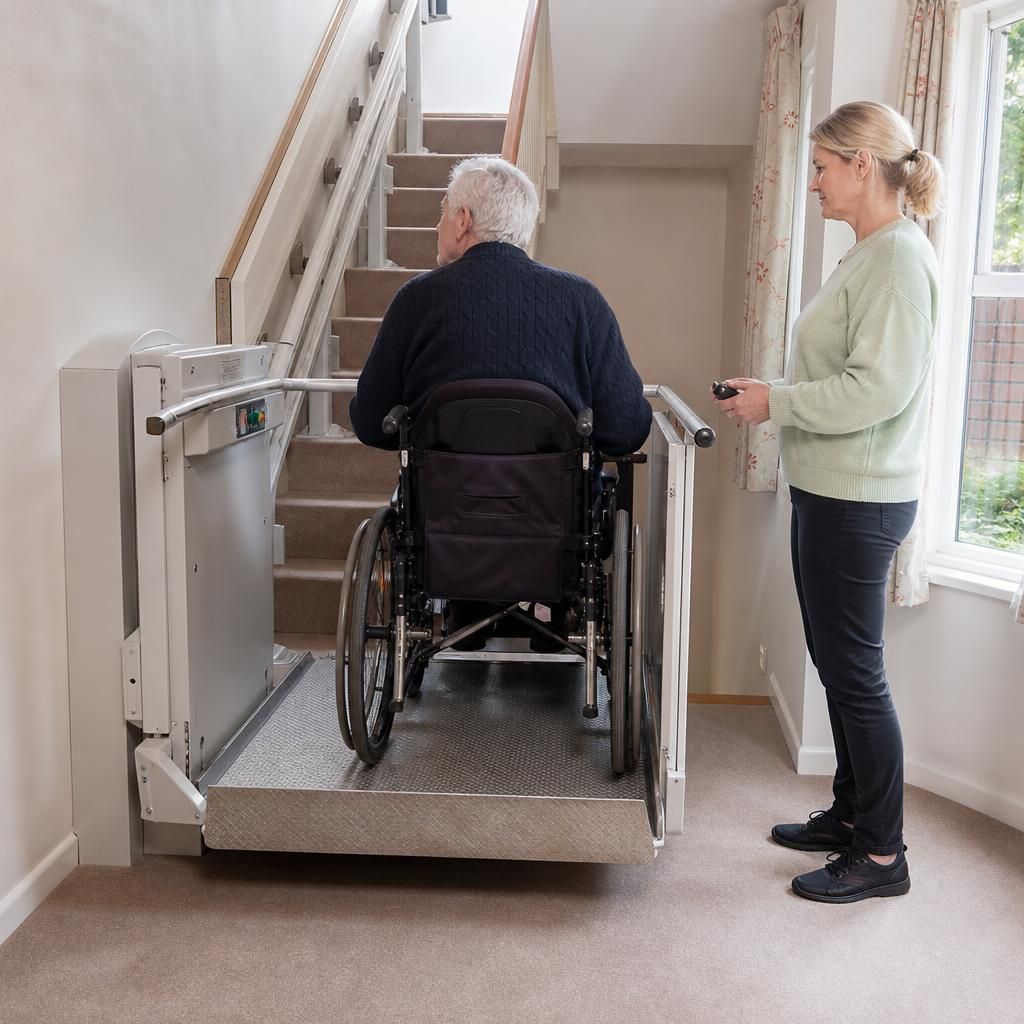
Space requirements can be significant. Unlike a conventional seated stairlift, a wheelchair stairlift usually has a platform or carriage large enough to accommodate the wheelchair safely. The staircase must leave sufficient clear space for the platform to travel without obstructing walls, doors, handrails or other users. At the top and bottom, the platform may also need room to stop, unfold its ramps and allow the wheelchair user to approach and leave safely.
This can affect narrow hallways, small landings and rooms that open directly on to the stairs. A platform may need to be folded when not in use, but it can still reduce usable space. In some homes, doors may need to be repositioned, a handrail altered or furniture moved to maintain safe access. The assessment should consider how other household members will continue to use the staircase, including children or anyone carrying items.
The staircase shape can limit what is possible. Straight staircases are generally more straightforward, while quarter-turn, half-turn, spiral or unusually steep staircases may require a bespoke track and careful positioning. Tight bends, very short steps, restricted headroom and narrow landings can make a wheelchair platform unsuitable or require adaptations to the surrounding area. External staircases introduce further considerations, including weather exposure, drainage, surface conditions and protection of electrical components.
Wheelchair dimensions and user needs also matter. A wheelchair stairlift must be compatible with the chair’s overall width, length, height and weight, including any attached equipment such as footrests, oxygen equipment or pressure-relieving cushions. Powered wheelchairs and larger specialist chairs may need more platform space and a higher weight capacity. The user must also be able to position the wheelchair correctly, operate the controls or have appropriate assistance, and remain safely within the platform’s designated area throughout the journey.
Some users may find the process of driving or reversing on to a platform difficult, particularly where they have limited hand control, poor vision, cognitive impairment or involuntary movements. A carer may be able to assist, but the assessment should establish exactly who will use the stairlift and whether the controls, ramps, restraints and transfer arrangements are practical. A stairlift does not remove every manual-handling risk, especially if a wheelchair has to be moved separately at either end.
Cost can be higher than for a standard stairlift. The price may reflect the larger platform, heavier-duty drive system, bespoke track, structural work and any changes needed to doors, walls, flooring or landings. Installation costs can increase where access is difficult or where electrical work and building alterations are required. A quotation should explain what is included, such as the survey, delivery, installation, testing, user instruction and ongoing servicing.
There may also be continuing costs for maintenance, replacement batteries, repairs and adapting the equipment if the user’s wheelchair or mobility needs change. It is sensible to ask about warranty terms, service arrangements and what happens if the stairlift becomes unavailable. These costs should be considered alongside alternatives rather than assessed only against the initial purchase price.
Installation may cause temporary disruption. The equipment normally needs to be brought into the property, assembled and tested on site. Installers may need access to both floors, and some installations involve fixing track or support components to the staircase or adjacent structure. If building alterations are necessary, the work may take longer and create temporary restrictions around the stairs. A plan should be agreed for moving between floors while the installation is taking place, particularly if the staircase is the only route.
Travel is not always as quick or convenient as using the stairs. The platform may need to stop at a landing, allow ramps or guards to operate, and require the user to position the wheelchair carefully. This can make each journey longer than walking or using a conventional lift. The platform may also need to be parked in a particular position so that it does not obstruct a doorway or the staircase when not in use.
Power and reliability need to be planned for. Wheelchair stairlifts use rechargeable batteries or another powered system, and the charging point must remain available. A power cut may limit operation unless the system has suitable battery backup. Regular maintenance helps keep the batteries, drive system, safety edges, restraints and controls working correctly, but no powered access equipment should be treated as maintenance-free.
There can also be practical limitations if the home has more than one staircase, if the required route does not connect directly with the main living areas, or if the user needs access to several levels. In these situations, a wheelchair stairlift may solve one part of the access problem without providing a complete solution throughout the property.
Depending on the home and the person’s needs, alternatives may include a conventional stairlift with a transfer to a different wheelchair, a vertical platform lift, a domestic lift, a ramped route or changes to the layout so essential facilities are on one floor. Each option has its own space, structural, planning and cost implications. A wheelchair stairlift should be selected only after comparing these options with the user’s current and likely future requirements.
A home assessment should check the staircase measurements, landings, headroom, doors, electrical supply, wheelchair specifications and safe approach routes. It should also include a practical demonstration where possible, so the user and any carers can assess positioning, controls and transfers. If the survey identifies a restriction, ask for the reason in clear terms and for any alternative designs or solutions that could address it. This provides a more reliable basis for deciding whether a wheelchair stairlift will be safe, usable and appropriate in the long term.
A wheelchair stairlift may require more space than a conventional seated stairlift because its platform must accommodate the wheelchair, safety features and access ramps. The staircase, landings and nearby doorways must leave enough clearance for the platform to travel, stop and be used safely.
This can be a particular limitation in narrow hallways, small landings or homes where a door opens directly on to the stairs. The platform may fold when parked, but it can still reduce usable space or affect how other people move around the staircase. A home assessment should check:
- the width and shape of the staircase;
- available space at the top and bottom;
- headroom, doors and handrails;
- the wheelchair’s dimensions and turning requirements; and
- whether household members can continue using the stairs safely.
In some properties, minor alterations such as moving furniture, adjusting a handrail or repositioning a door may be needed. If the available space cannot provide safe access, a vertical platform lift, domestic lift or different ground-floor arrangement may be more suitable.
Arrange a wheelchair stairlift assessment
Arrange a wheelchair stairlift assessment to check your staircase, landings, wheelchair dimensions and access requirements. We can help you understand whether a wheelchair stairlift is suitable and discuss alternative solutions where necessary.