
What are the maintenance requirements for wheelchair stairlifts?
Wheelchair stairlifts require routine servicing, safety inspections and basic cleaning to keep the platform, drive system, controls and safety devices working reliably. Follow the manufacturer’s service schedule, carry out simple checks before use and arrange professional attention promptly if you notice unusual noises, movement or fault warnings.
Wheelchair stairlifts require regular user checks, routine professional servicing and prompt attention to faults. Maintenance covers the platform, carriage, rail or track, drive system, controls, batteries, charging equipment and safety devices. Following the manufacturer’s service schedule and the instructions provided at installation helps keep the lift safe, reliable and suitable for everyday use.
Follow the recommended service schedule
Arrange servicing at the intervals specified for your particular wheelchair stairlift. The required frequency can vary according to the model, how often it is used, the length and design of the staircase, and whether the lift is installed indoors or outdoors. A qualified engineer should complete scheduled servicing, rather than relying solely on visual checks.
During a service, the engineer will normally inspect the structure and drive system, test the controls and safety circuits, check charging and battery performance, and examine moving parts for wear or damage. They may also clean, adjust or lubricate components where the manufacturer permits this. Any worn parts or developing faults can then be identified before they affect normal operation.
Checks to carry out before use
Simple checks can identify problems between service visits. Before using the lift, look for:
- Obstructions on the stairs, platform, landing or track
- Visible damage, loose fittings or unusual changes in the position of the rail
- Worn, damaged or unsecured platform edges, ramps, barriers or armrests
- Fault warnings, unexpected lights or low-battery indications
- Anything that could interfere with the platform, seat or carriage as it travels
Operate the lift only from the intended controls and make sure the platform, barriers and safety restraints are correctly positioned before travel. Do not use the stairlift if it moves unpredictably, stops unexpectedly, makes an unusual noise, gives off a burning smell or shows a fault that you cannot resolve using the normal instructions.
Keeping the platform and track clean
Dust, grit, pet hair and other debris can collect around the platform, carriage and track. Wipe accessible surfaces with a soft, slightly damp cloth and remove loose debris carefully. Keep the track and the areas around the drive mechanism clear, but do not apply household cleaning products, water or lubricant unless the manufacturer’s instructions specifically allow it.
Do not stand on the platform while cleaning, reach into moving parts or remove covers. Electrical components and safety mechanisms should be handled by a qualified engineer. For an outdoor wheelchair stairlift, check for leaves, mud, standing water, ice and other weather-related debris, particularly after poor weather.
Battery and charging care
Most wheelchair stairlifts use rechargeable batteries so the lift can complete a journey during a mains power interruption. Keep the lift parked on its designated charging point when it is not in use, as instructed for the model. Check that the charger is connected correctly and that any charging indicator behaves as described in the user manual.
Repeated low-battery warnings, reduced travel performance or failure to charge can indicate ageing batteries, a charging fault or an electrical problem. Do not attempt to replace batteries or alter the charger unless you have been instructed and authorised to do so. Battery replacement should be completed with suitable parts by a competent engineer.
Safety devices must remain operational
Wheelchair stairlifts commonly include controls such as emergency stop functions, platform barriers, safety edges, obstruction sensors, interlocks and over-speed or braking systems. These devices are essential and should never be bypassed, wedged open or modified. If a safety feature prevents movement, first check for an obvious obstruction and follow the operating instructions. If the problem continues, stop using the lift and request professional assistance.
Never allow untrained users to dismantle covers, adjust the drive system or reset a recurring fault. A lift that appears to operate after a reset may still have an underlying problem.
What to do if the lift develops a fault
Stop using the stairlift if there is damage, abnormal movement, repeated tripping, a persistent fault code or any doubt about its safety. If the platform is occupied and stops between floors, follow the emergency procedure supplied with the lift and use the emergency communication or assistance arrangements available. Do not try to move the platform manually or climb onto the staircase unless it is safe and you have been advised to do so.
Contact the service team and provide the lift model, the location of the problem, any displayed fault code and a description of what happened. This information can help the engineer prepare the correct parts and give appropriate initial advice. Keep the user manual and service details accessible to everyone who may operate the lift.
Maintenance records and responsibility
Keep a record of service visits, repairs, battery changes and any recurring warnings. This provides a useful history for engineers and helps identify patterns such as faults after power interruptions or increased use. Report changes in the user’s wheelchair, transfer method or operating needs, as these may affect how the platform is used and whether adjustments or additional advice are appropriate.
Routine maintenance does not replace safe operation. Keep within the lift’s specified weight and platform limits, position the wheelchair as instructed, secure any restraints and ensure other people and objects are clear of the travel path. If the stairlift has been unused for a prolonged period, arrange a check if recommended by the manufacturer before returning it to regular service.
For model-specific maintenance advice, use the manual supplied with your wheelchair stairlift and contact Independent Stairlifts if you are unsure about a check, service interval or fault. Professional inspection is the safest way to deal with anything beyond basic cleaning and visual checks.
Professional servicing is an essential maintenance requirement for a wheelchair stairlift. A qualified engineer should inspect the platform, track, drive system, controls, batteries and safety devices at the intervals recommended for the specific model.
Between service visits, carry out simple checks without removing covers or touching moving parts:
- Keep the platform, track and travel path clear of dust, objects and other obstructions.
- Check for visible damage, loose fittings, unusual noises, unexpected movement or warning lights.
- Keep the lift on its designated charging point when it is not in use.
- Never bypass safety edges, barriers, emergency stops or other protective devices.
Stop using the stairlift and contact the service team if it stops unexpectedly, repeatedly shows a fault, fails to charge or behaves differently from normal. Do not attempt repairs or battery replacement unless this has been authorised and carried out by a competent engineer.
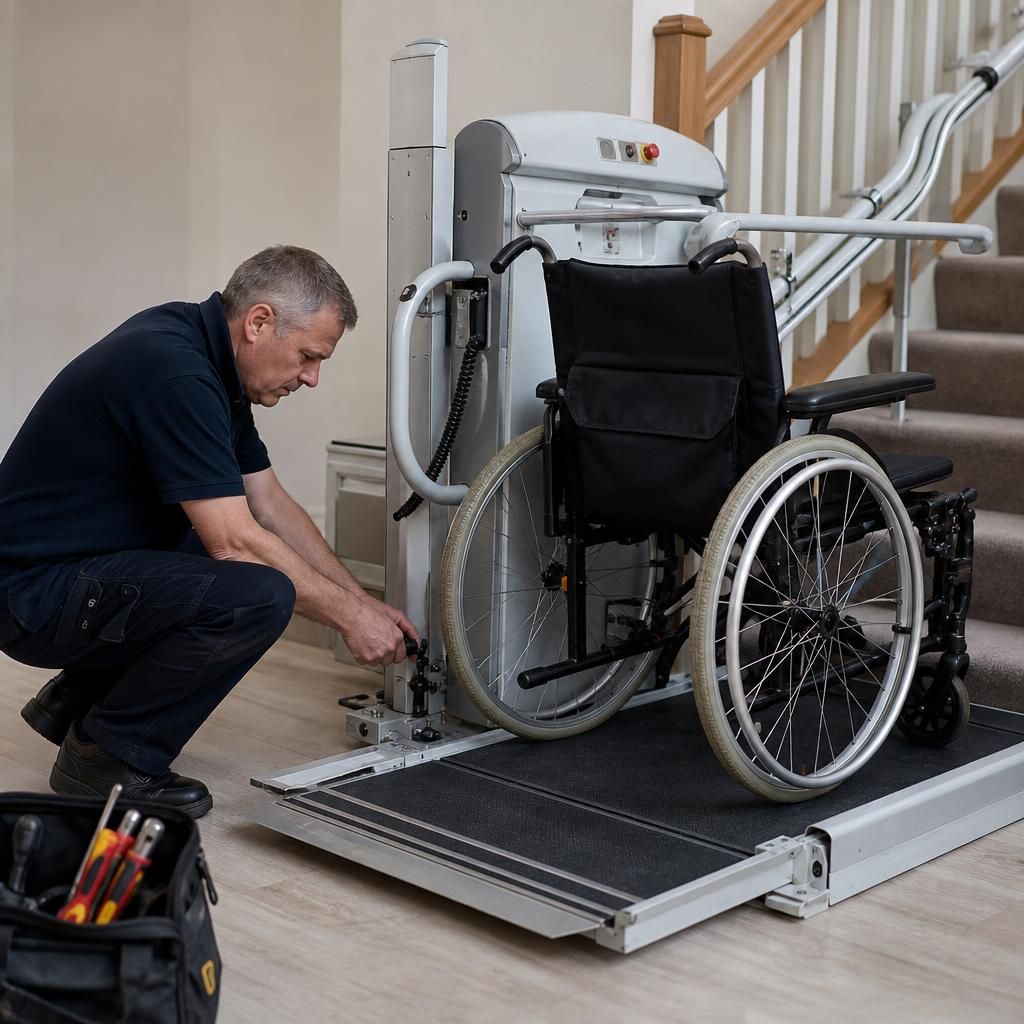
Arrange professional wheelchair stairlift maintenance
Contact Independent Stairlifts to arrange professional maintenance for your wheelchair stairlift and confirm the service schedule for your model. Our engineers can inspect the platform, drive system, controls, batteries and safety devices, and advise on any faults or wear.