
How do wheelchair stairlifts accommodate different wheelchairs and user needs?
Wheelchair stairlifts accommodate different chairs by using a platform sized for the wheelchair, with suitable weight capacity, access arrangement and controls for the user. An assessment considers the wheelchair’s dimensions and turning space, whether the user can transfer, the staircase layout and any carer requirements so the system can be configured safely.
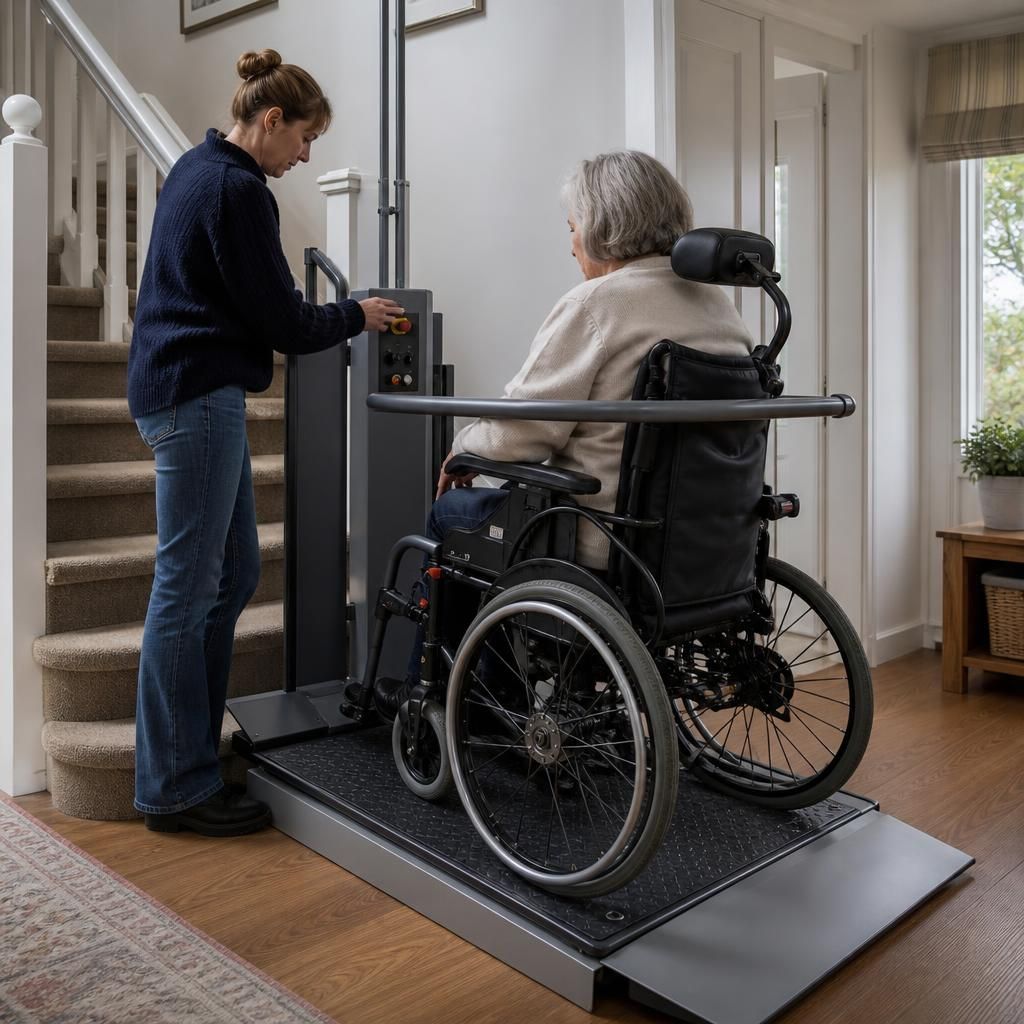
Wheelchair stairlifts accommodate different wheelchairs and user needs through a platform system configured around the chair’s size, weight, turning requirements and method of access. During an assessment, the installer considers the wheelchair and its occupant together, the available space at the stairs, how the platform will be approached, and whether the user needs assistance from a carer. The result may involve a particular platform size, entry arrangement, restraint system, control position and operating method rather than a standard installation.
Platform size and wheelchair dimensions
Platforms are available in different configurations, but the wheelchair must fit securely within the usable platform area. Measurements normally include the chair’s overall width and length, the height of its back or control equipment, the position of footplates, armrests and joystick controls, and the space needed to manoeuvre onto the platform. A chair that fits in a straight-on approach may need a different arrangement where the user must turn or enter from the side.
It is important to measure the wheelchair in its everyday configuration. Removing footrests, folding a chair or using a different cushion may not be practical for every journey. Powered chairs can also have fixed batteries, seating systems or control arms that affect the space required. The assessment should therefore be based on the actual wheelchair that will use the lift, including any removable accessories that the user regularly carries.
Manual, powered and specialist wheelchairs
A suitable platform can often be specified for a manual wheelchair or a powered wheelchair, but the requirements are not identical. Powered chairs are usually heavier and may have a larger turning circle. Their drive controls and joystick can also extend beyond the armrest, while reclining, tilt-in-space or standing functions may alter the chair’s profile. The combined weight of the user and wheelchair must remain within the lift’s rated capacity.
Some users move between a wheelchair and a stairlift seat, while others need to remain in their wheelchair throughout the journey. A wheelchair stairlift is intended for the latter arrangement, subject to the platform size, capacity and safe access conditions. Mobility scooters are not automatically suitable simply because they have wheels; their length, turning radius, steering column and weight need to be assessed separately. A scooter may require a different accessibility solution.
Transfer and access arrangements
The safest configuration depends partly on whether the user can transfer independently, needs assistance or must remain seated in the wheelchair. If a transfer is possible, a conventional seated stairlift may be considered alongside a wheelchair platform lift. If transferring is unsafe, painful or impractical, the platform needs to allow the wheelchair to be positioned and secured without requiring the user to leave it.
Access can be arranged in different ways, such as driving or being assisted straight onto the platform, entering from the side, or using a platform that folds or parks to keep the stairs available when it is not in use. The appropriate arrangement depends on the landing space, doorways, handrails and the direction from which the wheelchair approaches. Clear access is particularly important where the user cannot turn the chair easily or relies on a carer to guide it.
Securing the wheelchair and occupant
Once on the platform, the wheelchair must be positioned within the marked or designated area and secured using the equipment specified for that lift. This may include safety edges, a platform barrier, a lap belt, wheel restraints or other locking features. The exact arrangement varies according to the model and the wheelchair. Brakes should be applied where appropriate, but wheelchair brakes alone should not be treated as the complete restraint system.
The user must be able to remain in a stable position for the full journey. A person who needs additional postural support may require their usual wheelchair seating system, a correctly positioned safety belt or assistance from a carer. Loose bags, blankets and other items should not obstruct controls, ramps, barriers or moving parts. The installer should explain the correct loading and securing procedure and should not approve a setup that depends on improvised restraints.
Controls for different abilities
Controls can be positioned to suit the user, a carer or both. Depending on the equipment, operation may be available from the platform, at the landings or through a remote control. The user needs to be able to start, stop and supervise the journey safely, or have a carer operate the lift if hand movement, reach, vision or confidence makes independent use difficult.
For someone with limited hand strength or dexterity, the control type and location are significant. A joystick, hold-to-run control, pendant or other interface should be usable without leaning out of the wheelchair or placing hands near the platform edges. If a powered wheelchair has a joystick or other control mounted on an armrest, the platform controls must not interfere with it during loading or travel.
Carer and household requirements
A wheelchair stairlift may be used with or without a carer, but the assessment should establish who will help with each stage: approaching the platform, positioning the chair, applying restraints, operating the lift and leaving at the other landing. Space may be needed for the carer to stand beside the platform, open a door or turn the wheelchair after arrival.
The needs of other people in the home also matter. A platform that folds when parked can help preserve access for pedestrians, while a suitable parking position may prevent the lift from obstructing a doorway or narrow landing. The installer should also consider whether household members can reach the controls and whether the lift can be used safely if the usual carer is unavailable.
Adapting to the home
Wheelchair stairlifts are assessed against the staircase and landings as well as the wheelchair. The available width, headroom, bends, intermediate landings, door positions and the space at the top and bottom all affect the design. A platform may need to fold, park around a bend or stop in a position that allows the wheelchair to leave safely. These considerations can restrict the platform size or the direction of entry.
For curved or unusually arranged stairs, the track and platform may need to be bespoke. Outdoor installations require additional consideration of weather exposure, drainage, surface conditions and safe access to the platform. In every case, the lift should be specified for the actual route rather than selected solely by wheelchair type.
What to confirm during the assessment
- Which wheelchair or powered chair will use the lift, including its full operating dimensions and total weight with the user.
- Whether the user will remain in the wheelchair or transfer to a seat.
- How the wheelchair will approach, enter and leave the platform.
- Whether the user can operate the controls and restraints independently.
- Whether a carer needs room to assist at either landing.
- Whether the chair has specialist seating, a joystick, removable supports or accessories that affect clearance.
- How the platform will be parked when the stairs are needed by other people.
Bring the usual wheelchair to the assessment whenever possible, and explain any changes in mobility, seating or carer support that may be expected. A temporary or replacement wheelchair can differ enough in width, length or weight to affect suitability, so the installer should be told about likely changes before the equipment is ordered.
There is no single platform arrangement that suits every wheelchair user. The correct solution is the one that provides adequate clearance and capacity, allows a practical approach, secures the chair and occupant correctly, and can be operated safely by the intended user or carer. Independent Stairlifts can use the assessment to identify these requirements and explain whether a wheelchair stairlift, a transfer-based stairlift or another access option is most appropriate for the home.
A wheelchair stairlift is configured around the wheelchair’s real dimensions, weight and method of access, rather than selected by wheelchair type alone. The assessment should use the chair in its everyday setup, including its footplates, cushion, joystick, specialist seating and any accessories that affect clearance.
The installer will also check how the user approaches and leaves the platform, whether they can transfer or must remain in the wheelchair, and whether a carer needs space to assist. These details influence the platform size, entry direction, restraints and control position, helping ensure the lift can be used safely at both landings.
Arrange your wheelchair stairlift assessment
Arrange a wheelchair stairlift assessment with Independent Stairlifts so we can review your wheelchair, access requirements and staircase layout. We will explain the suitable options and identify any practical considerations before installation.