
How can I ensure my wheelchair stairlift remains safe and efficient over time?
Keep your wheelchair stairlift safe and efficient by following the manufacturer’s operating guidance, keeping the track and platform clear, and arranging regular professional servicing. Report unusual noises, movement, charging problems or changes in safety features promptly, and stop using the stairlift if it appears unsafe until it has been checked.
Keeping a wheelchair stairlift safe and efficient over time depends on correct use, regular basic checks, good charging habits and professional servicing. Follow the manufacturer’s instructions, keep the track and platform clear, report changes in performance promptly and stop using the stairlift if a safety feature appears faulty or the lift no longer operates normally.
Use the stairlift as intended
- Ensure the wheelchair is positioned securely on the platform before travel. Apply the wheelchair brakes and use any platform restraints, clamps or other securing equipment provided.
- Keep within the platform’s stated weight capacity, including the wheelchair and any belongings. Do not carry loose items that could fall into the stairwell or interfere with the controls.
- Keep hands, feet, clothing and mobility equipment inside the platform while the stairlift is moving. Do not allow anyone else to stand on the stairs or obstruct the route.
- Use the controls and safety features as described in the operating instructions. Avoid forcing a control, bypassing a sensor or continuing to travel after an obstruction has been detected.
- Leave the platform in its recommended parked position when it is not in use, particularly where it could otherwise obstruct the stairs or an access route.
Keep the stairlift and staircase clear
Inspect the travel route regularly for objects that could catch on the platform, wheelchair or moving parts. Remove shoes, toys, shopping bags, pet items and other belongings from the stairs. Check that doors, handrails and furniture do not interfere with the platform or its folding sections.
Keep the track, platform and landing areas free from dust, grit, water and spilled products. Clean surfaces with a slightly damp, soft cloth where appropriate, following the manufacturer’s cleaning guidance. Do not pour liquid onto the controls, motor, batteries, charging points or electrical components, and do not use abrasive products unless specifically approved.
Check the main safety features
Before use, make sure the seat or wheelchair platform is correctly positioned and that any safety belt, restraint, ramp, barrier or locking mechanism engages as expected. The stairlift should stop or prevent movement when a relevant safety edge or obstruction sensor is activated. Controls, emergency stop functions and key switches should also respond in the way described in the instructions.
Do not test a safety device by placing yourself or another person at risk. If a belt will not fasten, a barrier does not lock, a ramp moves unexpectedly or the lift continues after an obstruction is detected, do not use the stairlift. Contact the service team for advice and arrange an inspection.
Maintain reliable charging
Battery-powered wheelchair stairlifts need to return fully to their charging points when parked. Keep the charging contacts clean and unobstructed, and check that the charger indicator shows the expected status. Avoid leaving the lift away from its charging position for extended periods unless the operating instructions allow this.
A lift that travels more slowly than usual, stops before reaching the landing, gives a low-battery warning despite being parked correctly or has noticeably reduced range may need battery or charger attention. Do not attempt to replace batteries or alter electrical connections unless this is specifically permitted and you are suitably qualified. Arrange a professional check instead.
Arrange professional servicing
Servicing allows a qualified engineer to inspect components that are not suitable for routine customer maintenance. This may include the drive system, track, brakes, rollers, bearings, charging equipment, batteries, wiring, platform mechanism and safety circuits. The engineer can clean, adjust or replace worn parts and confirm that the stairlift remains suitable for the way it is being used.
Follow the service interval in your manufacturer’s documentation and keep any service recommendations. The correct interval can depend on the model, usage, environment and installation. A professional inspection is especially important after a fault, impact, water exposure, extended period out of use or change in the user’s wheelchair or mobility needs.
Report changes early
Contact Independent Stairlifts or the appropriate service provider if you notice unusual noises, vibration, jerky movement, repeated stopping, a burning smell, damaged wiring, loose fixings, inconsistent controls or changes in the way the platform folds, locks or travels. Note when the problem occurs and any warning messages or indicator lights, but do not repeatedly operate the lift to reproduce a fault.
Stop use immediately if the platform is unstable, the wheelchair restraints do not secure correctly, the lift moves without the expected control input, a safety device fails, or there is visible electrical or mechanical damage. Keep people away from the stairlift and follow the emergency procedure in the operating instructions. Do not dismantle covers or try to release a trapped platform unless the instructions specifically tell you how to do so safely.
Consider the installation environment
Indoor wheelchair stairlifts should be protected from spills, excessive humidity and impact. Outdoor equipment needs particular attention to weather exposure, drainage, corrosion and debris. Keep outdoor covers, controls and charging areas in the condition specified by the manufacturer, and report rust, water ingress or deterioration of seals. Never use an outdoor stairlift in conditions outside its stated operating guidance.
Keep useful records
Retain the user manual, service history and details of any repairs or replacement parts. Record recurring warning messages and tell the engineer about changes in the user’s wheelchair, posture, transfer method or level of assistance required. These details help confirm that the platform, restraints and controls remain appropriate for current needs.
Routine cleaning and sensible daily checks cannot replace servicing, and a service does not remove the need for safe operation. By combining both, you can identify wear or faults before they affect reliable travel and help protect the stairlift’s performance throughout its working life.
Regular professional servicing is essential for keeping a wheelchair stairlift safe and efficient over time. A qualified engineer can inspect parts that are not suitable for routine customer checks, including the drive system, track, rollers, brakes, platform mechanism, batteries and safety circuits.
Arrange servicing in line with the manufacturer’s guidance, as the appropriate interval depends on the model, frequency of use and installation environment. A professional inspection is also advisable after a fault, impact, water exposure or a prolonged period out of use.
- Report unusual noises, jerky movement, repeated stopping or charging problems promptly.
- Do not dismantle covers, bypass sensors or attempt unauthorised electrical repairs.
- Keep the service history and tell the engineer about any change to the wheelchair, posture or level of assistance required.
Routine cleaning and daily checks support reliable operation, but they do not replace servicing. If a restraint, barrier, ramp or other safety feature does not work correctly, stop using the stairlift and contact the service team.
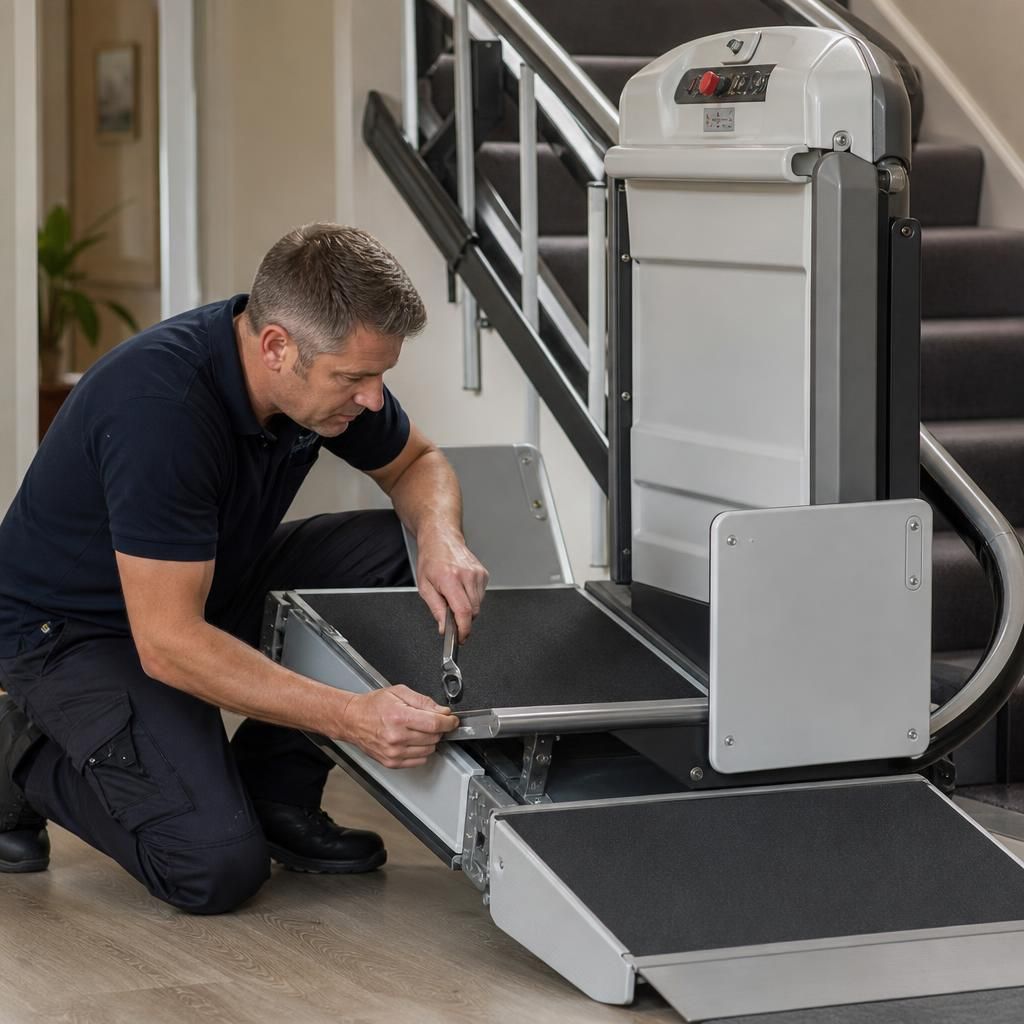
Arrange a professional wheelchair stairlift service
Arrange a professional wheelchair stairlift service with Independent Stairlifts to check its safety systems, drive components, charging equipment and platform mechanism. Contact our service team to book an inspection or discuss any changes in performance.