
Are there any financial assistance options available for purchasing a wheelchair stairlift?
Yes, financial help towards a wheelchair stairlift may be available through your local authority’s Disabled Facilities Grant, subject to eligibility, assessment and a means test; funding arrangements differ across the UK. You may also qualify for VAT relief or support from a charitable grant provider, so ask your council’s occupational therapist or housing adaptations team to assess your needs before arranging installation.
Financial assistance towards a wheelchair stairlift may be available, but it is not automatic. The main route is usually a local authority home-adaptation grant following an occupational therapist’s assessment. Depending on where you live, you may also be eligible for VAT relief, help from your housing provider or a charitable grant. Eligibility, funding limits and application procedures vary across the UK.
Disabled Facilities Grants and local authority funding
In England and Wales, a Disabled Facilities Grant (DFG) can help fund essential adaptations that allow a disabled person to move around and use their home more safely. A wheelchair stairlift or platform-style stairlift may be considered where it is judged to be a suitable and necessary adaptation. The council will normally assess:
- the person’s mobility needs and the impact of the stairs on everyday activities;
- whether the proposed equipment is reasonable and practical for the property;
- whether alternative adaptations would meet the need more effectively; and
- the applicant’s financial circumstances, where a means test applies.
A grant may cover all or part of the approved cost. Some applicants will be expected to make a contribution, and the council may only fund work that has been agreed in advance. Do not place an order or start installation before confirming the council’s requirements, as costs incurred beforehand may not be eligible.
In Scotland, equivalent help is arranged through the local authority rather than the DFG system used in England and Wales. Councils may have their own assistance, grant or housing-adaptation arrangements, with eligibility and contribution rules set locally. In Northern Ireland, applications for disabled facilities adaptations are generally handled through the Northern Ireland Housing Executive. Your local council or housing team can confirm the scheme that applies to your address.
How the assessment usually works
- Contact your local authority’s adult social care, housing adaptations or occupational therapy team and explain that you need access between floors.
- An occupational therapist or other suitable assessor considers your ability to use the stairs, your wheelchair, transfers, carers’ needs and the layout of the property.
- The council decides whether a wheelchair stairlift is an appropriate solution or whether another adaptation should be considered.
- If funding is potentially available, the council explains the application, financial assessment, specification and quotation requirements.
- Only after written approval should you proceed in line with the agreed specification and conditions.
A supplier’s survey and quotation can help establish whether the stairlift will fit the staircase and accommodate the wheelchair, but a supplier’s recommendation does not replace the local authority’s assessment. Ask whether the council requires quotations from approved contractors or has specific technical standards.
VAT relief
Some disabled people can have VAT removed from eligible mobility equipment and installation services. This is a tax relief rather than a grant, and it is subject to HM Revenue and Customs conditions. The equipment must generally be supplied for the personal or domestic use of an eligible disabled person, rather than for a business or general commercial purpose. The installer should confirm whether the proposed wheelchair stairlift and related work qualify and provide the appropriate VAT declaration. VAT relief is separate from any council funding, so it is worth asking about both.
Help through a housing association or landlord
If you rent your home, speak to your landlord or housing association before arranging any work. A social landlord may have an adaptations budget, an approved application process or requirements concerning reinstatement when you move out. Private tenants should obtain the landlord’s written permission and ask the local authority whether the adaptation can be funded under its housing-assistance rules. A grant application does not usually remove the need for permission to alter the property.
Charitable and other sources of support
Some charities and grant-giving organisations provide help with disability equipment or essential home adaptations. Their criteria may depend on age, disability, income, employment history, location or the type of equipment required. Applications often require evidence of need, household finances and an itemised quotation. Availability changes, and charitable funding may not cover the full cost, so use reputable organisations and check whether they pay the supplier directly or reimburse you.
Benefits such as Personal Independence Payment, Disability Living Allowance or Attendance Allowance are not normally restricted to stairlift purchases. They may help with general disability-related costs, but receiving one does not by itself guarantee a stairlift grant. NHS and social care services may also advise on equipment or care needs, although a wheelchair stairlift is not routinely supplied through the NHS. Your occupational therapist can explain whether any equipment loan or care package is relevant to your circumstances.
What to prepare for an application
- details of the wheelchair, including its dimensions, weight and turning requirements;
- information about who uses the stairs and what activities are currently difficult or unsafe;
- the property address, tenure and landlord details where applicable;
- medical or occupational therapy information requested by the council;
- household income and savings information for any means test; and
- a detailed quotation showing the stairlift, installation, electrical work, adaptations and ongoing service arrangements separately.
Ask whether the funding includes removal, making good, electrical work, servicing or future repairs. A cheaper quotation may not be comparable if it excludes essential work or does not meet the specification agreed with the assessor.
If your application is refused or the proposed contribution is unaffordable, request the decision and reasons in writing. Ask about the review or appeal process and whether an alternative design, phased work or another funding route can be considered. Independent Stairlifts can provide the technical information needed for an assessment, but the local authority or funding body decides whether assistance is available and how much it will contribute.
The main source of financial assistance for a wheelchair stairlift is usually a local authority home-adaptation grant, such as a Disabled Facilities Grant in England and Wales. Funding is based on assessed need, the suitability of the property and, where applicable, the applicant’s financial circumstances.
Start by contacting your council’s adult social care, occupational therapy or housing adaptations team. An assessment will consider how the stairs affect the wheelchair user, whether the proposed stairlift is suitable and whether another adaptation would meet the need more effectively. Obtain written approval before placing an order or beginning installation, as costs agreed in advance are more likely to qualify for funding.
A supplier’s survey and quotation can support the application, but the council decides whether assistance is available and how much it will contribute. Ask whether the approved funding covers associated work such as electrical alterations, removal, making good and servicing.
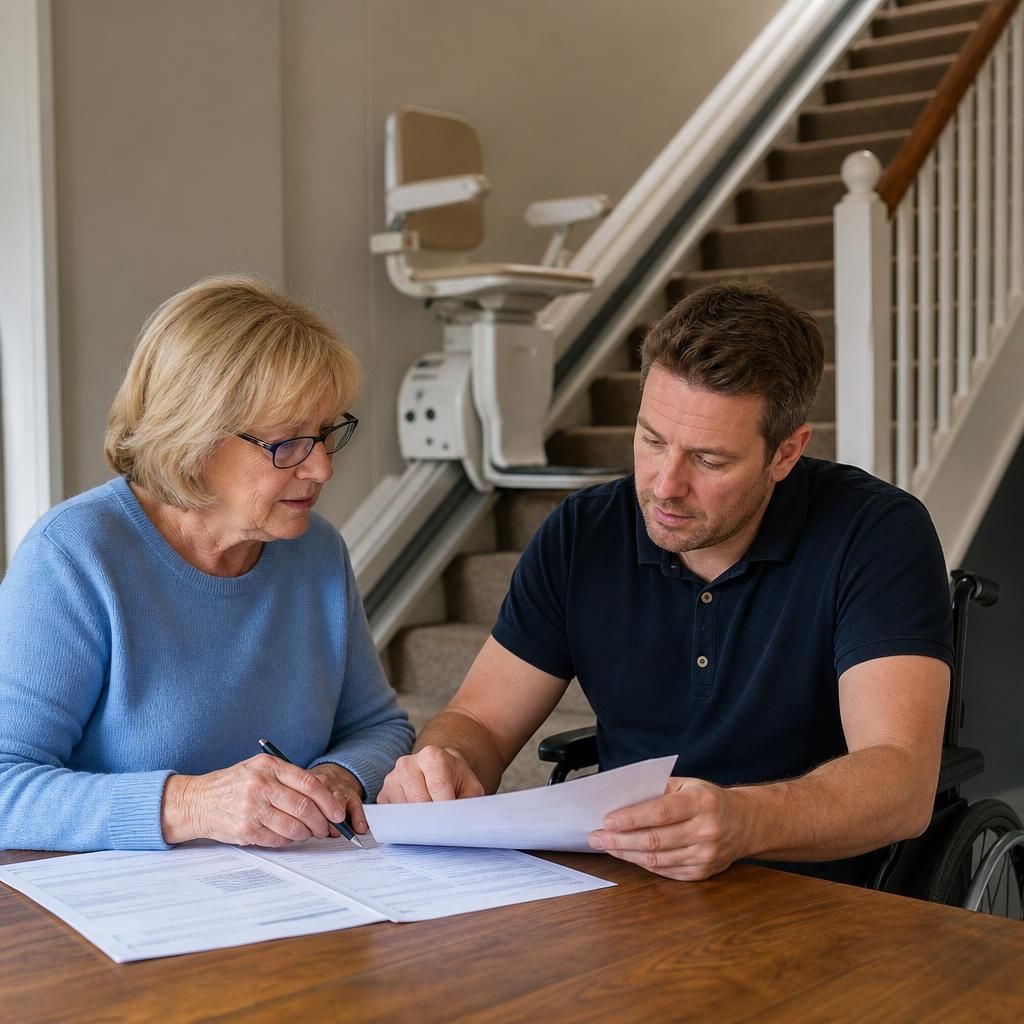
Ask About Wheelchair Stairlift Funding Options
Speak to Independent Stairlifts for a suitable wheelchair stairlift assessment and quotation to support your funding application. We can provide the technical information your local authority or funding organisation may require.