
What should I expect during a wheelchair stairlift installation process?
A wheelchair stairlift installation usually involves a home assessment, confirmation of the most suitable system, preparation of the staircase and electrical supply, followed by professional fitting and safety testing. The installer will also explain how to operate the lift, use its safety features and arrange ongoing servicing.
A wheelchair stairlift installation normally involves a detailed home assessment, confirmation of the most suitable lift, preparation of the staircase and power supply, professional fitting, safety checks and a practical handover. The exact process depends on whether the system is a seated stairlift, standing aid or platform stairlift, as well as the staircase layout, available space, wheelchair dimensions and the structure of the property.
Home assessment and measurements
The process begins with an assessment at your home. The installer will examine the staircase, landings and access routes rather than relying only on photographs or general measurements. This helps establish whether a platform can travel safely, where the lift can park, and whether the wheelchair user can transfer on and off it comfortably.
The assessment will usually consider:
- The width, length, gradient and shape of the staircase.
- The available space at the top and bottom of the stairs.
- Doorways, radiators, handrails, furniture and other potential obstructions.
- The wheelchair’s width, length, turning circle and total weight with the user.
- The position of landings, intermediate floors and changes in direction.
- The condition of walls, floors and stair fixings.
- The location and suitability of the electrical supply.
- How the user will approach, enter, leave and operate the lift.
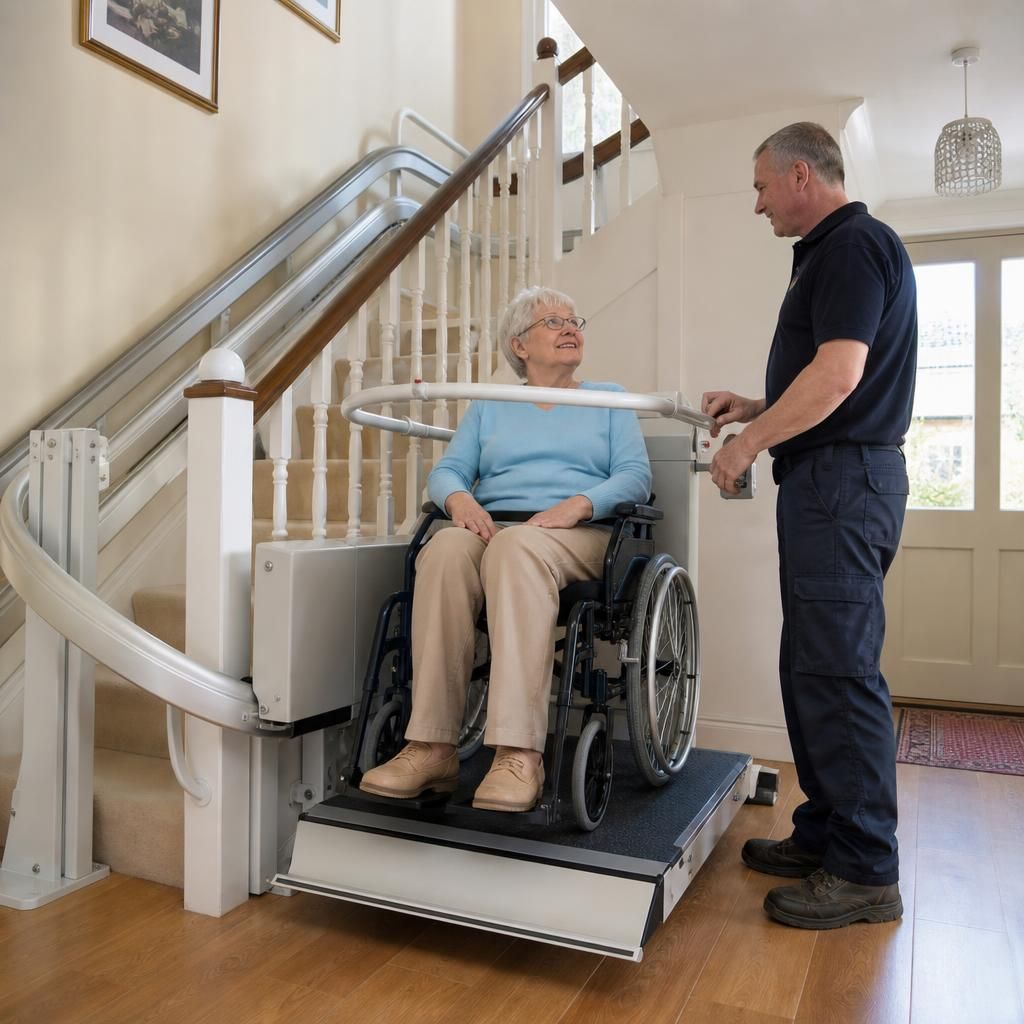
For a platform stairlift, the platform must be large enough for the wheelchair while leaving suitable clearance from walls, doors and other users of the staircase. If space is restricted, the installer may discuss a folding platform, a different parking position or an alternative access arrangement. A wheelchair stairlift is not automatically suitable simply because it fits along the stairway; the full journey must be safe and practical at both ends.
Confirming the proposed system
After the assessment, the proposed configuration should be explained clearly. This includes the type of lift, its route, platform or seat dimensions, maximum permitted load, controls, safety features, parking position and any work needed before installation.
Where the staircase is curved, narrow or unusually shaped, the rail or track may need to be made to suit the property. Straight staircases can often use a simpler arrangement, but the landing spaces and wheelchair access points still need to be checked. Outdoor installations require additional consideration of weather exposure, drainage, surface condition and protection for the electrical components.
Before fitting goes ahead, make sure you understand any limitations. These may include the type of wheelchair that can be carried, whether the user must remain attended, how the platform is folded or deployed, and whether doors or parts of the staircase need to remain clear while the lift is in use.
Preparing the staircase and property
Most wheelchair stairlifts are secured to the stairs or adjacent structure, rather than relying solely on the wall. However, the exact fixing method depends on the design and the condition of the staircase. If the installer identifies weak, damaged or unsuitable surfaces, remedial work may be required before the lift can be fitted.
Preparation may include:
- Removing or repositioning items that obstruct the proposed route.
- Checking that handrails, doors and fire escape routes remain usable.
- Providing a suitable electrical connection or charging point.
- Protecting flooring, walls and furnishings during the work.
- Making minor adjustments to the landing or access area.
A suitable power supply is normally required for the lift’s charging equipment and controls. The installer should check that the supply is appropriate and explain whether any electrical work must be completed by a qualified electrician. Battery-powered systems still need regular charging, so the charging points must remain accessible and the user should know what to do if the batteries become low.
What happens on installation day
The installation team will normally confirm the agreed route and protect the surrounding area before work begins. They will position and secure the rail, track or supporting structure, then fit the platform, drive system, controls and safety equipment. On some installations, the track is assembled in sections; on bespoke curved systems, components are made to follow the assessed staircase.
The work can involve drilling and fixing, so there may be some dust or minor noise. The team should keep disruption controlled, maintain safe access where possible and explain if a temporary restriction is necessary. You may be asked to keep the staircase and nearby landings clear until the fitting and testing are complete.
For a platform lift, the installer will also check the deployment of the platform, entry ramps, folding sections, guard rails and barriers. These parts must operate without striking walls, doors or furniture. If the platform is designed to fold when not in use, its folded position should leave adequate space for other people to use the stairs.
Safety testing and commissioning
Once the lift has been fitted, it should be tested through its complete route. This is more than checking that it moves up and down. The installer should verify the operation of the controls, charging system, braking and stopping points, as well as the safety features relevant to the model.
Checks may include:
- Safety edges or obstruction sensors stopping the lift when an object is detected.
- Platform barriers, ramps and interlocks securing the wheelchair during travel.
- Emergency stop controls and manual lowering or release procedures.
- Correct operation at the top and bottom landing positions.
- Battery charging and operation during a power interruption, where applicable.
- That the lift does not create an avoidable obstruction for people using the staircase.
The installer should also confirm that the platform is level and stable when parked, and that the user can approach and leave it without being placed in an awkward or hazardous position. Do not use the lift independently until these checks and the handover have been completed.
Demonstration and handover
A proper handover is an important part of installation. The installer should demonstrate the controls at the lift and, where provided, the remote controls. They should show how to call the lift, unfold and secure the platform, position the wheelchair, use the restraints or barriers and park the system safely.
You should receive clear guidance on:
- The maximum permitted user and wheelchair load.
- How to position and secure the wheelchair before travel.
- Which parts of the platform must be clear while the lift is moving.
- How to respond if the lift stops or an obstruction sensor operates.
- What to do if the battery is low or the electricity supply fails.
- How to report a fault and when to stop using the lift.
- Basic cleaning and daily visual checks.
Ask the installer to allow the wheelchair user to operate the system, rather than demonstrating it only to a relative or carer. If the user has limited reach, vision, hearing, strength or dexterity, the controls and transfer method should be assessed in practice. Written instructions, warranty information and servicing details should also be provided.
After installation
Keep the route clear and check the lift before use for visible damage, loose items or anything obstructing the platform and track. Follow the manufacturer’s instructions for charging, cleaning and loading. Do not exceed the stated capacity or carry additional items that could affect the wheelchair’s stability or block the controls.
Arrange servicing in line with the manufacturer’s recommendations and have faults investigated promptly. Stop using the lift if it makes an unusual noise, moves irregularly, fails to stop correctly or if a safety feature does not work. Do not attempt to bypass an interlock or carry out electrical or mechanical repairs yourself.
If the staircase, wheelchair, furniture or user’s mobility changes after installation, request a further assessment. A system that was suitable initially may need its settings, parking arrangement or operating method reviewed. Installation is complete only when the lift has been securely fitted, fully tested and explained to the people who will use or support it.
A wheelchair stairlift installation begins with an assessment of the complete journey, not just the staircase. The installer will check how the wheelchair user approaches the lift, boards the platform, travels between floors and leaves it safely.
This assessment should take account of the wheelchair’s dimensions and weight, turning space, doorways, landings, handrails and nearby furniture. It also identifies the most suitable parking position and confirms that the platform, ramps and barriers can operate without obstructing the staircase or surrounding access routes.
- Keep the usual wheelchair and any essential walking aids available for the assessment.
- Explain how the user transfers, if a transfer is required, and whether they need help from a carer.
- Point out practical concerns such as limited reach, reduced strength, poor vision or difficulty using controls.
- Ask the installer to demonstrate how the proposed lift will be approached, operated and parked.
A detailed assessment helps ensure the completed installation suits the person using it, rather than simply fitting the available space.
Arrange your wheelchair stairlift assessment
Arrange your wheelchair stairlift assessment with Independent Stairlifts to confirm the most suitable system, route and access arrangements for your home. We can assess the staircase, wheelchair dimensions and user requirements before installation.