
What maintenance requirements should I be aware of to ensure the longevity of my stairlift for wheelchair users?
To extend the working life of a wheelchair stairlift, keep the track and moving parts clean and unobstructed, charge the batteries as instructed, carry out basic visual checks, and arrange servicing at the manufacturer’s recommended intervals. Do not ignore unusual noises, jerky movement, warning lights or reduced battery performance; stop using the lift if it appears unsafe and contact a qualified stairlift engineer.
Regular cleaning, correct charging, routine visual checks and professional servicing are the main requirements for keeping a wheelchair stairlift safe, reliable and in good working order. The exact maintenance schedule depends on whether you have a platform, through-floor or other wheelchair-access stairlift, so always follow the manufacturer’s instructions and arrange service visits at the recommended intervals.
Keep the lift and its route clear
Before using the stairlift, check that the track, platform and landing areas are free from objects, loose rugs, toys, clothing and other obstructions. Items caught in the mechanism can affect movement or activate a safety sensor. Keep the stairway and the area around the lift clear enough for the platform, seat or wheelchair to move and park safely.
Do not store items on the platform or use it as a shelf. If the lift has a folding platform, raise or fold it only as described in the operating instructions and check that it locks into position when required.
Clean the accessible surfaces carefully
Wipe the platform, seat, armrests, controls and safety features with a soft, slightly damp cloth. Use only cleaning products approved by the manufacturer. Keep liquids away from the motor, control units, charging points, sensors and electrical connections, and never hose or pressure-wash an outdoor lift.
Dust and debris can collect around the track and moving parts. Remove loose surface dirt gently, but do not dismantle covers, lubricate components or apply household oil unless the manufacturer specifically instructs you to do so. The wrong lubricant can attract dirt, affect sensors or interfere with braking and drive components.
Charge the batteries as instructed
Battery-powered stairlifts should normally be returned to their designated charging position after use, even if the journey was short. Check that the charging indicator is operating and that the lift is correctly positioned on its charging contacts. Avoid leaving the stairlift unused for a prolonged period without following the manufacturer’s storage or charging guidance.
Reduced travel distance, slow movement, repeated low-battery warnings or a lift that will not charge can indicate ageing batteries, a charging fault or another electrical problem. Do not try to replace batteries unless this is specifically permitted and you can do so safely. A trained engineer should assess and replace them where necessary, as batteries can be heavy and may require the correct specification.
Carry out simple checks before use
A brief check can identify problems before they become a safety issue. Look for:
- unusual noise, vibration, juddering or changes in speed;
- warning lights, fault codes or repeated audible alerts;
- loose, damaged or missing covers, guards, handles or fasteners;
- damage to the track, platform, ramp, seat, restraint or safety edges;
- controls that stick, fail to respond or operate intermittently;
- doors, barriers or locking mechanisms that do not close and secure correctly; and
- oil, battery fluid or other signs of leakage.
For a wheelchair platform stairlift, pay particular attention to the safety barrier, access ramp, non-slip platform surface, restraint system and sensors. These parts help prevent a wheelchair from moving or leaving the platform during travel. Never bypass a sensor, hold down a control to override a safety feature or use the lift with a barrier or restraint that is not working properly.
Arrange professional servicing
Servicing should be carried out by a suitably qualified stairlift engineer at the intervals specified for your model, and sooner if the lift is used frequently, exposed to weather or showing signs of deterioration. A service commonly includes checking the drive system, track, brakes, batteries, charging equipment, controls, sensors, safety edges, platform or seat mechanisms, fixings and electrical connections. The engineer can also test the lift under operating conditions and identify wear that is not obvious during a visual inspection.
Keep a record of service visits, reported faults, battery replacements and any repairs. This gives the engineer useful information and helps you monitor recurring problems. If your stairlift is covered by a service agreement or warranty, check its requirements carefully; missed servicing, unauthorised modifications or unsuitable repairs may affect the cover.
Take extra care with outdoor wheelchair stairlifts
Outdoor installations need additional attention because rain, frost, dirt, salt and temperature changes can affect electrical connections, surfaces and moving parts. Use the supplied cover where appropriate, keep drainage points clear and remove leaves or grit from the track and platform. Inspect for corrosion, water ingress and damage after severe weather. Do not use the lift if its electrical enclosure, controls or charging equipment appears wet or damaged; arrange an inspection first.
Know when to stop using the lift
Stop the stairlift and remove the key or isolate it according to the operating instructions if it moves unpredictably, stops during travel, makes a new or severe noise, smells of burning, shows visible damage, repeatedly loses power or does not secure the wheelchair or platform correctly. Do not attempt to force the lift, continue travelling past a fault or carry out electrical repairs yourself. Contact Independent Stairlifts or the appropriate qualified service engineer and explain the symptoms, any displayed fault code and where the lift stopped.
If a user becomes stranded, follow the emergency procedure supplied with the lift and use the manual lowering or release function only if you have been trained to do so. Do not leave someone on a raised platform or stairway without suitable assistance. Keep the operating instructions and emergency contact details accessible to the people who use or care for the stairlift.
Good daily care cannot prevent every fault, particularly as batteries, drive components and safety mechanisms age. Combining sensible user checks with manufacturer-recommended servicing provides the best way to maintain safe operation and extend the useful working life of a wheelchair stairlift.
Correct battery charging is one of the simplest ways to protect a wheelchair stairlift’s reliability. Return the lift to its designated charging position after use, check that the charging indicator operates, and follow the manufacturer’s instructions if it will be unused for an extended period.
Slow movement, reduced travel distance, repeated low-battery warnings or failure to charge may indicate worn batteries or a charging fault. Do not continue using the lift if these problems persist, and do not replace batteries unless the procedure is specifically approved and safe for your model. A qualified stairlift engineer should inspect the charging system and fit the correct replacement batteries where required.
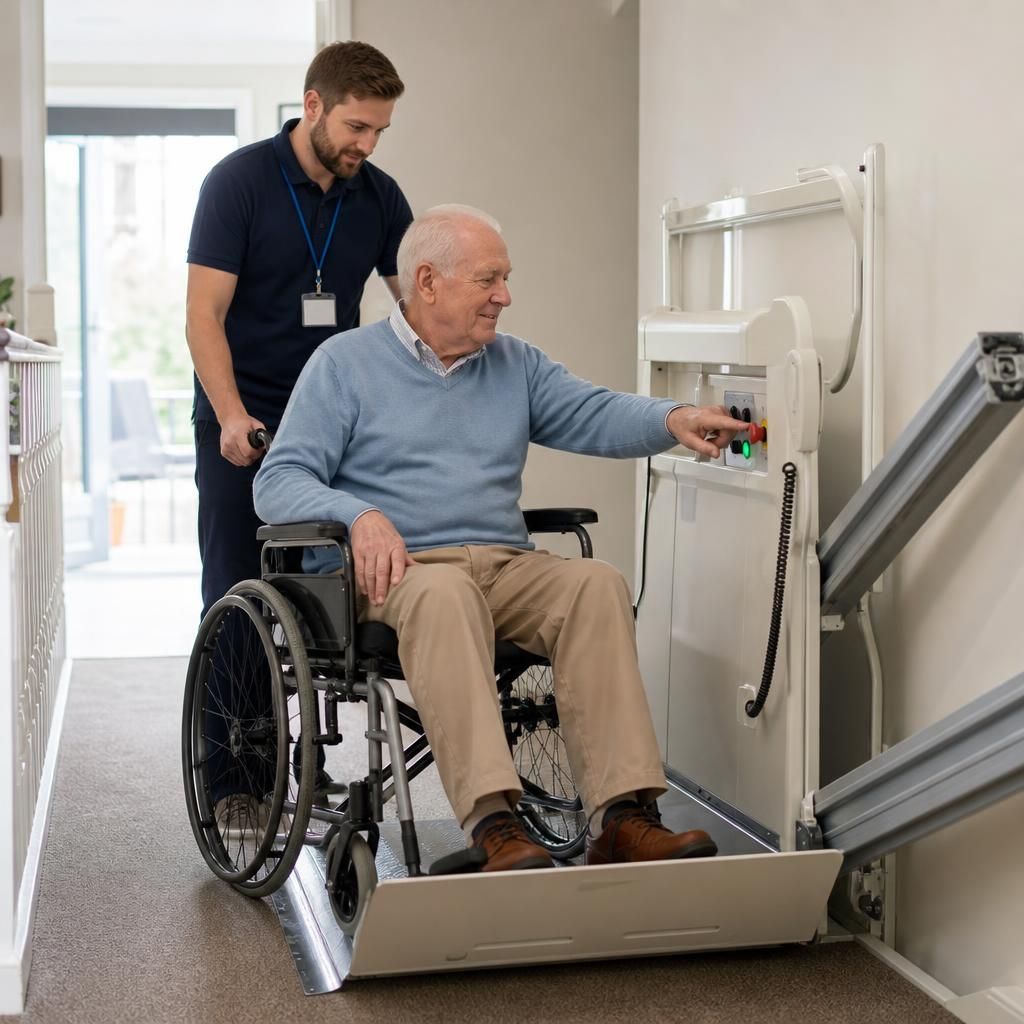
Arrange Your Wheelchair Stairlift Service
If your wheelchair stairlift is due a service or showing signs of reduced performance, contact Independent Stairlifts to arrange an inspection by a qualified stairlift engineer. We can assess the lift, identify wear or faults and advise on any required maintenance or repairs.