
What features should I look for in a stairlift specifically designed for wheelchair users?
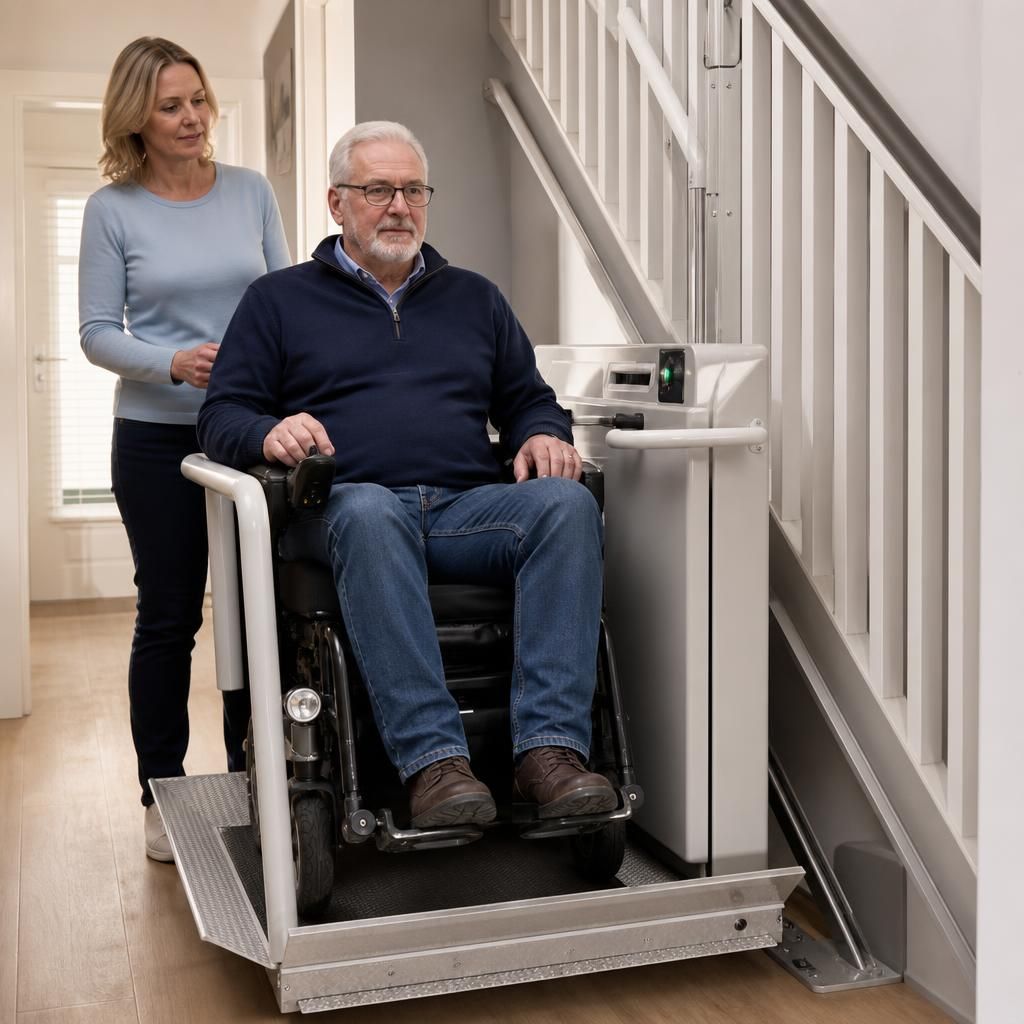
A stairlift specifically designed for wheelchair users should offer a suitably sized, weight-rated platform, safe wheelchair access, secure restraints or barriers, dependable controls and battery backup. Also check that the platform folds or parks appropriately, the lift suits your staircase and landing, and features such as non-slip surfaces, obstruction sensors and accessible call controls meet the user’s needs.
A stairlift designed for wheelchair users should provide a stable, weight-rated platform that allows the user to remain in their wheelchair while travelling between levels. The most important features are suitable platform dimensions, safe access, reliable restraint and barrier systems, simple controls, obstruction protection, battery backup and a layout that works with the staircase and landings. A professional assessment is needed to confirm that these features are appropriate for the wheelchair, user and property.
Platform size and safe working load
The platform must be large enough for the wheelchair to sit fully within the protected travel area, without wheels, footrests or other components projecting into unsafe positions. Check the platform dimensions with the wheelchair actually being used, as a compact manual chair, powered wheelchair and mobility base can have very different widths, lengths, turning circles and weights.
The lift’s safe working load must cover the combined weight of the wheelchair and user. This should be checked against the heaviest configuration, including batteries, removable equipment and any items that are routinely carried. Do not assume that a platform lift intended for a standard wheelchair will be suitable for a larger powered chair or specialist seating system.
Easy and level access
Entry and exit should be as straightforward as possible. Look for a platform that can be reached without a steep approach, awkward transfer or excessive manoeuvring. Depending on the staircase and landing, useful features may include:
- Powered access ramps or bridge plates to reduce the gap between the platform and landing.
- Low-profile entry points that minimise the threshold the wheelchair must cross.
- Fold-down or automatic ramps that stay securely in position during travel.
- A platform orientation that allows the user to approach, leave and turn safely at the top and bottom of the stairs.
- Suitable landing space for positioning the wheelchair without obstructing doorways, corridors or escape routes.
Access arrangements can differ at each end of the staircase. A platform that is easy to enter downstairs may require a different exit direction upstairs, so both landings should be assessed rather than judging the staircase by its width alone.
Side barriers, gates and restraints
Protective barriers should prevent the wheelchair from rolling off the platform during movement. These may include hinged arms, side rails, entrance gates or powered safety barriers. They should close securely and prevent the lift from travelling if they are not correctly positioned.
A restraint system may be appropriate where there is a risk of the user moving within the wheelchair. The correct arrangement depends on the wheelchair type, the user’s posture and their ability to operate or release the restraint. A restraint should not be treated as a substitute for properly applied wheelchair brakes. The chair should be positioned as instructed, with its brakes engaged where applicable, before travel begins.
Check that the barriers and restraints can be operated by the intended user or by a carer. They should not require excessive force or difficult reaching, particularly where the user has limited hand strength, dexterity or movement.
Non-slip platform and stable positioning
A durable, non-slip platform surface helps keep the wheelchair stable when the lift is moving. The surface should remain secure when wet if the lift is installed outdoors, and it should be easy to inspect and clean. Wheel chocks or suitable positioning guides can help the user place the wheelchair consistently, but they must not interfere with larger wheels, footplates or powered chair components.
The platform should provide adequate clearance from the stairs, walls and handrails throughout its route. A correctly installed system should not rely on the user making precise corrections while travelling.
Controls that suit the user
Controls should be clearly marked, easy to reach and usable from the wheelchair. Depending on the user’s abilities, consider:
- Constant-pressure controls, which require the control to be held while the lift is moving and can provide additional operational control.
- Large, tactile or illuminated buttons for users with reduced vision or dexterity.
- Controls positioned so the user does not need to lean outside the wheelchair or reach across a barrier.
- Remote call and send controls at both levels, allowing the platform to be brought to the required floor.
- Simple audible or visual indicators showing whether the lift is available, charging, moving or stopped because a safety condition has been detected.
If a carer, family member or support worker will operate the lift, they should be able to use the controls safely without standing in the path of the moving platform. Key switches or restricted controls may also be useful where unsupervised use needs to be limited.
Obstruction detection and emergency protection
Obstruction sensors should stop or prevent movement if the platform encounters an object on the stairs or along its travel path. Ask where the sensors are located and whether they protect the leading edges, underside and sides of the platform. Sensors cannot replace good housekeeping, so the staircase should still be kept clear.
Important safety provisions may also include an emergency stop control, manual lowering or release arrangements, an alarm or communication method, and a mechanism that prevents travel when a gate, barrier or ramp is not correctly secured. The user and regular carers should receive clear instructions on what to do if the lift stops unexpectedly.
Battery backup and charging
Battery operation allows many wheelchair platform lifts to continue working during a mains power cut, provided the batteries are sufficiently charged. Confirm where the lift charges, whether it charges automatically when parked, and whether the platform must be left in a particular position.
Ask how the system indicates a low battery and what happens if the batteries fail. Battery condition is affected by age, use and charging patterns, so it should be included in routine servicing. The electrical supply and any dedicated circuit must be suitable for the property and installed in accordance with applicable requirements.
Travel route, parking and folding
A platform lift needs enough usable stair and landing space for the platform, its rails and the wheelchair. On narrow or busy staircases, a folding platform may help preserve access when the lift is not being used, but the folded unit must not create a hazard or obstruct a landing.
Consider where the platform parks at each end, whether it blocks a doorway or corridor, and whether a parked platform could interfere with a handrail or emergency route. Some properties require the platform to be moved or folded before other people can use the stairs comfortably.
Curved systems can be designed around bends, intermediate landings and changes in direction, while straight systems may be suitable where the staircase follows one uninterrupted line. The choice depends on the complete route, not simply on whether the first flight appears straight.
Compatibility with the wheelchair and user
Provide accurate details about the wheelchair’s overall width, length, height, weight and turning requirements. Include any powered seating, joystick controls, headrests, oxygen equipment or other accessories that will travel on the platform. A demonstration with the actual wheelchair is preferable where practicable.
The user’s posture, balance, vision, hearing, cognitive ability and hand control also affect the suitable specification. For example, someone unable to operate a standard joystick may need alternative controls, while a user with poor balance may require more substantial support and a carer-operated procedure. The lift should support the person’s normal routine rather than requiring them to change wheelchairs or transfer unnecessarily.
Build quality and suitability for the location
Materials and protection should match the installation environment. Outdoor wheelchair stairlifts need weather-resistant components, effective drainage, corrosion protection and controls that remain usable in cold or wet conditions. Indoor installations still need robust, easy-to-clean surfaces and protection against everyday knocks from wheelchair footplates and frames.
Where the stairlift serves more than one person, check that the features do not make ordinary stair use unnecessarily difficult. The assessment should consider household members, visitors, carers, fire safety, door positions and any future changes to the user’s mobility.
Questions to confirm before choosing a model
- Will the platform safely accommodate the user’s actual wheelchair, including its batteries and accessories?
- Is the safe working load sufficient for the combined user and wheelchair weight?
- Can the user enter and leave at both levels without unsafe turning or reversing?
- Are the ramps, gates, barriers and restraints easy for the user or carer to operate?
- Are the controls, indicators and emergency procedures suitable for the user’s abilities?
- Will the platform, rails and parked lift leave adequate clearance on the stairs and landings?
- What happens during a power cut or if the lift stops between floors?
- What servicing, battery replacement and safety checks will be required?
The best specification is therefore not the lift with the most features, but the one whose platform, access system, controls and safety equipment match the wheelchair, the user and the home. An on-site assessment should verify measurements, travel clearances, electrical arrangements and operating needs before a final recommendation is made.
The platform must accommodate the user’s actual wheelchair, not just a standard chair. Its width, length and safe working load should allow the wheelchair, user and essential equipment to travel securely without wheels, footrests or controls projecting beyond the protected area.
During the assessment, include batteries, powered seating, headrests and any other accessories normally used. Entry and exit space, ramps, barriers and controls should also be checked at both landings so the user can approach, travel and leave the platform without unsafe manoeuvring or unnecessary transfers.
Arrange a wheelchair stairlift assessment
Arrange a wheelchair stairlift assessment with Independent Stairlifts to check the platform, access points, controls and safety features against your wheelchair, mobility needs and home layout.