
What safety features are included in outdoor wheelchair stairlifts to ensure user protection?
Outdoor wheelchair stairlifts protect users with non-slip platforms, secure safety restraints, protective edges and sensors that stop the lift if an obstruction is detected. Weather-resistant controls, emergency stop functions and reliable braking systems provide additional protection during outdoor travel.
Outdoor wheelchair stairlifts are designed to protect the user through a combination of secure platform access, controlled movement, obstruction detection and weather-resistant components. Key features commonly include a non-slip platform, safety barriers or restraints, automatic stopping sensors, emergency controls, reliable braking and interlocked access ramps. The exact specification depends on the model and staircase, so the safety features should be confirmed during the assessment and installation.
Non-slip platform and safe access
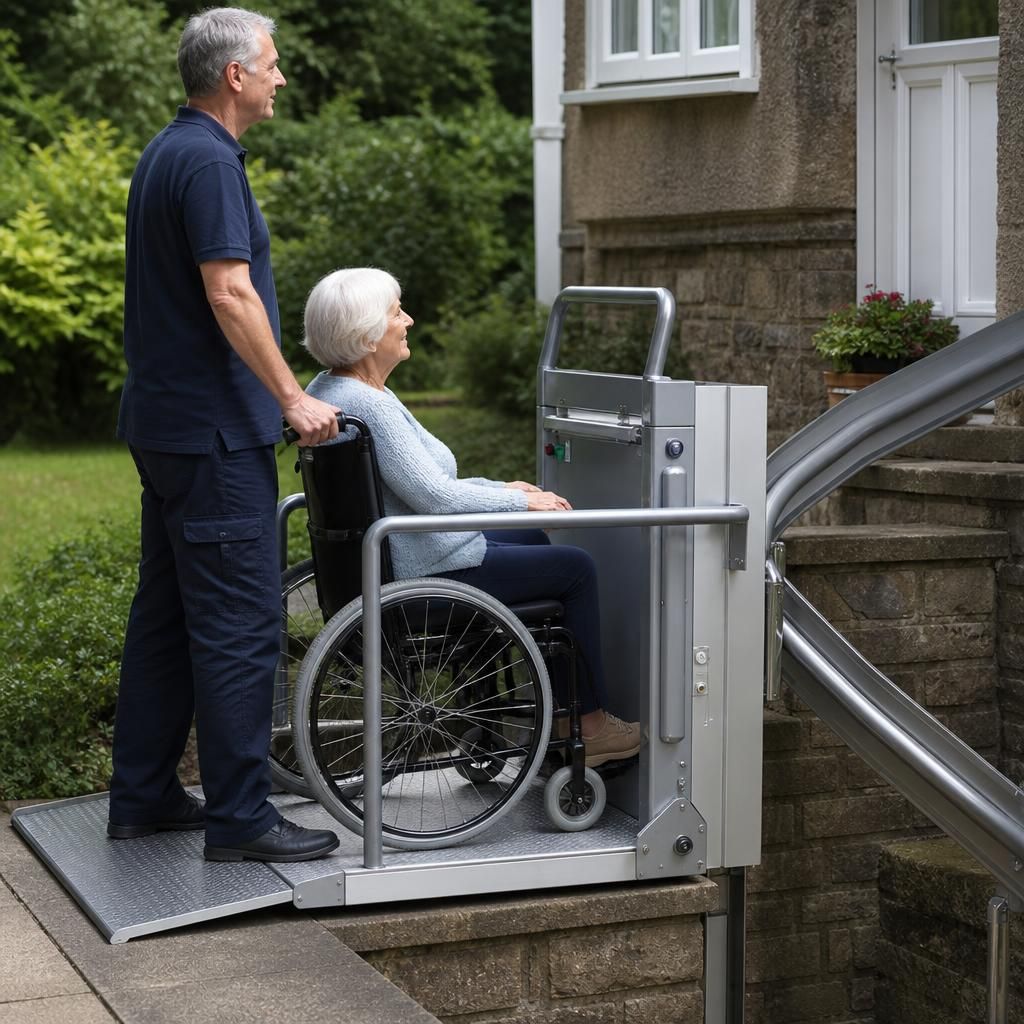
The platform normally has a slip-resistant surface to provide stable footing for the wheelchair and attendant, even when the equipment is used in damp conditions. Ramps or hinged access plates help the wheelchair move safely on to and off the platform. When the lift is travelling, these components typically fold or lock into position so that the wheelchair cannot roll away from the platform.
Some outdoor wheelchair stairlifts also include raised edges, wheel stops or protective side barriers. These help keep the wheelchair within the platform area, particularly when the lift is travelling along a steep or exposed staircase. The platform should be large enough for the intended wheelchair and positioned so that the user can board without having to make an unnecessarily difficult turn.
Restraints, barriers and access interlocks
Depending on the design, the lift may have a lap belt, safety bar, arm barrier or other restraint system. These features are intended to keep the user securely positioned while the platform is moving. A restraint should be used as instructed and adjusted so that it is secure without restricting normal breathing or causing discomfort.
Access ramps and safety barriers are often linked to interlock systems. This means the lift will not travel unless the relevant ramp, gate or barrier is correctly closed and secured. The control system may also prevent the platform from moving if the wheelchair has not been positioned properly or if an access component is still open.
Obstacle detection and automatic stopping
Sensors around the platform and drive system can detect obstacles on the staircase or in the lift’s travel path. If an obstruction is detected, the lift should stop or prevent movement, reducing the risk of trapping or impact. Controls are usually designed to allow the operator to stop the lift immediately if an unexpected object, person or animal enters the route.
Obstacle sensors are an important safeguard but they do not replace visual checks. The staircase should be kept clear of garden equipment, parcels, loose mats, snow, ice and other items before use. Users and carers should also keep hands, feet, clothing and wheelchair accessories within the protected platform area while the lift is moving.
Controlled movement and braking
Outdoor wheelchair stairlifts use a controlled drive system to start, travel and stop smoothly. A braking mechanism holds the platform when it is stationary and helps prevent uncontrolled movement if the control is released or the power supply is interrupted. The drive system and its supporting structure are selected for the slope, length and loading requirements of the particular staircase.
Hand-held or platform-mounted controls normally require continuous pressure to operate. Releasing the control stops the lift, allowing the user or attendant to stop travel without needing to reach a separate switch. The controls should be positioned so they can be operated without leaning out of the wheelchair or reaching into the moving mechanism.
Emergency stop and manual recovery
An emergency stop control allows the lift to be stopped quickly if there is a problem. Many installations also provide a method of lowering or moving the platform to a safe position if the normal controls or mains supply cannot be used. Battery-backed operation may allow the lift to complete a journey during a power interruption, although the available function varies between models.
Users and regular carers should know where the emergency stop is located and understand the manufacturer’s recovery procedure. They should not attempt to release a trapped platform, remove covers or work on the electrical system themselves. If the lift stops unexpectedly, secure the wheelchair, use the instructed emergency procedure and contact the service team if the issue cannot be resolved safely.
Weather-resistant electrical and structural components
Outdoor models use materials, finishes and enclosures selected for exposure to rain, sunlight, dirt and changing temperatures. Controls, motors, sensors and electrical connections should have suitable protection for their location, while drainage and covers help prevent water from collecting around sensitive components. This weather resistance supports safe operation, but it does not make the equipment immune to severe conditions.
Heavy ice, standing water, snow, wind-blown debris or flooding can affect safe use. The platform and staircase should be cleared and checked before travel, and the lift should not be used if water has entered electrical parts or if any component appears damaged. Protective covers should be fitted only as directed, because incorrectly placed covers can interfere with ventilation, sensors or moving parts.
Safe installation and ongoing checks
Safety depends on correct installation as well as the equipment’s built-in features. The track, platform, stops, controls and fixing points must be suited to the structure and outdoor environment. During an assessment, the access points, staircase surface, drainage, power supply, wheelchair dimensions and the needs of the regular user should all be considered.
Routine servicing checks the brakes, safety belts, sensors, interlocks, emergency controls, batteries, fixings and weather seals. Report unusual noise, jerky movement, delayed stopping, damaged restraints, worn platform surfaces, exposed wiring or repeated sensor activation promptly. Do not bypass a safety switch or continue using the stairlift when a protective feature is not working.
Before each journey, check that the route is clear, the platform is fully deployed, the wheelchair is positioned within the marked area and the restraint or barrier is secured. These simple checks, combined with professional installation and regular maintenance, help the outdoor wheelchair stairlift provide controlled and protected access in everyday use.
Outdoor wheelchair stairlifts protect users by preventing movement when the platform is not safely prepared. Access ramps, gates and safety barriers usually have interlocks, so the lift will not travel until they are correctly closed or positioned.
Additional protection commonly includes a slip-resistant platform, raised edges or wheel stops, a suitable restraint and sensors that detect obstacles in the travel path. Releasing the continuous-pressure control should stop the lift, while an emergency stop provides a further means of stopping movement quickly. Before each journey, check that the staircase is clear, the wheelchair is within the marked platform area and all restraints or barriers are secured.
Arrange Your Outdoor Wheelchair Stairlift Safety Assessment
Arrange your outdoor wheelchair stairlift safety assessment with Independent Stairlifts to confirm the right platform size, access protection, controls and weather-resistant features for your staircase. Contact our team to discuss your requirements.