
What maintenance is required to keep outdoor wheelchair stairlifts in optimal condition?
Outdoor wheelchair stairlifts require regular cleaning, inspection and professional servicing to keep the platform, track, safety systems and power supply working reliably. Remove dirt and standing water, check for visible wear or damage, keep the track clear, protect the lift when it is not in use and arrange servicing according to the manufacturer’s guidance.
Outdoor wheelchair stairlifts need routine cleaning, visual checks and professional servicing to keep the platform, drive system, track, safety features and power supply reliable. Maintenance should remove weather-related debris, identify wear before it affects operation and protect electrical and mechanical components from rain, frost, grit and corrosion. Always follow the instructions for your specific model, as cleaning methods, lubrication points and service intervals vary.
Keep the platform and track clear. Leaves, mud, gravel, moss, ice and other debris can obstruct the platform, affect the wheels or interfere with the lift’s sensors. Before use, check that the staircase and the full travel path are clear. Remove loose dirt with a soft brush or cloth, then clean suitable surfaces with a damp cloth and mild detergent. Do not use abrasive cleaners, solvents or a pressure washer, as these can damage finishes, seals, controls and electrical components.
Pay particular attention to drainage. Standing water should not be allowed to collect on the platform, footrest, track or around the charging points. After heavy rain, clear blocked drainage areas and dry accessible surfaces where practical. If water has entered the control box, motor housing or another electrical component, do not operate the stairlift; arrange an inspection by a suitably qualified engineer.
Inspect the lift before regular use. Look for loose or missing fixings, damaged covers, rust, cracked plastic, frayed cables, unusual gaps and signs that the track or platform has moved. Check that the platform opens, folds and locks correctly, that the armrests and safety barriers operate as intended, and that the seat belt or other restraint is secure if fitted. Do not use the stairlift if a safety feature does not engage or if the platform feels unstable.
Pay attention to changes in operation. Grinding, scraping, clicking, juddering, unexpected stopping, slower travel, repeated warning sounds or reduced battery performance can indicate wear, contamination or an electrical fault. Stop using the lift if it behaves differently from normal and contact the service team rather than continuing to test it under load.
Maintain the power supply and batteries. Keep charging contacts clean and ensure the stairlift is left in its recommended charging position when not in use. Check that the mains supply has not been switched off and that any outdoor isolation switch or protective device remains accessible. Batteries gradually lose capacity, particularly in cold weather, and may need replacement as part of normal servicing. Do not attempt to open battery packs, alter wiring or bypass a fuse or safety device.
Lubrication should only be carried out at the points and with the product specified by the manufacturer or service engineer. Applying oil or grease to the wrong part can attract grit, affect sensors or cause the drive system to slip. Some modern tracks use materials or systems that do not require user-applied lubricant, so avoid treating the rail as a general lubrication point unless the maintenance instructions specifically say to do so.
Protect the stairlift from harsh weather. Remove snow and ice before operation, and do not force a frozen platform, cover or control. An approved protective cover can help when the lift is unused, but it must be fitted as instructed and should not trap moisture against the equipment. Keep nearby vegetation trimmed so that branches, leaves and roots do not obstruct the route or interfere with drainage. Coastal locations and exposed sites may require closer inspection for salt deposits and corrosion.
Arrange professional servicing at the interval recommended for the model and its usage. A qualified engineer can inspect the drive mechanism, batteries, charging system, fixings, track, sensors, emergency controls and safety edges, as well as clean and adjust components that are not intended for user maintenance. Servicing is especially important where the stairlift is used frequently, exposed to salt or flooding, or has been unused for a prolonged period.
Keep a record of servicing, reported faults and replacement parts. Tell the engineer about any changes in performance, impact damage, water ingress or periods when the lift has been left unused. If the stairlift is needed for daily mobility, report faults promptly and use an agreed alternative arrangement until it has been confirmed safe to operate. Regular user checks combined with scheduled professional servicing will help maintain safe, dependable operation and reduce the risk of avoidable repairs.
Regular visual checks are a key part of maintaining an outdoor wheelchair stairlift. Before use, check that the platform, track and travel path are free from leaves, mud, gravel, ice and standing water. Look for loose fixings, damaged covers, rust, cracked components or anything that appears to have moved.
Test the platform, safety barriers, controls and restraint system, where fitted, without placing anyone at risk. Unusual noises, juddering, slower movement, repeated warning sounds or reduced battery performance should be reported rather than ignored. Do not use the lift if a safety feature fails to engage or the platform feels unstable.
These user checks do not replace professional servicing. A qualified engineer should inspect the drive mechanism, batteries, charging system, sensors, fixings and other components at the interval recommended for the specific model. Servicing is particularly important after severe weather, water ingress, impact damage or a prolonged period of non-use.
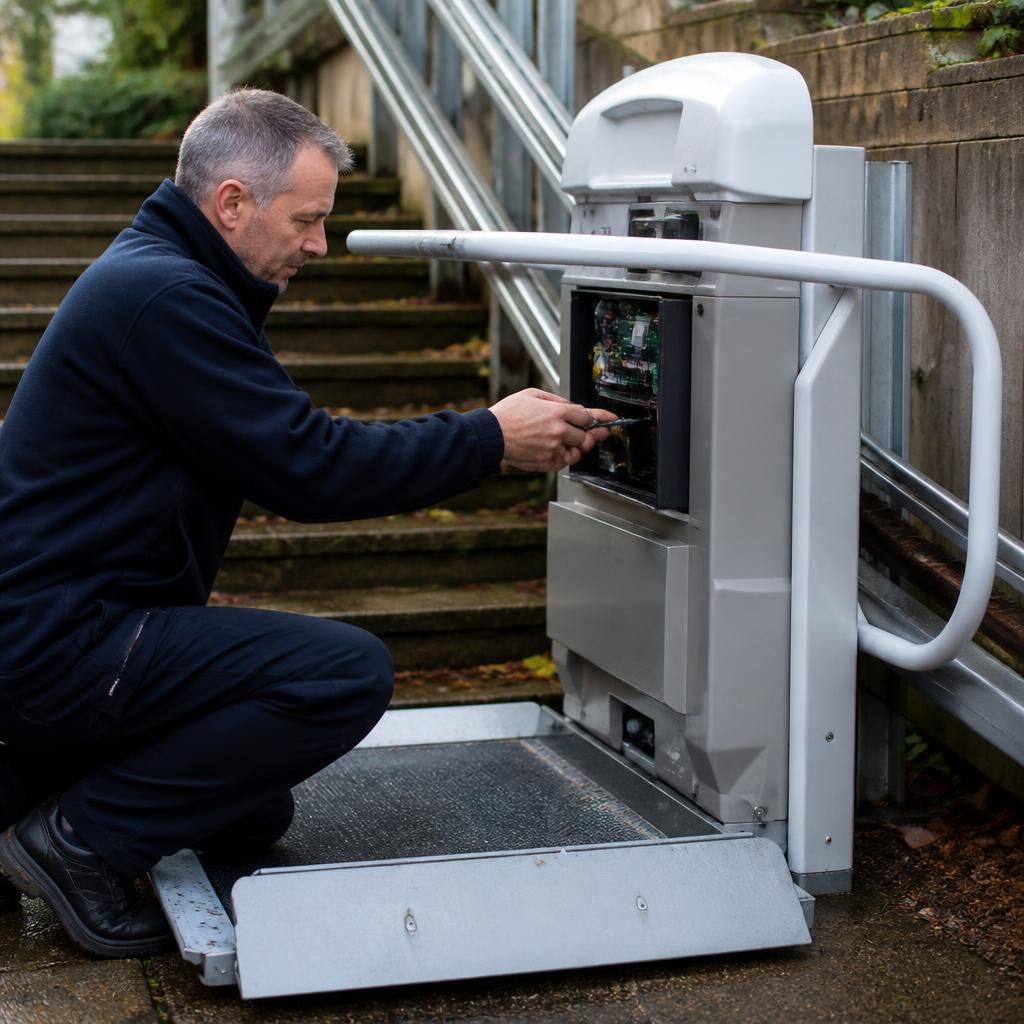
Arrange a Professional Outdoor Stairlift Service
Arrange a professional outdoor stairlift service to check the drive system, batteries, charging points, safety features and weather-related wear. Contact Independent Stairlifts to book an inspection or discuss any change in performance, water ingress or damage.