Travel without leaving the wheelchair
A platform stairlift lets the user remain in their own wheelchair during the journey, reducing the need for transfers at the stairs.

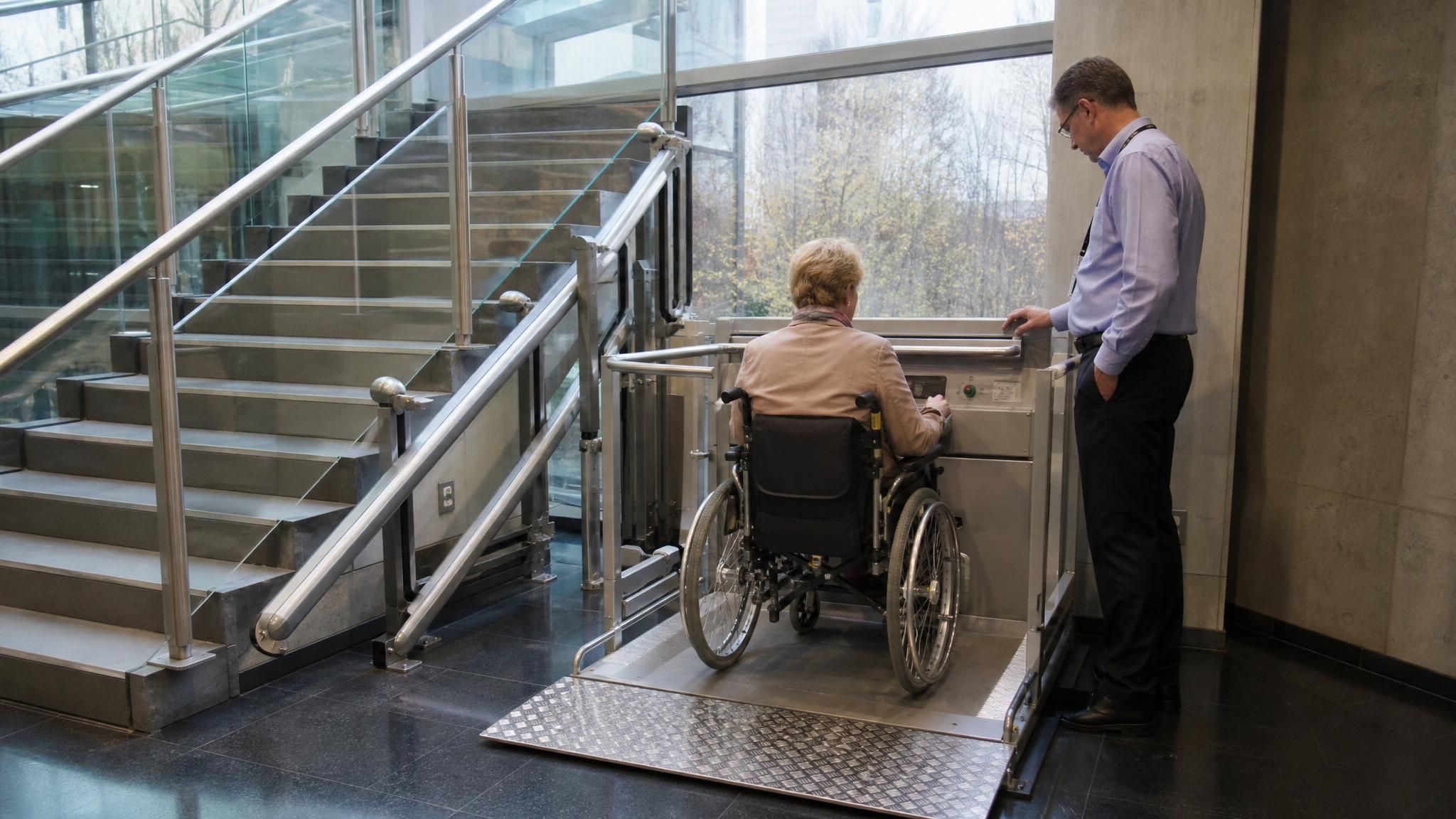
Commercial wheelchair stairlifts provide powered access between levels for wheelchair users in public, healthcare, education and workplace buildings. Platform or seat configurations are selected according to the staircase, available space, building use and individual access requirements.
Commercial wheelchair stairlifts must be assessed against the building layout, intended use, wheelchair dimensions, user weight and relevant UK safety requirements before installation. A site survey checks the staircase, landings, access routes, emergency controls, guarding and power supply, helping determine whether a platform lift, seat lift or another access solution is suitable.
Ongoing support should include clear operating guidance, maintenance recommendations and a straightforward process for reporting faults. Arrange a commercial site assessment with Independent Stairlifts so the proposed lift can be checked for safe access, practical installation and appropriate servicing requirements.
A commercial wheelchair stairlift must suit the staircase, wheelchair, building use and people who will operate it. Independent Stairlifts carries out a site assessment before recommending a configuration.
The assessment considers the staircase width and shape, landings, doorways, headroom, access routes, wheelchair dimensions, user weight and available power supply. It also considers whether staff or visitors will operate the lift and whether the building needs controlled access, emergency procedures or additional guarding. The recommendation is based on practical access and the requirements of the premises, rather than on a standardised product choice.
Commercial wheelchair stairlifts need controls and protective features that are suitable for regular use by different people. The final specification should reflect the risks identified during the assessment.
Depending on the lift design, relevant features may include ramps or barriers, safety edges, obstruction detection, grab rails, emergency stop controls, audible or visual indicators and key or attendant controls. Operating instructions should be provided in a clear format, with users shown how to board, secure the wheelchair, travel and respond to an interruption. The building operator should also keep access routes clear and make sure staff understand the agreed operating procedure.
Installation planning should account for the building’s normal activities, fire routes, visitors and any residents or service users who rely on accessible access. The work programme is agreed after the site requirements are understood.
Before work starts, the installation arrangements should cover delivery access, working areas, temporary restrictions, electrical work, protection of surrounding finishes and safe access during the installation. For public, healthcare, education and workplace buildings, the responsible person may also need to coordinate the work with facilities, estates or health and safety teams. Any necessary permissions or building-specific checks should be addressed before installation is scheduled.
A clear fault-reporting process helps the building operator respond promptly and prevents users from attempting unsafe repairs. Support arrangements should be explained before the lift is handed over.
If the lift stops, behaves unexpectedly or shows a warning, users should follow the operating guidance, keep the area safe and contact the designated support team. They should not bypass safety controls or try to access internal components. Independent Stairlifts can explain the appropriate reporting route, information to provide about the fault and the next steps for inspection or repair, subject to the agreed service arrangements.
Warranty terms and ongoing servicing arrangements depend on the equipment selected and the agreed installation package. These details should be confirmed in writing before the order is placed.
The handover information should identify what the warranty covers, how long it applies, any exclusions and how to request assistance. It should also explain recommended servicing, user responsibilities and whether parts, labour or call-outs are covered under a separate support agreement. Ask Independent Stairlifts to set out the proposed warranty and aftercare arrangements for the commercial wheelchair stairlift so the building operator can plan future maintenance with confidence.
Commercial wheelchair stairlifts are powered platform or seat lifts that move wheelchair users between levels in public, healthcare and workplace buildings. Their configuration depends on the staircase, landing space, wheelchair dimensions and building access requirements.
The right assessment covers safe transfers, guarding, controls and servicing. Independent Stairlifts can assess your premises and advise on a suitable commercial wheelchair lift.
A platform stairlift lets the user remain in their own wheelchair during the journey, reducing the need for transfers at the stairs.
Platform size, folding sections, controls and travel direction can be considered alongside the staircase, landings and available circulation space.
A commercial installation can support wheelchair users, people with limited mobility and approved attendants when the system is specified for shared use.
Where the layout permits, a stairlift can provide a practical route between levels in offices, care settings, schools, community buildings and other premises.
Commercial models can include safety edges, obstruction detection, barriers, emergency stop controls and interlocks selected for the site and intended users.
A detailed survey helps coordinate installation around opening hours, access routes and building operations, reducing avoidable disruption during the work.
Independent Stairlifts helps organisations assess and plan commercial wheelchair access, matching platform or seat lift options to the building, wheelchair and user requirements. Its service covers site surveys, installation guidance and ongoing support for practical, compliant access.
Platform and seat lift options
Independent Stairlifts can help compare inclined platform lifts with suitable seat-lift configurations, taking account of whether the user remains in their wheelchair, the staircase design and the space available at each landing.
Solutions for varied commercial buildings
Advice can be tailored to settings such as care facilities, offices, schools, shops and community buildings, where visitor access, staff procedures and regular public use may affect the most practical lift arrangement.
Straight, curved and outdoor staircases
The range of stairlift experience covers different staircase layouts and environments, including straight, curved and external access routes. This helps address buildings where a standard straight-stair arrangement is not appropriate.
Access planned around the wheelchair
Important details include wheelchair width and length, user weight, turning space, transfer needs and whether an attendant must travel with the user. Considering these points early helps avoid selecting equipment that is difficult to use in practice.
Practical installation planning
Commercial installations require more than checking the staircase. Access routes for delivery, landing clearance, guarding, controls, power supplies and the effect on normal building use all need to be considered before work begins.
UK-wide service
Independent Stairlifts provides coverage across the UK, giving organisations a single point of contact when they need commercial wheelchair access advice for premises in different locations.
Clear advice on suitability
If a wheelchair stairlift cannot provide a safe or workable arrangement, this should be identified during assessment rather than after installation. Independent Stairlifts can explain the practical limitations and indicate when another access solution needs to be considered.
Commercial wheelchair stairlifts are powered access systems that carry a wheelchair user between levels in settings such as care facilities, schools, offices and community buildings. Platform models usually allow the user to remain in their wheelchair while travelling along a staircase, while a seat lift may suit users who can transfer safely from their chair.
The right system depends on the staircase width, landings, available turning space, wheelchair dimensions, combined user and chair weight, building traffic and intended frequency of use. A commercial installation also needs suitable guarding, controls, emergency arrangements, power supply and planned maintenance; a stairlift should not be treated as a substitute for a full access assessment or building compliance advice.
Independent Stairlifts can arrange a site survey to establish whether a commercial wheelchair stairlift is practical and which configuration best suits the premises. Before proceeding, ask for clear information about installation work, user training, servicing and fault support so the lift can be operated safely and reliably after handover.
A commercial wheelchair stairlift is a powered platform or seat system that carries a person between levels in a public, healthcare, education or workplace building. Platform models keep users in wheelchairs; seat models require a safe transfer.
It provides direct movement between floors without staff lifting a wheelchair, where the staircase, landings and clearances permit safe operation. Specification should cover platform size, load capacity, guarding, controls, emergency arrangements and the building’s expected traffic.
Independent Stairlifts can survey the premises and wheelchair before recommending a suitable configuration. Ask for clear details of installation work, user training, servicing and fault support before approving the project.
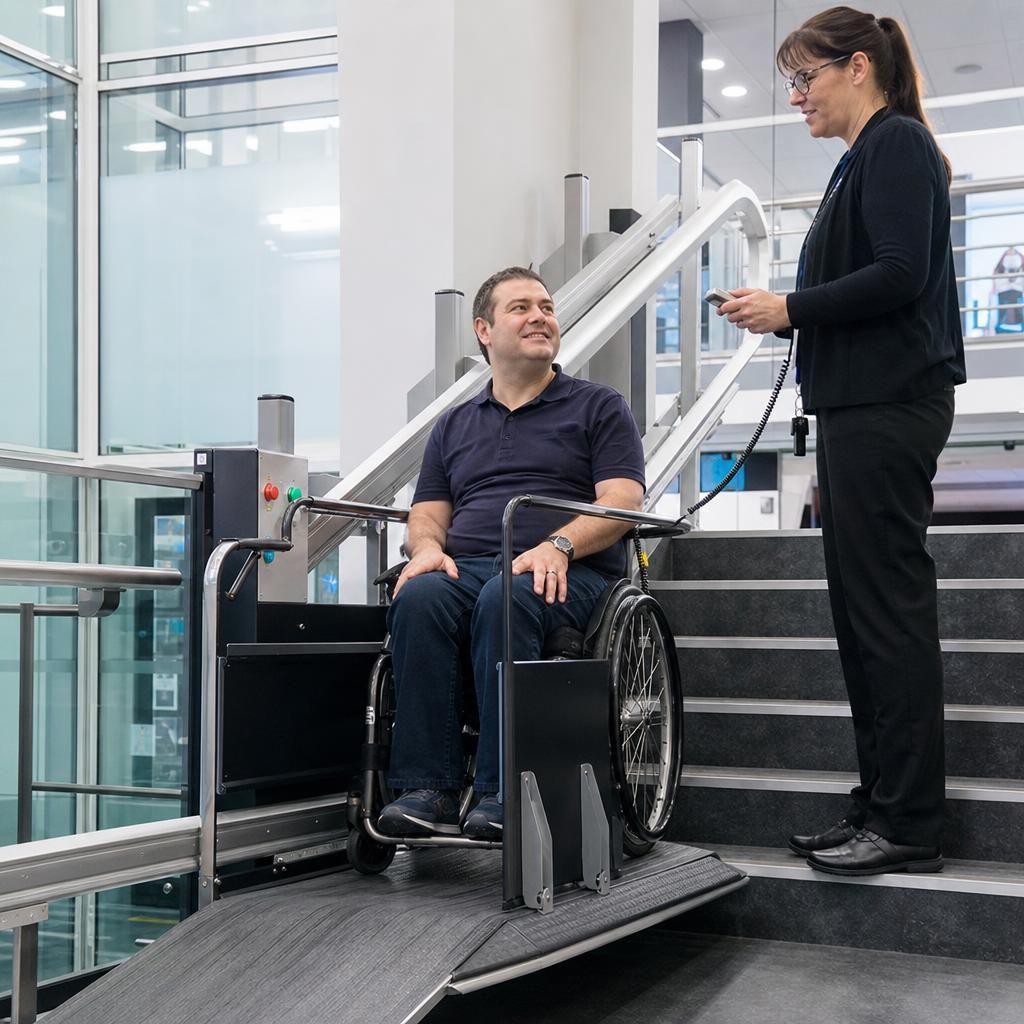
Commercial wheelchair stairlifts are specifically integrated into settings to ensure accessibility for wheelchair users, offering seamless operation across various structural designs and meeting all regulatory compliance requirements.
Commercial wheelchair stairlifts feature sensor systems to detect obstacles, automatic braking, safety belts, and emergency stop buttons, ensuring user safety during operation in various business environments.
Routine maintenance involves regular inspections, cleaning tracks, checking safety systems, and ensuring all mechanical components function smoothly. Professional servicing enhances performance and reliability, preventing disruptions and extending the lift's lifespan.
Customisation options include platform size, weight capacity, and control features, ensuring the lift fits architectural specifications and user preferences, delivering tailored accessibility solutions in various commercial environments.
Commercial wheelchair stairlifts are designed to meet stringent accessibility regulations through adherence to current safety standards, ensuring reliable operation and legal compliance in all business and public settings.
Independent Stairlifts provides clear operating guidance, installation advice and ongoing servicing support for commercial wheelchair stairlifts. Before you proceed, confirm the proposed warranty, maintenance arrangements and fault-reporting process, then request a site assessment to finalise your access solution.
Contact UsAll installations comply with stringent safety standards, providing a secure, reliable option. We ensure compatibility with varied architectural designs for seamless integration in commercial spaces.
Ensure the stairlift matches your specific accessibility requirements and building's architectural design, prioritising safety, user comfort, and compliance with relevant regulations for seamless integration and reliable performance.
Safety features include non-slip surfaces and sensors that detect obstructions, while ergonomic seating ensures user comfort. Regular maintenance and inspections uphold these standards, providing a secure and pleasant experience.
Regular maintenance and prompt support services prevent wear and tear, extend equipment lifespan, and ensure optimal functionality, minimising downtime and preserving reliable access for users.
Opt for energy-efficient stairlifts with advanced drive systems that minimise energy consumption, providing a cost-effective and environmentally friendly solution for commercial settings.
Arrange a commercial wheelchair stairlift assessment with Independent Stairlifts to confirm platform size, access route, controls and installation requirements. Receive clear advice on suitability, costs and ongoing servicing before you proceed.
Contact Us