
What features enhance the user experience in straight stairlifts?
Straight stairlifts enhance the user experience through features such as comfortable seating, simple controls, powered swivel seats, safety sensors and foldable arms or footplates. These options make transfers easier, improve confidence during travel and help the stairlift fit neatly into everyday home use.
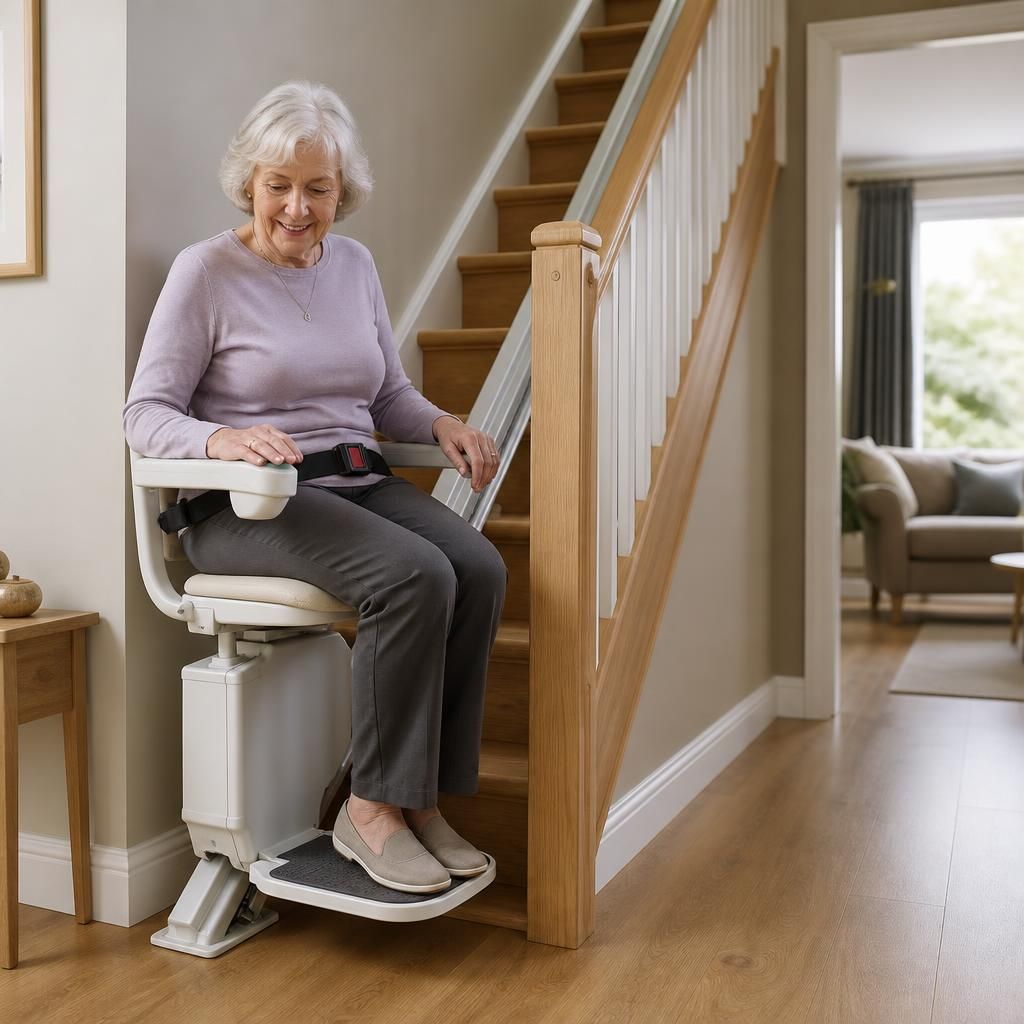
Straight stairlifts enhance the user experience by making transfers, travel and everyday operation simpler and more predictable. The most useful features are usually a supportive seat, intuitive controls, powered swivelling, safety sensors, a secure restraint system, smooth movement, rechargeable battery backup and foldable components that leave more space on the stairs when the lift is parked.
Comfortable, supportive seating
A well-designed seat helps the user remain stable and comfortable throughout the journey. Important details include a supportive backrest, suitable seat width and cushioning that accommodates the user’s posture without making it difficult to stand up. Armrests provide additional support when sitting down or rising, while a height-adjustable seat can make transfers easier where the staircase, landing or user’s leg strength creates particular challenges.
Some stairlifts offer different upholstery or seat configurations. The right choice depends on how the user transfers, whether they need extra lateral support and how much space is available at the top and bottom of the stairs. A home assessment should consider the user’s normal footwear, clothing and any walking aid used during transfers.
Powered swivel seats for safer transfers
A powered swivel seat turns towards the landing when the stairlift reaches the top of the stairs. This allows the user to leave the staircase before standing, rather than twisting in the seat while facing the steps. It can be particularly helpful for people with reduced balance, limited hip movement or difficulty turning independently.
The seat should lock securely in the travel position and return reliably to its normal position when required. A manual swivel seat may be suitable for some users, but it requires enough upper-body strength and control to operate safely. The assessment should establish whether powered operation is preferable.
Simple and accessible controls
Controls should be easy to identify and operate without stretching or changing position. Common arrangements include a joystick or button on an armrest and a remote control for calling or sending the stairlift between floors. A control that responds to light pressure can be useful where hand strength, dexterity or finger movement is restricted.
Controls should have a clear direction of travel and should stop the lift when released. Handsets can also allow another person to move the lift when it is parked in the way, although the user should not be carried unless seated correctly and operating the lift as instructed. Large, clearly marked buttons and straightforward audible or visual indicators can further improve usability.
Safety sensors and a secure restraint system
Sensors around the footrest, carriage and other exposed areas detect obstacles such as toys, footwear or objects left on the stairs. When a sensor is triggered, the stairlift should stop so the obstruction can be removed. This reduces the risk of damage and helps prevent the lift from continuing against an object.
A seatbelt or harness keeps the user positioned correctly during travel. The most suitable restraint depends on the user’s balance, posture and ability to release it independently. Some people may need a belt that is easier to fasten, while others may benefit from additional support. The restraint should be used for every journey and checked regularly for damage or poor adjustment.
Smooth starting, stopping and travel
Controlled acceleration and braking make the journey more comfortable and reduce sudden movement when the stairlift starts or stops. A consistent speed helps the user feel secure, particularly if they are anxious about heights, have poor balance or experience pain when jolted.
At the top and bottom of the staircase, the stairlift should stop in a predictable position that allows the user to transfer safely. The landing area must remain clear, and the final parking position should not obstruct a doorway, corridor or route used by other people in the home.
Foldable arms, seat and footrest
Foldable components allow the stairlift to be parked neatly against the wall when it is not in use. Folding the seat, arms and footrest can preserve usable stair width for other household members. This is especially important on narrow staircases or where the stairs form part of an escape route.
Folding should be straightforward and should not require excessive force. If the user cannot fold the components safely, a carer or family member may need to do so. Some models include powered folding options, which can be considered where reaching down or applying pressure is difficult.
Rechargeable battery operation
Battery-powered stairlifts continue to operate during a power cut, provided the batteries are charged and maintained correctly. Charging points are normally positioned along the rail so that the lift can recharge when parked. This avoids the need to connect a cable before every journey.
It is important to park the stairlift at a designated charging point and follow the manufacturer’s charging guidance. Warning tones or indicator lights may signal a low battery, a charging problem or another condition requiring attention. If these warnings persist, the stairlift should be checked rather than repeatedly used until the battery is completely depleted.
Clear status information and audible alerts
Visual indicators and audible tones can confirm whether the stairlift is charging, moving, stopped by a sensor or experiencing a fault. These prompts are particularly useful where the user has difficulty judging the lift’s status from its movement alone. However, alerts should be understandable rather than unnecessarily complicated, and the user should know what each warning means.
Instructions should be kept accessible for the user and anyone who may provide assistance. If a fault code or warning appears, recording the message can help a service engineer identify the issue more efficiently.
Practical rail and parking arrangements
For a straight staircase, the rail is normally fitted alongside the steps and can be designed around features such as doors, landings and available clearance. The position of the rail, charging points and parking area affects how easily the user can approach the seat and transfer at either end.
A compact folded design can reduce visual and physical intrusion, while suitable rail positioning helps keep handrails, doorways and walkways usable. The installer should check that the lift does not interfere with doors, radiators, light switches or other household fittings. Where the staircase is narrow, these details are just as important to everyday usability as the stairlift’s controls.
Options for changing mobility needs
The best feature combination should reflect both current ability and likely changes in mobility. For example, a user who currently manages a manual swivel may later benefit from powered swivelling, while someone with increasing difficulty standing may need a different seat height or greater arm support. A powered folding footrest or a more supportive restraint may also reduce the physical effort required.
Discuss changes in balance, strength, vision, posture and confidence during the assessment. The stairlift should support the user without requiring movements they cannot perform reliably. If a condition changes after installation, contact the service team before altering how the lift is used or adding equipment.
Features should be matched to the individual home and user
No single feature improves every user’s experience in the same way. A person with good hand control may value a simple armrest joystick, whereas someone with limited dexterity may need larger controls or remote operation. Someone who struggles to stand may prioritise powered swivelling and adjustable seating, while a household with limited stair width may place greater importance on folding components and a compact parked position.
During an assessment, consider how the user approaches the stairs, sits down, fastens the belt, operates the controls, travels, swivels at the landing and stands up. Trying these movements with suitable guidance helps identify which features provide genuine practical benefit rather than adding unnecessary complexity. Correct installation, clear instruction and regular servicing are also essential: even well-chosen features cannot compensate for an unsuitable layout, poor adjustment or neglected maintenance.
A powered swivel seat improves transfers by turning the user towards the landing before they stand. This avoids twisting while facing the stairs and can be particularly useful for people with reduced balance, limited hip movement or difficulty turning independently.
The seat should lock securely in the travel position and swivel reliably at the top of the staircase. During the assessment, consider whether the user can stand safely from the seat, operate the control and keep the landing clear. If manual swivelling would require too much strength or coordination, powered operation may provide a more suitable solution.
Discuss the right straight stairlift features for you
Speak to Independent Stairlifts about your staircase, transfer needs and preferred features so we can help you choose a suitable straight stairlift.