
What are the crucial maintenance practices I should undertake to ensure the longevity and optimal performance of my straight stairlift?
Regularly keep the stairlift’s track, seat and controls clean, check for visible damage or unusual noises, and follow the manufacturer’s guidance for charging and use. Arrange professional servicing at the recommended intervals, and report any fault promptly rather than attempting repairs yourself, to help maintain safe, reliable performance and extend the lift’s working life.
To keep a straight stairlift safe, reliable and efficient, carry out simple user checks and cleaning regularly, keep the track and charging points clear, follow the manufacturer’s charging and operating guidance, and arrange professional servicing at the recommended intervals. Report unusual movement, noises, warning lights or loss of performance promptly, and do not attempt electrical or mechanical repairs yourself.
Keep the stairlift clean and free from obstructions. Dust and debris can affect the carriage, track or moving parts. Wipe the seat, armrests, controls and footrest with a slightly damp, non-abrasive cloth, then dry them thoroughly. Use cleaning products suitable for the materials and avoid spraying liquid directly onto the controls, motor housing, track or charging contacts. Keep the staircase clear of toys, bags, cables, clothing and other items that could obstruct the footrest, safety sensors or travel path.
The rail should remain clean and unobstructed. Remove loose dust with a dry or lightly damp cloth, but do not apply oil, grease or household lubricant unless the manufacturer or a qualified engineer specifically instructs you to do so. Incorrect lubrication can attract dirt, affect the carriage or interfere with components designed to operate without additional lubricant.
Check the main user and safety features before use. Look for visible damage or anything that has become loose, including:
- the seat, armrests, swivel mechanism and seat belt;
- the footrest and its edges or sensors;
- the joystick, remote controls and display indicators;
- the rail, brackets and visible carriage components; and
- the charging points and any accessible cables.
Use the stairlift only when the seat is correctly positioned, the armrests and footrest are secure, and the belt fastens properly. Do not continue using it if the seat swivels unexpectedly, the belt will not latch, a safety edge remains activated, or a control does not respond normally.
Maintain correct charging habits. Park the lift at its designated charging point when it is not in use, unless your model’s instructions state otherwise. Avoid repeatedly leaving the stairlift away from its charger, as this can allow the batteries to discharge and may shorten their useful life. If the lift has charging points at both ends of the rail, make sure it reaches one of them as advised in the operating instructions. Keep the contacts clean and report charging warnings, reduced travel distance or repeated low-battery messages.
Batteries are service items and eventually require replacement. Do not replace them with unsuitable batteries or attempt to alter the charger. A qualified stairlift engineer can test the batteries, charger and charging circuit and identify whether poor performance is caused by battery wear, a contact issue or another fault.
Pay attention to changes in performance. Stop and seek advice if you notice jerky movement, unusual vibration, grinding or clicking noises, slower travel, unexpected stops, repeated error tones, a burning smell, visible damage or a failure to charge. A brief interruption caused by a safety sensor can have a simple explanation, such as an obstruction, but the lift should not be repeatedly reset or used if the cause is unclear.
Never bypass a safety sensor, hold down a control to overcome a fault, remove covers or work on the wiring. Stairlifts contain electrical and mechanical components that require appropriate training and safe isolation procedures. If the lift stops on the stairs, follow the instructions supplied with your model and contact the service team for guidance rather than trying to move it manually.
Arrange professional servicing as recommended. A service visit normally includes inspection of the rail and fixings, carriage, drive system, batteries, charger, controls, seat belt, swivel mechanism, footrest and safety sensors. The engineer can also check alignment, connections and operating performance in ways that are not possible through routine cleaning. Keep the service documentation and note any faults reported between visits so they can be investigated efficiently.
Follow the specific maintenance instructions for your model, particularly if the stairlift is used by more than one person, is installed in a dusty or damp environment, or is used infrequently. A lift that is left unused still needs suitable charging and periodic checks. If the property is empty for an extended period, ask for advice before disconnecting the power or leaving the stairlift in a particular position.
For outdoor straight stairlifts, protect the seat and controls from prolonged exposure to rain, frost and direct sunlight as instructed, and check more carefully for moisture, corrosion or debris. Do not use the lift if water has entered the controls or electrical housing; arrange an inspection first.
Good maintenance does not replace safe operation. Use the seat belt, respect the stated weight limit, sit facing the correct direction and keep hands, feet and clothing away from the rail and moving parts. These habits, combined with regular cleaning and professional servicing, help preserve the lift’s performance and identify developing problems before they become more disruptive or potentially unsafe.
Professional servicing is an essential part of straight stairlift maintenance because an engineer can inspect components that routine cleaning and user checks cannot fully assess. During a service, the rail and fixings, drive system, carriage, batteries, charger, controls, seat belt, swivel mechanism, footrest and safety sensors can be checked for wear, alignment and reliable operation.
Arrange servicing at the intervals recommended for your model and keep a note of any warning lights, unusual noises, jerky movement or charging problems to discuss during the visit. If the stairlift develops a fault between services, stop using it where appropriate and contact the service team rather than removing covers, bypassing safety sensors or attempting electrical and mechanical repairs yourself.
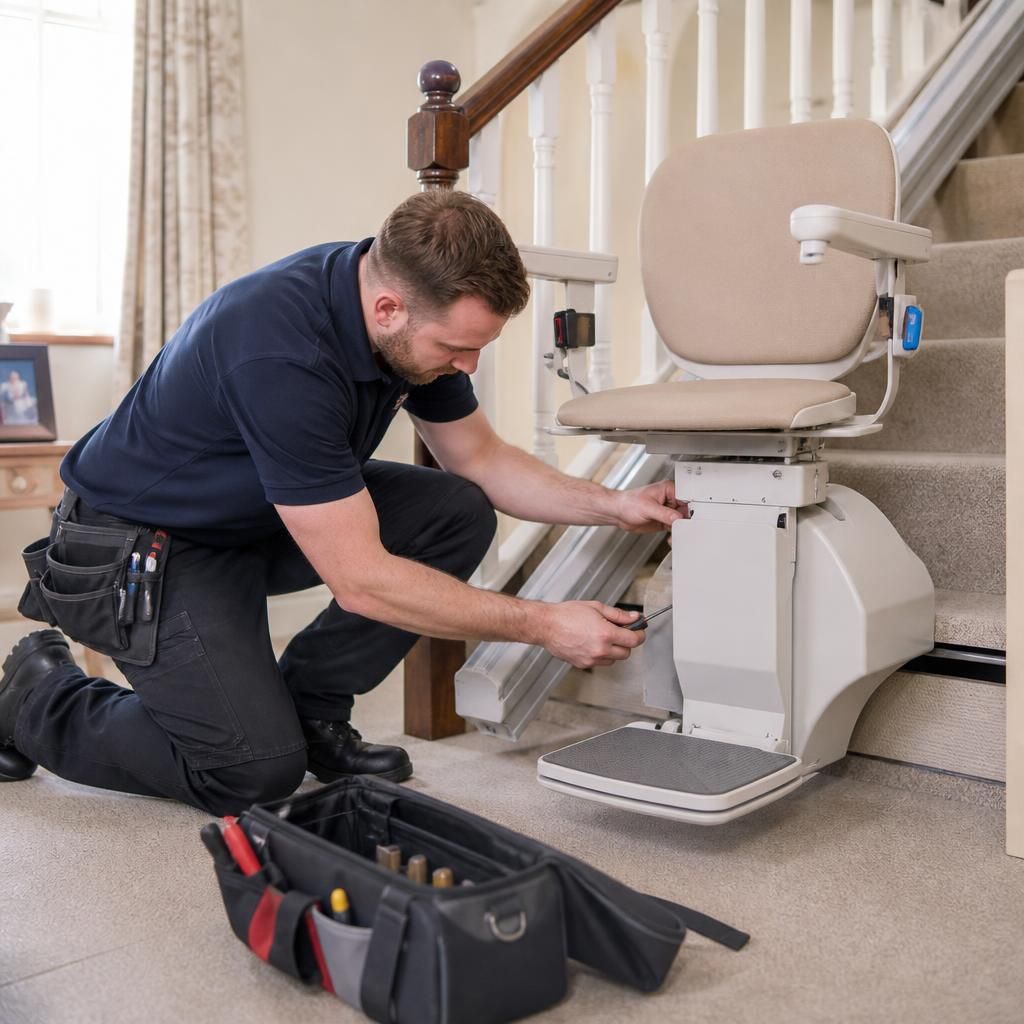
Arrange professional straight stairlift servicing
Arrange professional straight stairlift servicing to check the rail, drive system, batteries, safety features and controls. Contact Independent Stairlifts to book a service or discuss any warning signs or performance changes.