
What signs indicate that my straight stairlift might require immediate servicing before a scheduled maintenance check?
Your straight stairlift may need immediate servicing if it stops unexpectedly, moves unevenly, struggles on the track, makes unusual noises, fails to charge, or shows warning lights or error messages. Stop using it if operation seems unsafe, keep the lift switched off where appropriate, and contact Independent Stairlifts for advice rather than waiting for the scheduled maintenance check.
A straight stairlift requires servicing before its scheduled maintenance check when its movement, stopping, charging, safety controls or physical condition changes noticeably. Treat unexpected stops, uncontrolled movement, difficulty starting, unusual noises, warning lights, charging problems or damaged safety components as reasons to stop using the lift and contact Independent Stairlifts for advice.
Do not continue using the stairlift simply because it still completes the journey. A developing fault can become more serious, leave you stranded on the stairs or affect the lift’s ability to stop safely. If the problem occurs while you are travelling, remain seated, keep your hands and feet clear of moving parts, and use the normal stop or emergency controls if necessary. Do not attempt to climb off on the staircase unless there is an immediate danger and you have no safer option.
Warning signs that usually justify prompt professional attention include:
- Unexpected stopping or starting: the lift stops between the top and bottom of the track, starts intermittently, or only operates after the controls are used repeatedly.
- Uneven, jerky or unusually slow travel: changes in speed, vibration, hesitation or difficulty moving along the rail may indicate a control, drive, battery or mechanical problem.
- Unusual sounds: grinding, clicking, squealing, knocking or repeated beeping should be investigated, particularly if the noise is new or becomes louder during travel.
- Charging failure: the lift does not charge when parked correctly, the charging indicator does not behave as expected, or the batteries lose power more quickly than usual. Avoid relying on repeated charging attempts or using the lift until its battery and charging system have been checked.
- Warning lights or error messages: record what is displayed and when it appears. Do not ignore a warning because the lift continues to operate.
- Safety controls not working correctly: test controls such as the armrest switches, joystick, seat swivel, safety belt, sensors and emergency stop only as described in the user instructions. If any control is unreliable, do not use the stairlift.
- Difficulty locking or swivelling the seat: the seat should be secure for travel and should not move unexpectedly. A loose seat, armrest or footrest needs professional assessment.
- Obstructions or track damage: objects on or beside the rail, a damaged cover, loose fitting or visible obstruction can interfere with movement and should not be removed if doing so would require dismantling the lift.
- Burning smells, smoke, heat or electrical damage: switch the stairlift off at the appropriate isolation point if it is safe to do so, keep away from smoke or damaged wiring, and seek urgent assistance. If there is fire or immediate danger, leave the area and contact the emergency services.
Some faults are particularly urgent. Stop using the stairlift immediately if it moves without the control being operated, fails to stop normally, runs past a stopping point, the seat or belt does not secure you, the lift shows signs of overheating, or a component is loose or damaged. Keep other people away from the lift and do not remove covers, bridge sensors, bypass safety switches or attempt electrical repairs.
If the stairlift has stopped but there is no immediate danger, check only the simple points covered in your instructions. Make sure the power supply has not been switched off, the lift is properly positioned on its charging point, the key switch is in the correct position, the armrests are lowered and the controls are being used as intended. Check that the track and footrest area are clear without putting yourself in danger. If the fault remains, arrange professional servicing rather than repeatedly resetting the lift.
Before contacting Independent Stairlifts, note the symptoms, when they began, where on the track they occur, whether the lift was carrying its usual load, and any warning light, beep or message. A photograph of a displayed error or damaged component can also help, provided you do not put yourself at risk. Tell the adviser whether anyone is currently unable to leave the stairlift safely, as this affects the urgency of the response.
A scheduled maintenance check is intended to identify wear and confirm that the stairlift is operating correctly; it should not be used as a reason to delay reporting a new fault. Continuing to use a lift with changing performance can increase wear on components and may make a straightforward repair more complex. If you are unsure whether a symptom is serious, stop using the stairlift and contact Independent Stairlifts for specific guidance.
A straight stairlift requires immediate servicing when it develops a fault that could affect safe movement, stopping or passenger security. Do not wait for the scheduled maintenance check if it stops unexpectedly, travels unevenly, makes a new grinding or clicking noise, fails to charge, or displays a warning light or error message.
Stop using the lift immediately if the seat, safety belt, armrests, swivel mechanism or controls do not work reliably. Keep the stairlift switched off where it is safe to do so and contact Independent Stairlifts for advice. Do not remove covers, bypass sensors or attempt electrical repairs, as these actions can create additional hazards and may make diagnosis more difficult.
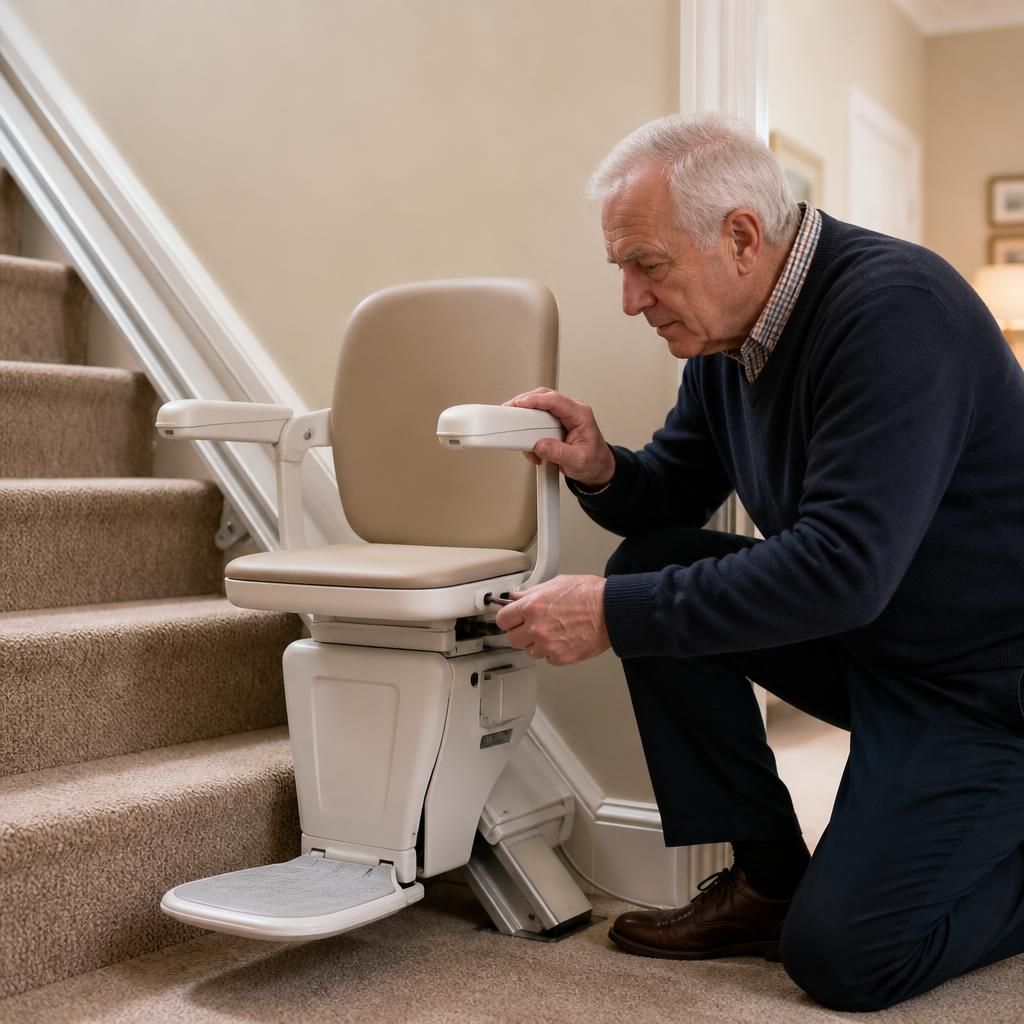
Contact Independent Stairlifts for Prompt Servicing
If your straight stairlift shows any warning sign before its scheduled maintenance check, stop using it where appropriate and contact Independent Stairlifts for prompt servicing advice. Our team can help assess the fault and arrange the appropriate repair or inspection.