
What should I do if my straight stairlift starts making unusual noises?
If your straight stairlift starts making unusual noises, stop using it if the sound is loud, sudden or accompanied by juddering, sticking, a burning smell or reduced movement. Check for obvious obstructions without removing covers, then contact Independent Stairlifts for professional advice and servicing rather than continuing to operate a potentially faulty lift.
If your straight stairlift starts making an unusual noise, stop using it if the sound is sudden, loud or accompanied by juddering, sticking, reduced movement, a burning smell or visible damage. If it is safe to do so, park the lift securely, switch it off and contact Independent Stairlifts for advice. Do not continue making journeys to see whether the noise disappears, as this could worsen a fault or create a safety risk.
Some operating sounds are normal. A steady motor sound, the movement of the carriage along the rail and a light click when the lift starts, stops or reaches a charging point can vary between models. A new, worsening or irregular sound is more significant, particularly if it occurs alongside a change in speed, movement or stopping.
Common unusual noises and what they may indicate include:
- Grinding, scraping or crunching: the carriage, rail, drive mechanism or another moving part may need inspection, cleaning or adjustment. Do not apply oil or grease unless an engineer specifically instructs you to do so, as the wrong lubricant can affect the drive system.
- Squealing or high-pitched whining: this can be associated with friction, a drive component or an electrical issue. Stop using the stairlift if the sound is persistent or becoming louder.
- Clicking, knocking or clunking: a loose, worn or obstructed component may be involved, especially if the noise occurs at a particular point on the rail or during starting and stopping.
- Rattling or vibration: check whether an item is touching the rail or carriage, but do not remove covers or attempt to tighten internal components. A vibration that can be felt through the seat or footplate should be reported promptly.
- Beeping or warning tones: these may indicate that the lift is not correctly parked, a safety switch is activated, the batteries are low or another fault has been detected. The meaning varies by model, so refer to the user instructions or ask the service team.
Before contacting us, carry out only these safe external checks:
- Make sure there is no footwear, carpet edge, furniture, pet toy or other object touching the rail, footrest or carriage.
- Check that the seat, armrests, footrest and swivel mechanism are in their normal travel position.
- Ensure the stairlift is fully parked at a charging point when not in use and that the power supply has not been switched off.
- Look for anything visibly loose or damaged, without removing covers or reaching into the mechanism.
- Note when the noise occurs: during starting, stopping, travelling, turning the seat, using the footrest or reaching a particular section of the rail.
If the noise is minor and the lift otherwise works normally, avoid unnecessary use and arrange a service assessment rather than ignoring it. A technician can inspect the rail, carriage, drive system, safety edges, seat and electrical connections, then identify whether the sound is caused by normal wear, an adjustment issue, an obstruction or a component that needs replacing.
Stop using the stairlift immediately and seek urgent advice if you notice a burning or electrical smell, smoke, sparks, overheating, repeated stopping, uncontrolled movement, severe juddering, a damaged cable, fluid leakage or a loss of braking. Keep clear of the stairlift and do not attempt to move it manually unless you have been given specific instructions for your model. If someone is stranded on the stairs, prioritise their safety and use an alternative safe route or obtain assistance rather than attempting to operate a lift that may be faulty.
Do not remove the motor or rail covers, bypass a safety switch, alter the wiring or attempt an internal repair. These parts require appropriate technical knowledge, and an unauthorised repair may make the fault more serious or affect warranty arrangements. If the stairlift is under warranty or covered by a service agreement, contact Independent Stairlifts before arranging work elsewhere and keep a note of the symptoms you reported.
When you contact the service team, provide the stairlift model if known, the location of the noise, when it began, whether it happens in one direction or at one point on the stairs, and any warning lights or error tones. If it can be done without using the lift or putting anyone at risk, a short recording of the sound may help with the initial assessment. The engineer can then advise whether the lift should remain out of use and arrange the appropriate inspection or repair.
Unusual noise from a straight stairlift can indicate an obstruction, wear or a developing mechanical or electrical fault, particularly when it is new, worsening or accompanied by juddering, sticking or reduced movement.
Stop using the lift if the sound is loud, sudden or persistent. If it is safe, park it at a charging point, switch it off and check only the visible areas for objects touching the rail, carriage or footrest. Do not remove covers, apply oil or grease, bypass safety switches or attempt an internal repair. Contact Independent Stairlifts with details of when the noise occurs and whether you have noticed warning tones, unusual movement, a burning smell or visible damage. This helps the service team decide how urgently the stairlift needs inspection.
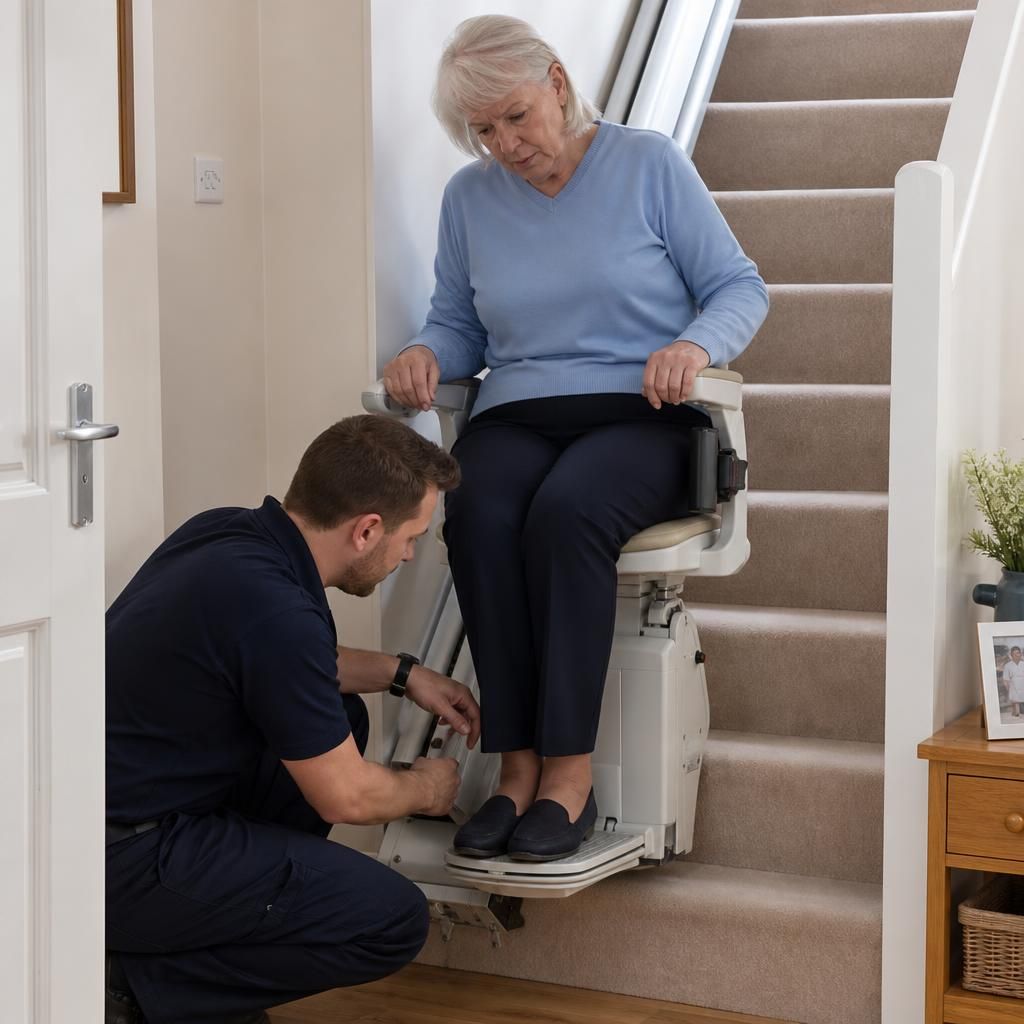
Arrange a stairlift noise assessment
If your straight stairlift is making an unusual, persistent or worsening noise, contact Independent Stairlifts to arrange a professional assessment. We can help identify the cause and advise whether servicing or a repair is needed.