
What are the common signs that indicate my straight stairlift needs servicing?
Common signs that your straight stairlift needs servicing include unusual noises, jerky or slower movement, unexpected stopping, difficulty starting, charging problems, or warning lights and error signals. Stop using the lift if it moves unsafely or repeatedly fails, and contact Independent Stairlifts for advice and a professional inspection.
Common signs that a straight stairlift needs servicing include unusual noises, jerky or slower movement, unexpected stopping, difficulty starting, charging problems, and warning lights or error signals. Physical changes, such as a loose seat, damaged armrest, worn-looking belt or obstruction on the rail, also need attention. If the stairlift moves unsafely, repeatedly fails, or stops on the stairs, stop using it and contact Independent Stairlifts for advice and a professional inspection.
Changes in movement
- Jerky or hesitant travel: The lift should move smoothly along the rail. Surging, juddering, hesitation or a noticeable change in speed may indicate an issue with the drive system, batteries, controls or another component.
- Slower operation: A stairlift that takes noticeably longer to travel, struggles on part of the staircase or sounds as though it is working harder should be checked rather than used until the problem worsens.
- Unexpected stopping: Stopping during a journey may be caused by a safety sensor, an obstruction, a charging or battery fault, or a problem with the control system. Do not repeatedly restart the lift without finding out why it stopped.
- Difficulty starting: Delayed starting, needing to operate the control more than once, or the lift only moving in one direction can point to a fault with the handset, arm-control, wiring or drive mechanism.
Unusual sounds or smells
Grinding, knocking, squeaking, clicking, rattling or other new sounds are signs that the stairlift should be assessed. A change in noise may relate to wear, debris, alignment or the drive components. Stop using the lift if the sound is accompanied by vibration, a burning smell, smoke or heat from the equipment. Do not remove covers or attempt to lubricate internal parts yourself, as the wrong product or adjustment could affect safe operation.
Charging and battery symptoms
Most straight stairlifts rely on rechargeable batteries, so charging problems can affect whether the lift starts or completes a journey. Arrange a check if the lift repeatedly reports low power, fails to charge when parked, loses charge unusually quickly, or will only work after being left for an extended period. Check that the lift is parked in its designated charging position and that the power supply is switched on, where applicable. Keep the charging contacts and surrounding area clean and unobstructed, but avoid dismantling the charger or battery compartment.
If the batteries are ageing or have been deeply discharged, they may need testing or replacement. A battery warning does not always mean the batteries are the only cause, so continued charging faults should be investigated by a qualified stairlift engineer.
Warning lights, displays and error signals
Warning lights, beeps, display messages or an error code should not be ignored, particularly if they recur after the lift has been parked correctly or restarted in accordance with its instructions. Note what the indicator shows, when it appears and what the stairlift was doing at the time. This information can help Independent Stairlifts identify whether the issue relates to charging, a safety sensor, the controls or another part of the system.
Safety equipment and physical condition
Arrange servicing if the seat does not swivel or lock correctly, the safety belt is damaged or will not fasten securely, the armrests or footrest feel loose, or a control is sticking. The stairlift should not be used if a safety feature does not work as intended. Also check the rail and steps for anything that could obstruct travel, such as furniture, stored items, loose flooring or objects caught near the footrest. Never try to force the lift past an obstruction.
A change in the home can create a servicing requirement even when the stairlift itself appears to work normally. Redecoration, flooring changes, movement of furniture, water damage, or impact to the rail or seat can affect clearance and safe operation. Report any accidental contact or damage before using the lift again.
What to do when you notice a sign
- Stop and park the stairlift safely if it can do so without creating additional risk.
- Keep the staircase clear and do not allow anyone to use the lift if it is behaving unpredictably.
- Make a note of the symptoms, warning message, unusual sound and circumstances in which the fault occurs.
- Contact Independent Stairlifts for advice and arrange an inspection where necessary. Use the stairlift only as advised.
Some issues, such as an isolated obstruction or a control that has not been operated correctly, may have a straightforward explanation. However, a recurring fault should still be reported. Servicing can identify wear and developing electrical or mechanical problems before they lead to a breakdown, while confirming that the drive system, batteries, controls and safety features are operating correctly.
A straight stairlift needs servicing when its movement, sounds, controls or safety features change from normal operation. Jerky travel, slower movement, unexpected stops, difficulty starting, unusual noises, charging problems or repeated warning signals should be checked rather than ignored.
Stop using the stairlift if it behaves unpredictably, produces a burning smell, becomes unusually hot, or a safety feature such as the belt, swivel seat or arm-control does not work correctly. Park it safely if possible, keep the stairs clear and contact Independent Stairlifts for advice and a professional inspection.
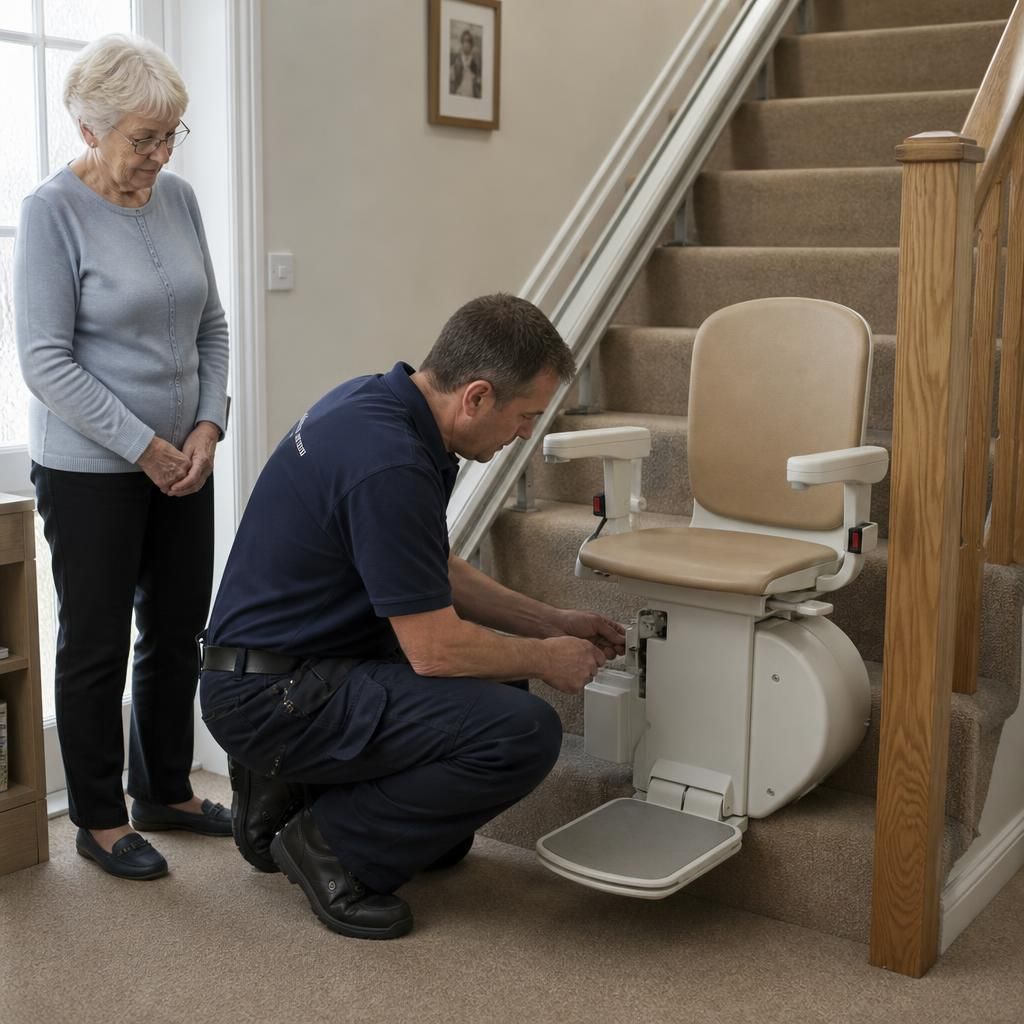
Contact Independent Stairlifts About Servicing Your Straight Stairlift
If you notice any changes in your straight stairlift’s movement, sounds, charging, controls or safety features, contact Independent Stairlifts for advice and arrange a professional inspection where needed.