
What are the benefits of ongoing maintenance for my straight stairlift?
Ongoing maintenance keeps your straight stairlift safe, reliable and comfortable to use. Regular checks can identify wear before it causes a breakdown, extend the lift’s service life and help ensure important safety features continue to work correctly.
Ongoing maintenance helps keep a straight stairlift safe, dependable and comfortable to use. A qualified engineer can identify wear, adjust components and test safety systems before a minor issue develops into a breakdown. Regular servicing also supports a longer operating life and helps your stairlift continue to suit the person and staircase it serves.
Key benefits of maintaining your straight stairlift include:
- Improved safety: Servicing checks essential features such as the seat belt, swivel seat, armrests, footrest, sensors, braking system and obstruction controls. These parts must operate correctly to help prevent unsafe movement or use.
- Fewer unexpected breakdowns: Wear on the drive system, batteries, charging contacts, wiring or control switches can often be detected during a maintenance visit. Addressing these issues early may reduce the chance of the stairlift stopping when it is needed.
- More consistent performance: Cleaning, lubrication and adjustment of the rail, carriage and moving parts can help the lift travel smoothly. This may reduce jolting, hesitation, vibration and unusual noises.
- Longer service life: Components that are kept clean, correctly adjusted and replaced when necessary are less likely to place excessive strain on other parts. Maintenance cannot prevent every fault, but it can help avoid avoidable wear and premature replacement.
- Reliable battery charging: Batteries gradually lose capacity and may not always show obvious signs of deterioration at first. An engineer can check the charging system and battery condition, helping to reduce the risk of the stairlift failing away from its charging point.
- Reduced repair disruption: Planned maintenance gives you an opportunity to deal with developing faults at a convenient time rather than waiting for an urgent repair. It can also help identify parts that may need replacement so the repair can be planned appropriately.
- Better user comfort: A correctly adjusted stairlift should start, stop and travel in a controlled manner. Keeping the seat, footrest, controls and travel mechanism in good condition makes everyday use easier, particularly for someone with limited balance, strength or confidence.
- Useful maintenance records: Service records provide a clear history of inspections, adjustments and repairs. This can help engineers diagnose future problems and confirm that the stairlift has been maintained in line with the applicable manufacturer guidance.
During a routine service, the engineer will normally inspect the rail and fixing points, drive mechanism, seat and swivel operation, safety belt, footrest, sensors, controls, batteries and charging points. They may also test the stairlift under normal operating conditions and check that it stops correctly at the top and bottom of the staircase. The exact checks depend on the model, its age, how frequently it is used and the condition of the installation.
Maintenance is particularly important if the stairlift is used several times a day, has been installed for a number of years, is used by more than one person or operates in an environment where dust, damp or temperature changes could affect its components. It is also sensible to arrange an inspection if the lift has been unused for an extended period before returning it to regular use.
Servicing does not replace sensible daily checks. Keep the rail and charging area clear, avoid placing objects on the footrest, use the seat belt as instructed and report changes such as unusual noises, slower travel, jerky movement, intermittent controls, a battery warning or difficulty reaching the charging point. Do not attempt to remove covers, alter wiring or repair the stairlift yourself, as this can create a safety risk and may affect warranty or service arrangements.
Follow the service schedule provided for your particular stairlift and arrange repairs promptly if a safety feature is not working correctly. If the stairlift stops, behaves unpredictably or shows signs of damage, stop using it where it is safe to do so and contact Independent Stairlifts for advice. Ongoing maintenance is most effective when combined with prompt reporting of faults and servicing by a suitably qualified engineer.
Ongoing maintenance helps keep your straight stairlift’s safety systems working correctly between repairs. During a service, a qualified engineer can inspect and test the seat belt, swivel seat, footrest, armrests, sensors, controls and braking system, as well as check that the lift stops properly at the top and bottom of the stairs.
These checks can identify wear, loose connections or adjustment issues before they affect everyday use. Maintenance is especially important if the stairlift is used frequently, has been installed for several years or has been unused for an extended period. If you notice jerky movement, unusual noises, slower travel or a safety feature not operating as expected, stop using the lift where possible and contact Independent Stairlifts for advice rather than attempting a repair yourself.
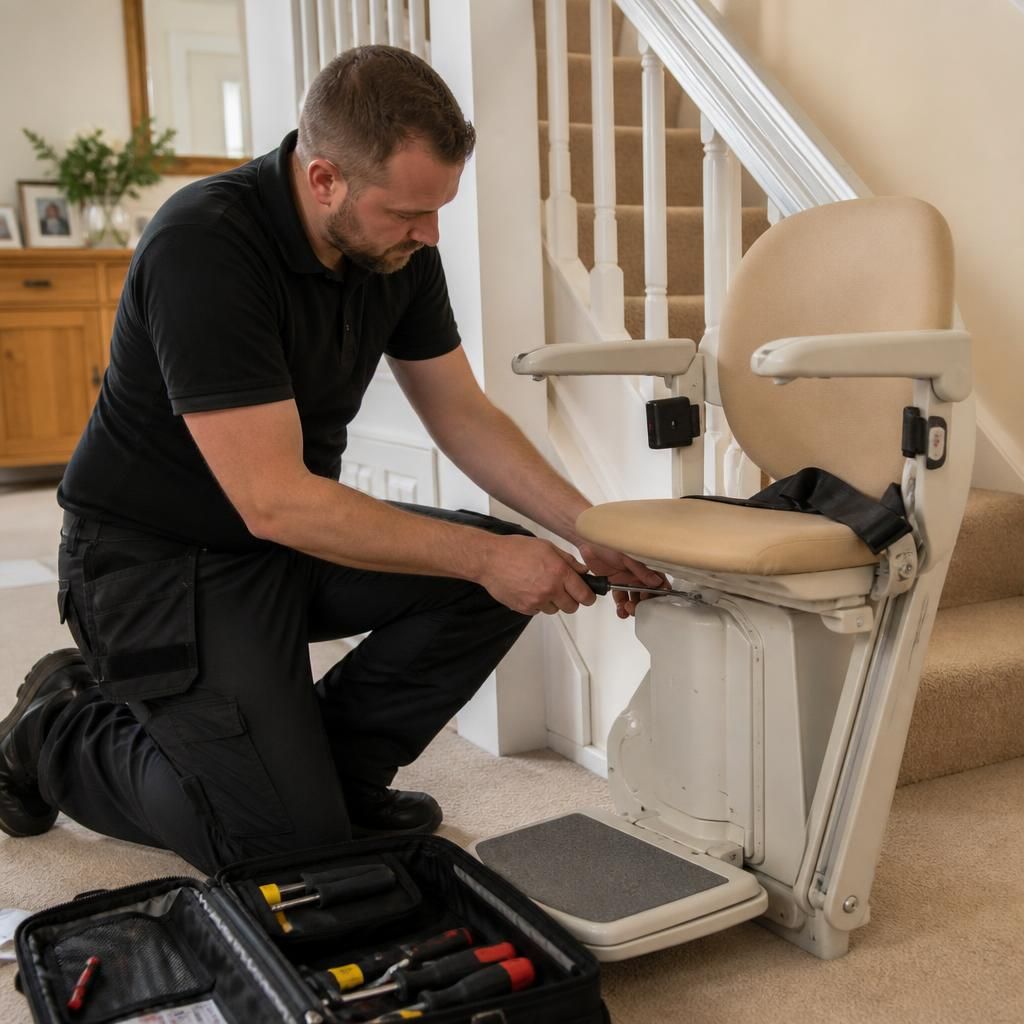
Arrange your straight stairlift maintenance service
Arrange your straight stairlift maintenance service with Independent Stairlifts to help keep its safety features, charging system and moving parts working correctly. Contact our team to discuss a suitable service appointment.