
How often should I have my straight stairlift serviced to ensure optimal performance and safety?
A straight stairlift should generally be professionally serviced at least once a year, or at the interval recommended by the manufacturer or your service agreement, to check its safety systems, batteries, charging points, drive mechanism and track. Arrange an earlier inspection if you notice unusual noises, jerky movement, reduced battery performance or any other change in operation.
A straight stairlift should generally be professionally serviced annually, or at the interval specified by the manufacturer or your service agreement. Regular servicing helps confirm that the lift’s safety systems, batteries, charging points, drive mechanism, seat and rail are operating correctly. Arrange an earlier inspection if its performance changes or you notice any signs of a fault.
The recommended interval may vary according to the stairlift model, its age, how frequently it is used and the environment in which it is installed. A lift used several times a day, for example, may experience more wear than one used occasionally. Dust, pet hair, damp conditions, heavy use and long periods without use can also affect components. Your service documentation should take priority if it specifies a different schedule.
During a professional service, the engineer will normally inspect and test the main working and safety components, which may include:
- the seat, armrests, footrest, swivel or folding mechanisms and seatbelt;
- the controls, remote controls, key switch and safety sensors;
- the batteries, charging points and charging performance;
- the motor, gearbox, drive mechanism and braking system;
- the rail, carriage, fixings and visible wiring;
- the lift’s movement, stopping position and operation of its safety cut-outs; and
- any unusual wear, damage, obstruction or build-up of dirt that could affect performance.
Servicing is also an opportunity to identify developing issues before they cause a breakdown. Batteries may gradually lose capacity, while drive components, rollers and other moving parts can wear over time. An engineer can advise whether adjustment, cleaning or replacement of a component is appropriate and can explain any work that is recommended.
You can support reliable operation between services by keeping the rail and charging areas clear, using the stairlift as instructed and reporting changes promptly. Avoid placing objects on the footrest or rail, and do not attempt to dismantle the lift, bypass a safety switch or carry out electrical repairs yourself. Follow the manufacturer’s guidance for cleaning and charging, particularly if the stairlift is not used for an extended period.
Do not wait for the next scheduled service if you notice:
- jerky, slow or uneven movement;
- unusual clicking, grinding, squeaking or other new noises;
- the lift stopping unexpectedly or failing to reach the end of the rail;
- reduced battery performance or repeated low-battery warnings;
- charging lights or indicators that do not behave as expected;
- a loose seat, armrest, footrest, rail or other fitting;
- the seatbelt, swivel seat or safety sensors not working correctly; or
- a burning smell, visible damage or any other electrical concern.
If the stairlift becomes unsafe or stops unexpectedly, switch it off if this can be done safely, keep the stairs clear and contact Independent Stairlifts or the appropriate service team for advice. Do not continue using it until the cause has been assessed where a safety feature, electrical component or mechanical part appears to be faulty.
Keep records of servicing, repairs and replaced parts, and check the terms of your warranty or service agreement before authorising work. Using an appropriately qualified engineer and following the specified maintenance schedule can help avoid problems with cover. The correct servicing interval for your particular lift can be confirmed from its documentation or during an assessment by Independent Stairlifts.
Annual professional servicing is a useful general guide for a straight stairlift, but the correct interval is the one specified by the manufacturer or your service agreement. The recommended schedule may vary with the model, age, frequency of use and conditions around the staircase. Arrange an earlier inspection if the lift becomes jerky, unusually noisy, slower than usual, difficult to charge or unreliable when starting and stopping. Do not wait for the next planned service if a safety feature, seatbelt, battery or electrical component appears faulty.
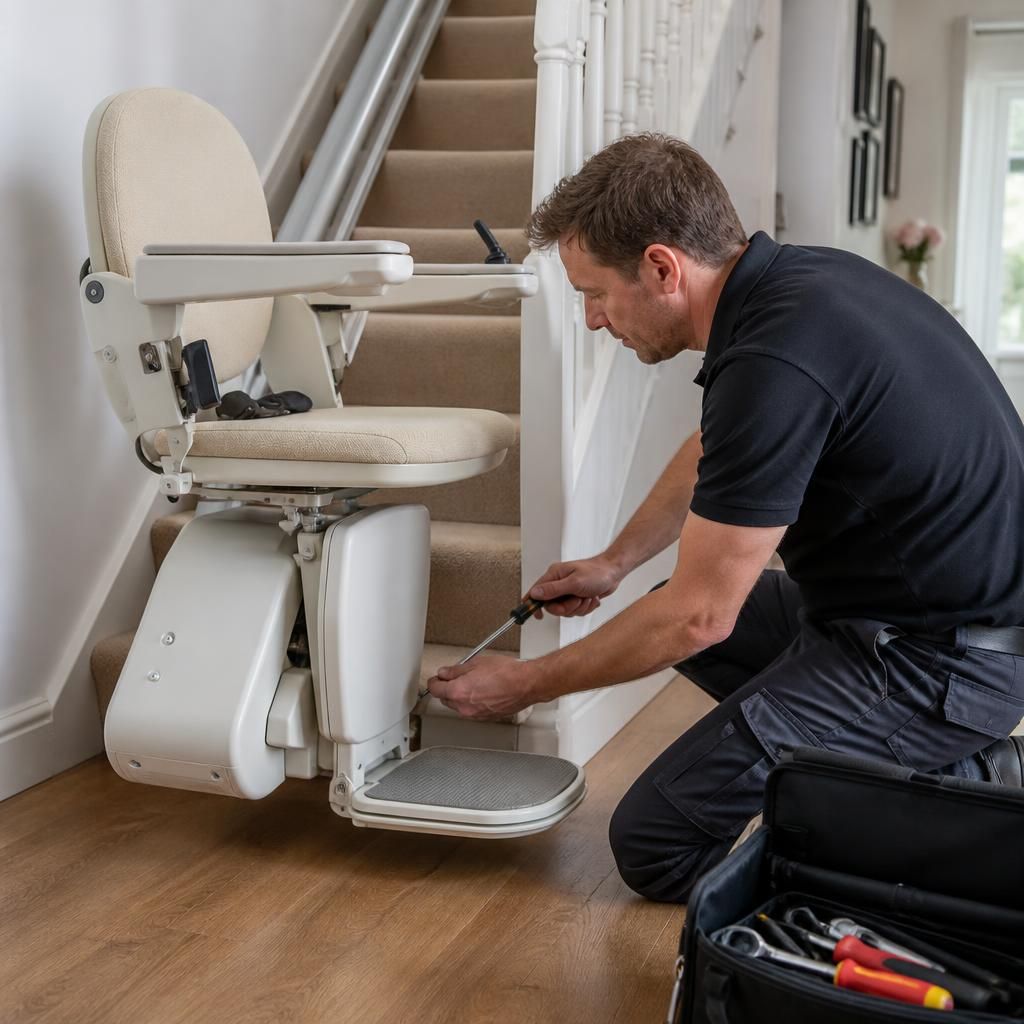
Arrange Your Straight Stairlift Service
If your straight stairlift is due for its routine service, or you have noticed any change in its performance, contact Independent Stairlifts to arrange an inspection. Our team can confirm the appropriate servicing interval and advise on any repairs or replacement parts required.