
What factors affect the cost of a straight stairlift?
The cost of a straight stairlift is mainly affected by the staircase layout, the stairlift model, the seat and safety features selected, and what is included in the survey and installation. Additional work such as electrical adjustments, relocating fixtures or fitting an outdoor model may also affect the final price.
The cost of a straight stairlift is primarily affected by the stairlift model, the condition and layout of the staircase, the seat and safety features selected, and the work required to survey and install it. A straightforward indoor installation with a standard specification will usually cost less than one requiring electrical adjustments, alterations to fixtures, specialist seating or outdoor protection.
The stairlift itself is one of the main parts of the price. New stairlifts are supplied with current features, manufacturer support and a new warranty. Reconditioned stairlifts may offer a lower-cost alternative, provided the equipment has been properly inspected, serviced and installed by a competent provider. The condition, age, specification and warranty of a reconditioned model all affect its price, so it is important to compare what is included rather than looking only at the initial figure.
The staircase layout also matters, even when the stairlift is described as straight. A simple, unobstructed flight with suitable space at the top and bottom is generally easier to install. The survey will check the width of the stairs, the available landing space, the position of doors and radiators, the height of the steps, the direction of travel and whether the user can get on and off the lift safely. A narrow staircase, restricted landing or obstruction near the rail may require additional planning or equipment.
Most straight stairlifts use a standard rail, but the rail may need to be made to suit the available space. The position of the rail and the clearances around it can affect whether the lift finishes at the most convenient point. If the staircase has an unusual starting or ending position, a hinged rail, a different parking arrangement or other space-saving solution may be considered. These options can change the overall cost.
The seat and controls can make a noticeable difference. A basic seat may be suitable for many users, while others may need a powered swivel seat, a powered or manual folding mechanism, adjustable armrests, a higher weight capacity or controls that are easier to operate. A powered swivel or fold feature can help where transferring at the top or bottom of the stairs is difficult, but it may add to the purchase price and servicing requirements.
Other features that may affect the price include:
- Remote controls for calling the stairlift between floors
- Different upholstery, seat sizes or support options
- Folding or retractable components where space is limited
- Enhanced controls for users with reduced hand strength or dexterity
- Additional safety or positioning accessories recommended following the assessment
Installation requirements are normally included in a properly prepared quotation, but the complexity of the work can affect the total. The installer may need to work around doors, skirting boards, radiators, handrails or other fixtures. In some homes, a socket may not be in a suitable position, or an electrical adjustment may be needed. Moving or adapting fixtures, making good minor changes or arranging additional electrical work should be discussed before installation so that the responsibilities and costs are clear.
It is also important to check whether the quoted price includes the home survey, delivery, installation, testing, user instruction and removal of packaging. A clear quotation should explain any exclusions, such as building work, electrical alterations, repairs to damaged surfaces or the removal of an existing stairlift. Asking about these items in advance helps prevent unexpected charges.
Indoor and outdoor installations have different requirements. An outdoor straight stairlift needs equipment and materials that can withstand rain, temperature changes and exposure to dirt. The position of the rail, the availability of a suitable power supply, drainage, security and protection when the lift is not in use may all affect the specification and cost. An outdoor assessment should consider the whole route, including steps, landings and access to the property, rather than treating the lift as an indoor model installed outside.
Aftercare and warranty cover should be considered alongside the purchase price. The length and scope of the warranty, what is covered if a fault occurs, the availability of engineers and the cost of future servicing can all affect the overall value. A lower initial price may not represent the best option if essential support, replacement parts or call-out arrangements are unclear. Confirm whether cover applies to both parts and labour and whether any conditions apply to reconditioned equipment.
The user’s needs are another important factor. A stairlift should not be priced or selected by model alone. The user’s height, mobility, balance, weight, ability to transfer and preferred side of operation may determine which seat and controls are appropriate. If more than one person will use the stairlift, the specification may need to accommodate the person with the greatest support requirements. Choosing unsuitable equipment to reduce the initial cost can affect safety, comfort and long-term usefulness.
Prices can also vary according to whether the stairlift is purchased, rented or supplied as a reconditioned unit. Rental may be considered where the expected period of use is limited, although it commonly involves an initial installation charge and continuing payments. The right option depends on how long the stairlift is likely to be needed, the condition of the staircase and the specification required.
The most reliable way to establish the cost is to arrange a proper assessment at the property. The quotation should set out the recommended model, rail arrangement, seat and safety features, installation work, warranty and aftercare, together with any items that are not included. If your circumstances or mobility needs change, tell the adviser before installation, as a different configuration may be more suitable than the lowest-cost standard option.
The cost of a straight stairlift is affected not only by the lift itself, but also by the work needed to install it safely in your home. A clear quotation should show whether the price includes the survey, delivery, fitting, testing, user instruction and removal of packaging.
The survey will identify practical issues that may alter the specification or installation work. These can include a restricted landing, a door or radiator close to the stairs, an unsuitable power socket, or the need for a hinged rail. Ask the adviser to explain any recommended extras and whether they are included in the quoted price.
It is also worth checking how warranty and aftercare are provided. Confirm what is covered for parts and labour, how faults are reported, and whether future servicing or call-out work is charged separately. Comparing complete quotations rather than headline prices makes it easier to understand the true cost of a straight stairlift.
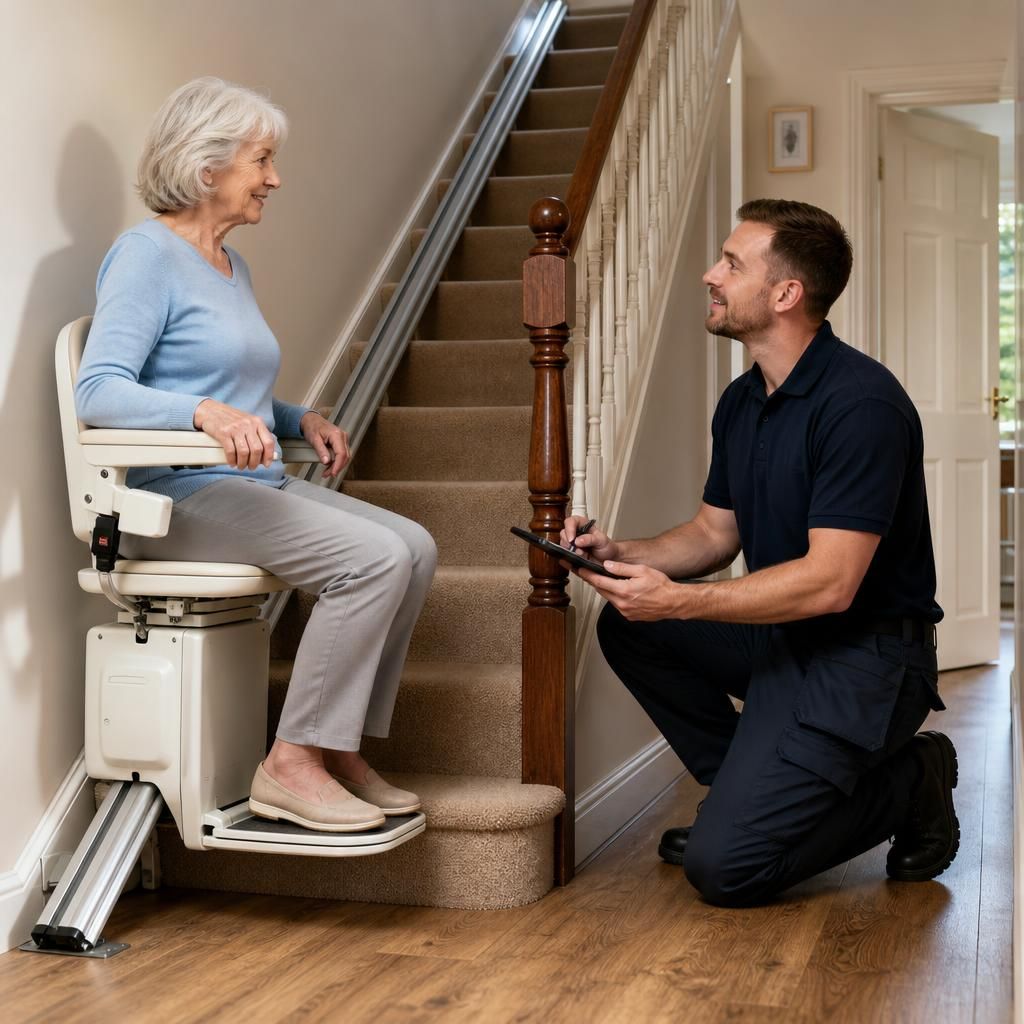
Get a clear straight stairlift cost assessment
Arrange a home assessment with Independent Stairlifts for a clear straight stairlift quotation based on your staircase, preferred specification and installation requirements.