
How do I choose between a new, reconditioned, or rental straight stairlift for my needs?
Choose a new straight stairlift for the latest features and full manufacturer warranty, a reconditioned model for a lower purchase cost, or a rental when your need is temporary. The right option depends on how long you expect to use it, your budget, the stairlift’s condition and warranty, and the availability of installation and ongoing support.
A new, reconditioned or rental straight stairlift can all be suitable, but the best choice depends mainly on how long you expect to need it, your budget, the condition and specification required, and the warranty and support included. A new stairlift is usually the strongest long-term choice; a reconditioned stairlift can reduce the purchase price; and rental is often most appropriate when the need is temporary or the future requirement is uncertain.
Choose a new straight stairlift when:
- You expect to use the stairlift for the foreseeable future and want a long-term solution.
- You require particular features, controls, seating options or upholstery that may not be available on a reconditioned model.
- You want the benefit of a full manufacturer’s warranty, subject to its terms and duration.
- You prefer to know the stairlift’s complete history and have access to the latest available design and safety features.
- You are installing the stairlift for someone whose needs may change and want to discuss upgrade or configuration options with the assessor.
A new stairlift normally has a higher initial purchase price, but this can be reasonable when the equipment is likely to be used regularly over an extended period. Ask what is covered by the warranty, whether labour and call-outs are included, and how ongoing servicing is arranged. A new model is not automatically the right choice if the stairlift will only be needed briefly, so consider expected use rather than focusing only on the specification.
Choose a reconditioned straight stairlift when:
- You want to reduce the upfront purchase cost while still buying rather than renting.
- You are comfortable choosing from the models and features currently available.
- The stairlift is for a standard straight staircase and does not require a highly specific configuration.
- You have checked that the unit has been professionally inspected, serviced and safety-tested before installation.
- The warranty, servicing arrangements and availability of replacement parts are clear.
A reconditioned stairlift should not simply be an older unit placed in another home. Ask what work has been carried out, which components have been replaced or tested, and whether the batteries, drive system, controls, safety edges and charging equipment have been checked. You should also receive clear information about the warranty and the support available if a fault develops. The lower purchase price is only useful if the stairlift is reliable and suitable for the user’s needs.
Reconditioned equipment can be a practical option for customers who need a dependable straight stairlift but do not require the newest styling or every available feature. However, availability can vary. The model that best fits the staircase may not be available at the time of assessment, so discuss acceptable alternatives before making a decision.
Choose a rental straight stairlift when:
- The stairlift is needed for a temporary period, such as during recovery from an operation, illness or injury.
- You are unsure how long the user will need it and want to avoid buying equipment that may soon be unnecessary.
- You need a faster, lower-cost way to improve access while a longer-term decision is made.
- The rental agreement provides suitable installation, servicing and removal arrangements.
Rental is not always the cheapest option over a long period. The total cost may include an initial installation charge, recurring rental payments, removal or collection charges, and any costs related to damage or changes outside the agreement. Check whether the contract has a minimum rental term, how much notice is needed to end it, what happens if the user’s circumstances change, and who is responsible for servicing and repairs.
Compare the total cost, not just the starting price
When comparing the three options, ask for the complete cost of the proposed arrangement. This should make clear whether the price includes the assessment, delivery, installation, demonstration, warranty, servicing, repairs, removal and any alterations needed to the staircase or surrounding area. For a purchase, also consider the likely cost of future batteries, servicing and repairs after the warranty ends. For a rental, compare the expected rental period with the purchase price of a suitable reconditioned or new stairlift.
Do not assume that a rental or reconditioned stairlift will fit every straight staircase without an assessment. Straight stairlifts are designed for staircases without intermediate bends or landings, but the available width, number and shape of steps, top and bottom clearances, handrails, radiators, doors and nearby furniture can all affect the installation. The user’s height, weight, balance, ability to transfer and preferred seating position also need to be considered.
Check the specification against the user’s needs
- Seat and transfer: Check that the seat height, swivel action, armrests and footrest allow the user to sit down and stand up safely.
- Controls: Consider whether the user can operate the arm controls and whether remote controls are needed at the top and bottom of the stairs.
- Safety features: Confirm the operation of the seat belt, obstruction sensors, braking system and battery backup.
- Weight capacity: Ensure the selected model is rated for the user and any clothing or items carried while using it. Never exceed the manufacturer’s limit.
- Parking position: Check where the stairlift will park and whether a hinged, sliding or alternative rail arrangement is needed to keep a doorway, corridor or landing clear.
- Charging: Ask where the charging points are located and whether the stairlift will charge when parked at the top, bottom or both ends of the rail.
It is also important to consider whether the user’s mobility is likely to change. A simple model may be appropriate now but difficult to use later if standing, bending, transferring or operating controls becomes harder. Conversely, paying for features that the user cannot operate or does not need may not represent good value. The assessment should focus on safe, independent use rather than the age or appearance of the equipment alone.
Use the warranty and support arrangements to distinguish options
A written warranty is one of the most important differences between apparently similar stairlifts. Establish whether it covers parts, labour, batteries, engineer visits and faults caused by normal use. Check any exclusions, response arrangements and what happens after the warranty expires. For a reconditioned unit, ask whether the warranty is provided by the installer or manufacturer and whether it applies to the particular equipment being supplied.
For all three options, find out who to contact if the stairlift stops working, whether telephone troubleshooting is available, and how emergency or priority call-outs are handled. A clear maintenance plan can be more valuable than a small difference in the initial price. Keep the user’s manual, warranty details and service records in an accessible place.
A practical way to decide
- Estimate whether the need is temporary, uncertain or long term.
- Arrange an assessment of the staircase and the user’s physical requirements.
- Set a realistic budget for the complete cost, including installation and future support.
- Compare a new, reconditioned and rental quotation on the same basis.
- Read the warranty or rental agreement before accepting the installation.
- Confirm that the installer will demonstrate safe operation to the user and anyone providing care.
In general, rental suits a genuinely short-term requirement, reconditioned purchase suits customers seeking a lower-cost permanent solution, and a new stairlift suits those prioritising choice, a full manufacturer’s warranty and longer-term ownership. If the expected period of use is unclear, ask for a comparison based on different usage periods rather than choosing solely on the initial payment. An assessment by Independent Stairlifts can confirm whether the staircase, user and preferred payment option are compatible before you commit.
Choosing between a new, reconditioned or rental straight stairlift depends largely on how long it is likely to be needed and what is included in the total cost. Rental can be practical for a temporary requirement, while a reconditioned or new stairlift may offer better long-term value when regular use is expected.
Before deciding, compare each option on the same basis. Check whether the quotation includes assessment, installation, warranty or servicing, repairs, removal and any future battery costs. For a reconditioned stairlift, confirm that it has been professionally inspected and safety-tested. For a rental, read the agreement carefully, including the minimum term, notice period and removal charges.
The stairlift must also suit the user and staircase, regardless of its age or payment method. Ask about seat position, weight capacity, controls, charging points and safe parking areas. Independent Stairlifts can assess these practical requirements and explain which option is suitable for the expected period of use.
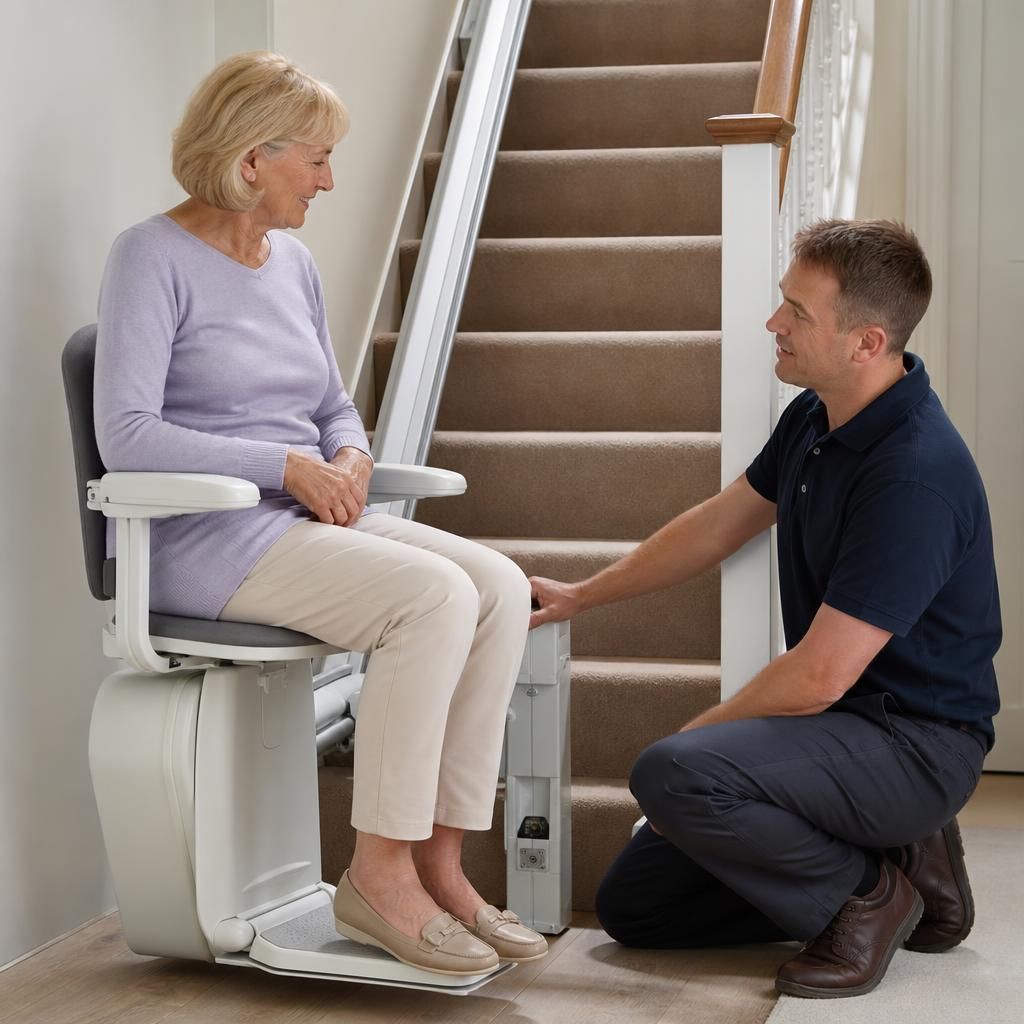
Compare your straight stairlift options with expert advice
Contact Independent Stairlifts to arrange an assessment and compare new, reconditioned and rental straight stairlift options for your staircase, budget and expected period of use.