
How can I ensure ongoing support and maintenance for my straight stairlift?
Ensure ongoing support for your straight stairlift by following the manufacturer’s maintenance guidance, arranging periodic servicing and reporting unusual noises, movement or faults promptly. Keep the track and charging points clear, use the lift as instructed and retain your installation and warranty details so qualified engineers can provide efficient support when needed.
Ongoing support for a straight stairlift combines routine user checks, manufacturer-recommended servicing and prompt attention to faults. Keep the lift clean and correctly charged, use it as instructed, retain your installation and warranty information, and contact a qualified stairlift engineer as soon as you notice a change in its performance. This approach helps maintain safe, dependable operation and can prevent a minor issue from becoming a larger repair.
Follow the servicing guidance for your model
Your stairlift’s service requirements depend on its make, model, age, usage and installation environment. The user manual should explain the recommended servicing interval, charging arrangements, safety features and any checks that can safely be carried out by the user. If you are unsure when your next service is due, check your installation paperwork or ask Independent Stairlifts to confirm the appropriate schedule for your lift.
Servicing should be completed by a suitably qualified engineer. A service may include checking the drive system, track, seat, armrests, footrest, swivel mechanism, sensors, controls, batteries, charging points and safety edges. The engineer can also identify wear, test the lift under operating conditions and advise whether any parts need adjustment or replacement.
Carry out simple checks between services
Regular visual checks can help you identify problems early, but they do not replace professional servicing. Before using the lift, make sure:
- The track and the area around the lift are clear of clothing, bags, toys, pets and other obstructions.
- The seat, armrests, footrest and swivel mechanism appear secure and operate as intended.
- The lift travels smoothly without unusual juddering, scraping, grinding or repeated stopping.
- The charging points are clean and unobstructed, and the lift is returned to its charging position when not in use if required by the manufacturer.
- The seat belt, controls and safety sensors work correctly.
- There is no visible damage, loose covering, fluid leakage or sign of overheating.
Do not remove covers, alter safety settings, lubricate components unless the manufacturer specifically permits it, or attempt electrical repairs yourself. Incorrect adjustments can affect braking, sensors or other safety systems.
Use the lift in a way that protects its components
Use the stairlift only for its intended purpose and stay within the stated weight limit. Sit correctly, fasten the seat belt where fitted, keep hands and feet within the seat area while travelling, and avoid carrying loads that could fall onto the stairs or interfere with the controls. Keep the track free from cleaning products and do not hang items from the lift.
If the lift is not used regularly, follow the manufacturer’s instructions for charging and storage. A stairlift that is left unused for a prolonged period may still need to remain connected to its charger, and its batteries can lose capacity if they are allowed to remain discharged. If the property is going to be empty, ask for advice before switching off the power or leaving the lift unused.
Report changes in performance promptly
Contact the support team if the lift becomes slower, noisier or less smooth than usual, fails to reach its charging point, displays a warning light or code, stops unexpectedly, or requires repeated attempts to start. You should also report a seat that does not swivel or lock correctly, a belt or armrest that is damaged, or controls and safety sensors that do not respond as expected.
When reporting a fault, have the lift’s model details, installation address and any warranty or service information available. Describe what happened, when it occurred and whether the problem happens at a particular point on the staircase. If a warning code is displayed, provide the exact code rather than relying on a description. This helps the engineer prepare appropriately and may reduce avoidable delays.
If the stairlift stops on the stairs, follow the emergency instructions in the user manual. Do not try to force the carriage, move it manually or dismantle any part of the lift. Keep the user safe and contact the appropriate support service. If there is smoke, a burning smell, exposed wiring or another immediate electrical hazard, stop using the lift and seek urgent professional assistance.
Understand warranty and service cover
Keep the warranty document, installation record, manual and engineer reports together. Check what the warranty includes, how long it lasts, whether call-outs or replacement batteries are covered, and whether servicing must be completed by an approved engineer. Some faults may be excluded if they result from accidental damage, misuse, unauthorised modification or failure to follow the manufacturer’s instructions.
A service agreement may provide planned servicing and access to repairs, while other arrangements may charge separately for visits, labour or replacement parts. Ask for the terms to be explained clearly before arranging additional cover, particularly if the lift is reconditioned, used outdoors or has an older battery system.
Keep useful records
Record service visits, reported faults, parts replaced and any advice given by the engineer. These records provide a useful history if the lift changes hands, develops a recurring fault or needs to be assessed for continued use. Tell the support team about changes to the user’s mobility, the way the lift is being used or the home environment, as these factors may affect safe operation.
With sensible day-to-day care, scheduled servicing and prompt fault reporting, a straight stairlift can remain a reliable part of the home’s access arrangements. If you are uncertain whether a noise, warning or change in movement is significant, stop using the lift if it appears unsafe and ask a qualified engineer for advice rather than waiting for the next planned service.
Regular servicing and prompt fault reporting are the main ways to keep a straight stairlift safe and dependable. Arrange maintenance at the interval recommended for your model, and contact a qualified engineer promptly if you notice unusual noise, juddering, repeated stopping, warning lights, charging problems or changes in the lift’s movement.
Between services, keep the track, charging points and surrounding stairs clear. Check that the seat, belt, armrests, footrest and controls appear secure, but do not remove covers, adjust safety settings or attempt electrical repairs yourself. Keep your manual, warranty details and service records available so the support team can identify the lift and its history quickly if assistance is needed.
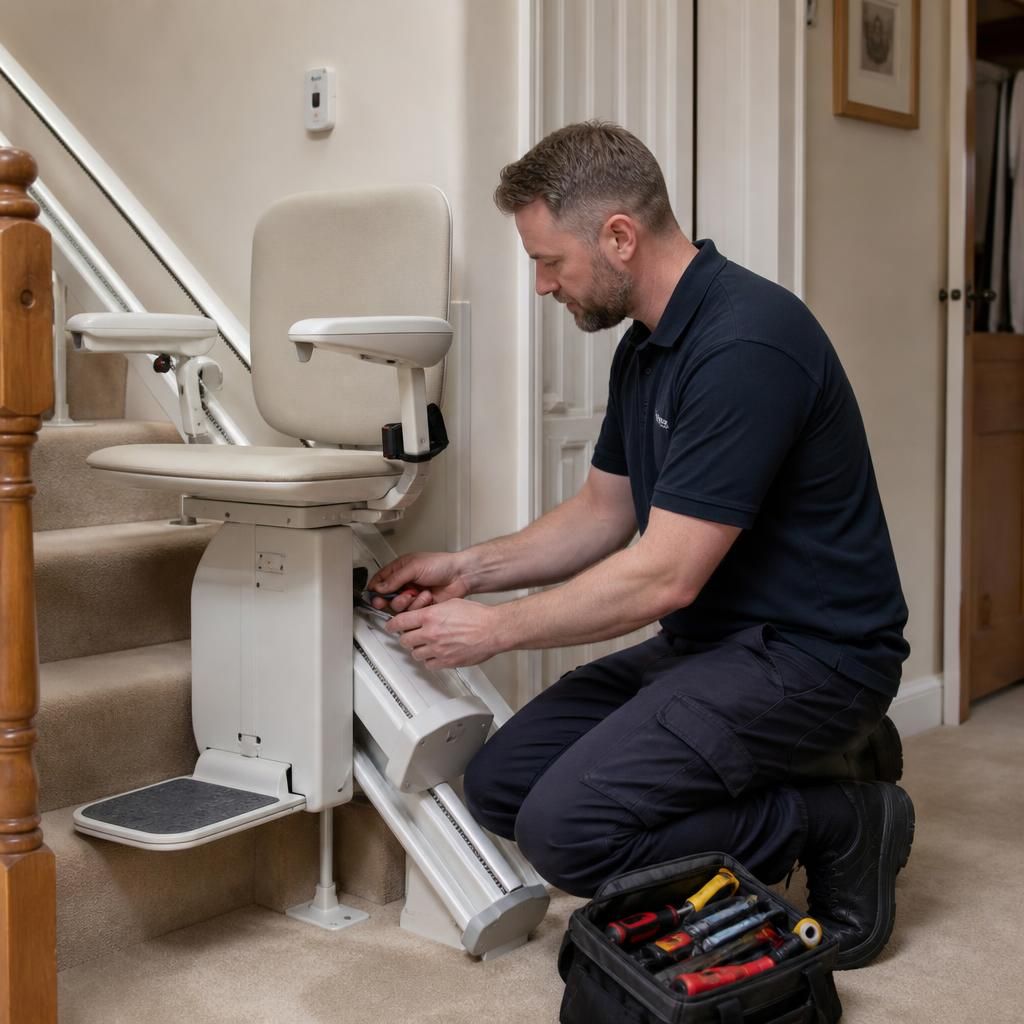
Arrange straight stairlift servicing or support
If your straight stairlift is due for a service or needs attention, contact Independent Stairlifts to arrange qualified support and discuss any changes in its performance.