
Can straight stairlifts be installed outdoors, and what considerations should I keep in mind for exterior use?
Yes, a straight stairlift can be installed outdoors when a suitable weather-resistant model is used and the staircase, landing and power supply are assessed beforehand. Exterior installations require protection from rain, moisture, temperature changes and other environmental conditions, along with suitable positioning and ongoing maintenance.
Yes, a straight stairlift can be installed outdoors, provided it is an exterior-rated model and the staircase, landing, electrical supply and surrounding environment are assessed first. An indoor stairlift should not simply be moved outside: outdoor models use weather-resistant components and require additional protection against rain, damp, frost, sunlight, dirt and temperature changes.
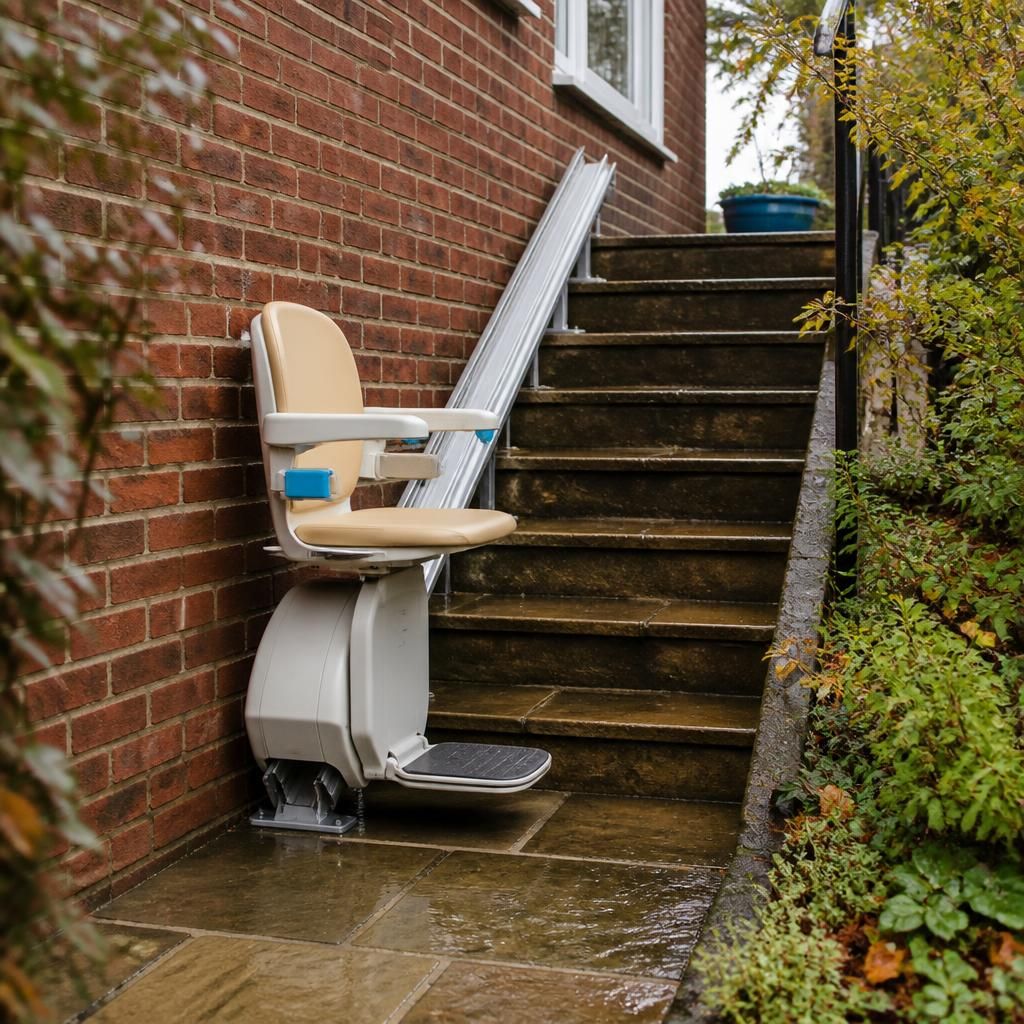
Outdoor straight stairlifts are commonly considered for steps leading to a garden, terrace, garage, entrance or other external area. The rail can often be fitted to a straight flight in much the same way as an internal stairlift, but the installation must account for exposure and the way the user approaches and leaves the stairs.
Weather protection is the main consideration. The seat, controls, motor, batteries, rail and charging equipment need to be suitable for exterior conditions. Weather-resistant does not mean that every component can be left permanently exposed without protection. Where possible, a canopy, covered landing or other shelter can reduce the effect of heavy rain, frost and direct sunlight. A suitable cover may also be recommended when the stairlift is not in use, although it must be used as instructed and should not trap moisture around the equipment.
A site assessment should consider the following points:
- Rain and drainage: Water should be able to drain away from the steps, rail and charging area. Persistent standing water, overflowing gutters or water running down the staircase can increase corrosion and affect safe operation.
- Temperature and frost: Very cold conditions can affect battery performance and moving parts. The installation plan should identify whether the equipment can be kept sufficiently protected and whether the charging point remains accessible.
- Sunlight and exposure: Ultraviolet light and prolonged heat can degrade some plastics, upholstery and covers over time. Positioning the lift in shade or under suitable shelter can help reduce this exposure.
- Wind and debris: Leaves, grit, snow and other debris can collect on the rail or steps. An exposed staircase may need more frequent clearing than an indoor one.
- Corrosion: Coastal air, road salt and damp conditions can accelerate corrosion. The suitability of the rail, fixings and other exposed parts should be checked for the location rather than assumed.
- Security: An outdoor stairlift may be visible or accessible to other people. A lockable control, removable key or other security measure may be appropriate, particularly where the staircase is shared or open to the public.
The steps and landings must be safe independently of the stairlift. They should provide a stable, non-slip surface and adequate space for the user to get on and off. Wet leaves, ice, moss and loose surfaces can create a slip risk even when the stairlift itself is working correctly. The installer will also need to check the width, gradient, clearances, handrails, gates, doors and any obstruction at the top or bottom of the flight.
The position of the charging points is particularly important outdoors. The stairlift needs to be able to charge reliably when parked, while the power supply and electrical protection must be suitable for the environment. Outdoor electrical work should be assessed and completed by a suitably qualified professional, with appropriate protection against moisture. Extension leads or improvised covers should not be used as a substitute for a correctly installed supply.
Operating controls may need extra consideration if the user will be wearing gloves, if the controls are likely to become wet, or if the lift is used in low light. The user should be able to operate the controls without reaching across the staircase. Any remote controls, call points or charging connections should be positioned where they can be reached safely and kept as dry as possible.
Maintenance is usually more important for an outdoor stairlift than for an equivalent indoor installation. Keep the rail and steps clear, wipe away dirt or moisture as advised, check that covers and protective parts remain secure, and report unusual noises, slower movement, charging problems or signs of corrosion. Do not use abrasive cleaners, hose the stairlift down or apply lubricants unless the manufacturer or service engineer specifically recommends them. Regular servicing can identify wear and weather-related damage before it affects reliability.
An outdoor straight stairlift may not be the best option where the staircase is heavily exposed, frequently flooded, unstable, exceptionally narrow or used by several people at once. In some locations, improving the steps, adding shelter or considering a different access solution may be more appropriate. A home assessment is therefore essential before choosing a model or accepting an installation quotation.
Before installation, ask for confirmation of what is included in the outdoor specification, how the equipment should be protected, where it will charge, what preparation is required and how servicing will be handled. A proper assessment should also explain any limitations caused by the site and identify costs for electrical work, shelter, changes to the steps or additional protective measures. With the right model, suitable weather protection and a realistic maintenance plan, a straight stairlift can provide dependable access on many external staircases.
An outdoor straight stairlift must be designed for exterior conditions; an indoor model should not be installed outside without the manufacturer’s approval. Weather-resistant components help protect the seat, motor, batteries and controls from rain and damp, but suitable shelter is still important.
Where possible, provide a covered landing or canopy and keep the charging point protected from moisture. The steps should also drain properly and be kept clear of leaves, ice, grit and moss. Regularly check for corrosion, damaged covers or charging problems, and arrange servicing if the lift becomes noisy or moves unusually slowly.
Arrange an outdoor stairlift assessment
Arrange an outdoor stairlift assessment with Independent Stairlifts to check the staircase, weather protection, electrical supply and charging position. We can recommend a suitable exterior model and explain any preparation or ongoing maintenance required.